9 May 2024

Welcome to the terrordome : 2006 : Enders Analysis at Denton Wilde Sapte, City of London

 The first of April proved not such an innocuous date on which to have started my new job. Within weeks, I began to wonder if I was the fool to take on a position as ‘media analyst’ that I had never known existed, let alone submitted a job application. The previous year, I had been minding my own business, providing a steady stream of stories as uncredited news editor to weekly print publication ‘The Radio Magazine’ [see blog], when an e-mail arrived from (unknown to me) Claire Enders asking if I wanted to write an analysis of Britain’s largest commercial radio owner ‘GCap Media plc’. Having tabulated radio industry data for myself since 1980, I was happy to pen six pages demonstrating that this group had already hit the rocks, ending my report:

“Someone should have done [GCap chief executive Ralph] Bernard a big favour and bought him a sign that Christmas to hang in his office that said: ‘It’s all about the content, stupid!’”

Published by ‘Enders Analysis’ that November, I was left to presume the response to my critical analysis had been positive because I was asked if I desired a full-time office position writing similar reports about the media industries. My employment would replace radio industry veteran Phil Riley who had anonymously freelanced occasional radio reports for the company until then. It was an offer too good to refuse as the salary for working in a comfy central London office was considerably greater than my pay from American public corporation ‘Metromedia International Inc’ had been a decade earlier for having schlepped around Russia, Hungary, Latvia, Berlin and Prague for several years [see blogblog and blog]. Persuasion proved unnecessary as funds were required for my daughter attending a London university.

Having agreed the April start date, the prior month I started to receive emails from Enders Analysis requesting my help with radio industry information it needed for a tribunal case it had taken on. I thought this was rather cheeky but, not wanting to appear unenthusiastic about the job I had yet to start, I responded helpfully. Then I received a further message from Claire Enders asking me to drive to the office for a library of legal documents concerning the tribunal to take home, read and analyse. I had to apologise that this task was not possible … but only much later did I realise this request as a harbinger of things to come.

Why my refusal? Firstly, I was still employed full-time (in addition to my freelance work for The Radio Magazine) by ‘Laser Broadcasting Ltd’, managing applications to regulator Ofcom for local commercial radio licences, a job from which I had given notice but which did not terminate until the end of March. Secondly, my rented semi-detached London home lacked a spare room in which to store a document library. Finally, I did not own a vehicle, let alone one large enough to transport thousands of documents. Only months later, once the tribunal was in session and its documents could be seen filling an entire wall of a courtroom did I realise an assumption might have been made earlier that I too resided in some inherited multi-bedroom castle, country pile or stately home … and owned a truck.

Come April, I started work in Enders Analysis’ cramped Mayfair office but was soon assigned full-time to the tribunal project which occupied me until the end of that year [see blog]. During those long months, I continued to follow radio industry developments in order to write weekly news stories for ‘The Radio Magazine’ though, disappointingly, there was no opportunity for me to pen a single radio analysis for publication by my new employer. I joined a subset of Enders’s dozen staff deployed to work on the tribunal case from conference room 9.16 at the City offices of law firm ‘Denton Wilde Sapte’ (established 1785) that was representing Enders’ client in the tribunal. For several months, I hardly visited the Mayfair office, instead commuting to the lawyers on a direct rail route from home.

I had been diverted into this project once Claire Enders discovered I understood the complex system of payments made by UK commercial radio stations for playing music within their programmes, as well as the multiple agreements that had applied since the broadcast sector’s launch in 1973. At ‘Metro Radio’ in Newcastle [see blogblog and blog], my work responsibilities had included ensuring accurate reports were submitted regularly to music royalty collection agencies PPL, PRS and MCPS. A decade later, planning the launch of ‘KISS FM’ in London [see blog], I had created the entire music reporting system and hired personnel to collate and submit the required paperwork in an era before usage could be tracked digitally.

The Denton Wilde Sapte lawyers with whom we worked were courteous, professional and demanding because they needed to understand how these systems functioned both theoretically and in reality. I was the only person there with experience of having been responsible for their administration or of having worked in commercial radio, requiring me to respond to multiple queries and to analyse radio industry data and documentation that I had collected during the previous two decades of my career. Those lawyers would have been earning more in a single day than I was being paid in a month, sending me emails at all hours of the day and night requesting data, but there was never any friction as they had been steeped in ‘client service’.

Although the Enders team in the conference room were contributing to a common project, it quickly became apparent that ‘teamwork’ was a somewhat alien concept. Had there been a ubiquitous whiteboard in that room, it might have shown the clear hierarchy between Claire Enders and each employee, but nothing between members of our group. Not only was there no apparent camaraderie but, at times, it appeared that some colleagues believed they were in competition with each other for the attention and approval of their boss. It felt like some kind of video wargame where the objective is to crush your opponent, where the individual is ‘king’ and where ‘collaboration’ has been outlawed. This atmosphere was worsened by Enders’ tendency to bark orders verbally to her staff, rather than negotiate tasks with them to guarantee they remained ‘onside’.

Until then, I had not realised that projects in which I had been involved and previous jobs I had performed had all required productive teamwork, without which they would have failed. Whether it was a student newspaper [see blog], a student union [see blog], a commercial radio station, a community radio station [see blog, blog and blog] or a magazine [see blog], all had forced those of us involved to discuss, agree and focus jointly on common objectives to be achieved. Yes, I had come across the odd team member who had not prioritised the group’s success above their own. Yes, I could cite examples of projects I watched fail because of the selfishness of a manager who had pursued purely egotistical objectives. However, this was the first occasion that I felt like a complete outsider to my ‘colleagues’ who seemed happy functioning as individuals.

Whilst enjoying the work I was being asked to do because it tapped into my specialist knowledge, I disliked the working environment into which I had been dropped. Everyone else present seemed to view it as perfectly normal. I did not. I could not complain. I was the ‘new boy’ amongst men who viewed themselves differently from me, something they had communicated on my first day, interrogating as to which private school I had attended three decades earlier [see blog]. Er, none. Now, each morning, I was having to steel myself to go to the office. I had never had a job at which I hated arriving as much as this one. It was a struggle to get through the day. At lunchtime, a local sandwich shop would provide respite to sit alone in a less febrile environment.

At the end of the day, I would rush down to ‘City Thameslink’ railway station in the basement of the law firm’s tower block, sit on an uncomfortable wooden bench on the southbound platform and cry, sometimes for a few minutes, sometimes for half an hour. Trains regularly came and went, though I stayed put until I knew I could make the journey home, crammed like sardines against fellow commuters, without sobbing uncontrollably. Sat there in that barely lit underground world, nobody approached to ask if I was okay, a forty-eight-year-old suited man in tears. Perhaps other commuters felt the same way about their workplaces but dared not let their emotions escape. Perhaps they assumed I had just lost my job. Whatever it was, I was always left alone on that bench.

I needed to arrive home in one piece. Occasionally, on the final leg, I would walk the route from the station down my suburban street with tears on my cheeks, but these had to be wiped away before I entered the front door. Nobody needed to know what I felt. There were bills to pay. We hoped to purchase our first home. I would get up at six each weekday morning and check ‘Google News’ for radio stories before heading to work. Often, I would not return home until late evening, after which I would eat and go to bed. I spent Sunday writing up news stories for submission to The Radio Magazine on Monday morning. It did not feel much of a life but I convinced myself it must be better than the years I had spent unemployed.

It was a huge personal disappointment to feel this way about my new job. The office environment at Denton Wilde Sapte was pristine and its staff were courteous. Their ‘tea lady’ pushed a glimmering trolley around the office suites, freely offering an expanse of snacks such as salmon sandwiches and hot drinks ‘silver service’ style on exquisite porcelain crockery with immaculately polished cutlery. Many evenings after work, the firm hosted drinks receptions to celebrate a ‘win’ or an internal promotion or to welcome a new client. As portrayed in American television legal dramas, a short speech by one of the firm’s partners would be followed by wine and delicate snacks offered generously to all present on the floor, including us visitors. Some evenings, I would partake and sit on the building’s fire escape staircase, sipping my drink and looking down on London landmarks like St Paul’s Cathedral’s illuminated dome. It might have seemed an idyllic existence “but I know that this will never be mine.”

During the tribunal’s early stages, Claire Enders expressed concern that our number was insufficient to sort the huge volume of legal documents into a coherent filing system we could then reference. I thought I was being helpful by suggesting that her personal assistant could be drafted in to provide an additional pair of hands. Next moment, I was ordered to meet the assistant at London’s Victoria railway station and bring her to the lawyers’ office by Tube. Strangely, the assistant only ever worked for Enders from her own home in Brighton and, meeting me for the first time, appeared unhappy to be suddenly relocated to London for several days. I was henceforth blamed for this inconvenience, ensuring our relationship remained frosty during the years I had to communicate with her.

Why this assistant could not have travelled by Tube from Victoria to 1 Fleet Place on her own initiative I had no comprehension. A pattern later became apparent whereby Claire Enders seemed to regard us analysts as her London ‘help’ who could be dispatched at the drop of a hat for errands such as picking up prescriptions from her doctor or buying a birthday present for her daughter. Was our status that much different from her parallel household staff in Scotland who could be ordered to collect and drive her home to the family seat? Evidently, we were all 'Parker's, ready to be summoned by a tinkling bell. “Yes, m’lady?”

Working at the lawyers’ office one Friday, I sent an email to Enders Analysis colleague Ian Maude, asking him to write something for submission to our boss by an urgent deadline we had been given. Over the weekend, having received no response from him, I presumed this task was in hand. Until … Monday morning when Claire Enders stormed into our conference room and immediately tore a strip of me in front of the others for not having informed Maude to complete this work. Once the shouting ended, she stormed out without even asking my version of events or giving me space to respond. I realised how easy the ‘new boy’ must have been to blame for my colleague having missed our deadline.

Later that day, Maude unusually suggested the two of us go for “a drink” after work, implying he wished to recompense my betrayal. I refused. I was still furious. Never before in any job had I been addressed so disrespectfully by a boss for a wrong that was not even mine. Never before had I felt what it must be like to be employed in servitude to the privileged elite. During the following months, Maude regularly repeated his invitation. I always refused. I had learnt that it was ‘every man for himself’ in this workplace.

Months later, after another sub-group of Enders Analysis staff had completed a different project for ‘HMV Records’, it was suggested we go for a celebratory drink after work. Although by now I was wary of some of my co-workers, I felt it would appear anti-social to refuse. We stood together outside a busy bar in a pedestrianised alleyway off Park Lane. Ian Maude offered to buy the first round. I requested a ‘Bacardi & Coke’. When it arrived, my first sip tasted strange. I had favoured this drink since 1976 when the girls in my summer job workplace ‘Associated Examining Board’ had taken me one lunchtime to a huge darkened basement bar in Aldershot and insisted I drink the same as them at our trestle table. Three decades later, stood in Mayfair, after my second sip had made me unexpectedly dizzy, I realised my drink had likely been spiked.

“Some will eat and drink with you …”

30 April 2024

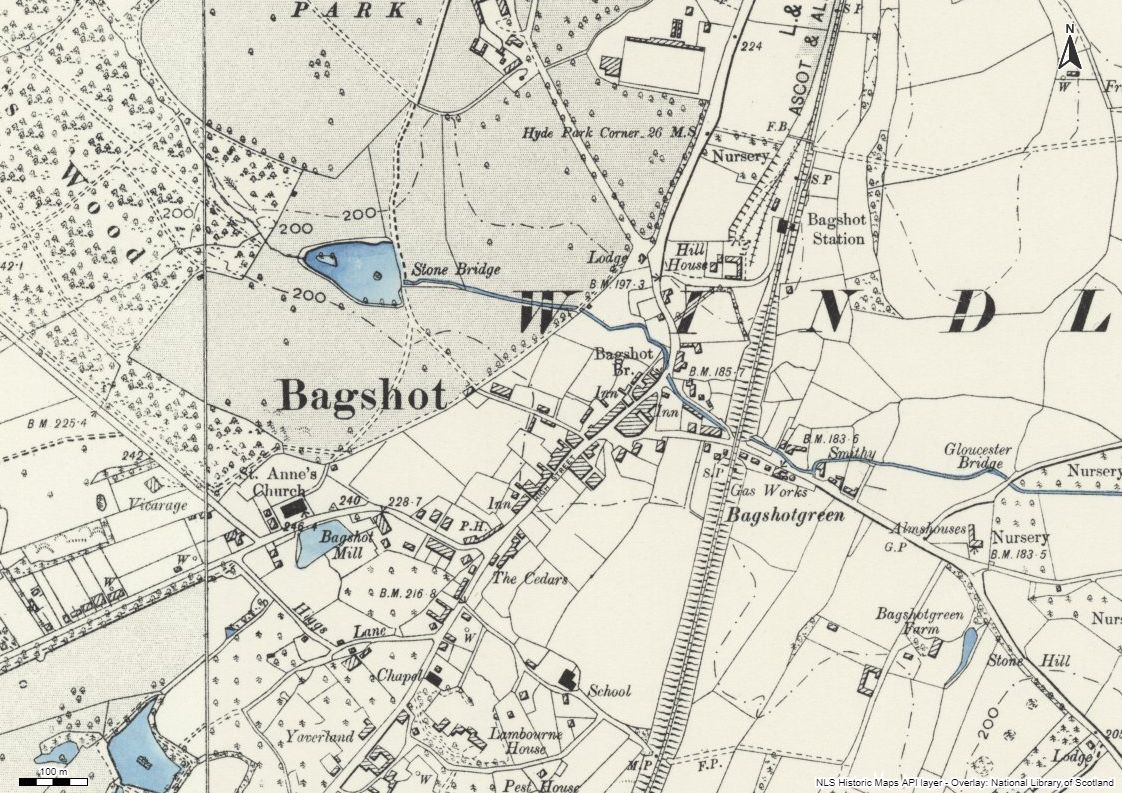
Attempted murder on the Waterloo express? : 1971 : Bagshot railway station

 Kapow! There was an explosion. Before I even grasped what had just happened, I could see I was covered with shards of glass. What was that noise? The train window I was sat next to had suddenly vanished and was in pieces on me and the seat. Luckily, I had not been looking towards the window at the time, otherwise my face would have been injured. Luckily, because it was winter, I was wearing an army surplus hat with furry earflaps that had protected my head and ears. Luckily, I was wearing a coat over my school blazer, gloves and long trousers that had shielded me, these winter woollies necessary because trains’ heating systems rarely functioned adequately.

I caught the ten-past-eight number 28 train every day for seven years from Camberley station to my school half-an-hour away in Egham. It was part of a commuter route propelling workers on the one-hour journey into London’s busy Waterloo terminus. Travelling to school this way felt like stepping into Narnia through the wardrobe door of our suburban British Rail station. Journeys were populated by strange characters not present in my normal day-to-day home life. The station platform was awash with bowler-hatted, suited gentlemen carrying leather briefcases and rolled-up umbrellas. Women were a rare sight. Humourless station staff in uniforms shouted announcements about delays in the tone of army drill sergeants. Bumptious Terry-Thomas ticket inspectors walked through train carriages, looking down their noses at our thick green cardboard season tickets as if we were interlopers on their Orient Express.

At least the trains on our line were relatively modern electric rolling stock. As a small child, I recall standing at the top of the open footbridge over Camberley station, looking down at the signal box beside the level crossing and feeling clouds of smoke envelope me from a steam train passing underneath. Or was that a ‘Railway Children’-inspired false memory, acquired from reminiscences by my grandfather who had worked unloading timber for local building firm ‘Dolton, Bournes & Dolton’ in the goods yard beside the station? He had been made redundant in the early 1960’s for the yard to be replaced by a new ring road and Camberley ‘bus station’, in reality no more than a line of bus stops and tiny shelters without a waiting room. After my afternoon arrival in Camberley by train to await the hourly 39B (40 minutes past every hour) or two-hourly 34A bus (15 minutes past even hours) for the final two-mile journey home, I would have to walk over to the railway station lobby and sit opposite the ticket window to keep warm and dry.

My schoolfriends and I were the Pevensie children of Camberley, rendezvousing every morning at the very rear of the station’s eastbound platform that could accommodate only four carriages, despite our train normally being eight. When the train driver pulled up close to the signal at the top of the platform, we could just about clamber up to open the first door of the fifth carriage from the platform’s sloping end. Those rear four carriages became our playground because, until the train reached Ascot station’s longer platform, we had that section entirely to ourselves. No other passengers, no train staff. We could be as loud and unruly as we wanted. We would walk down the corridor to sit at the very rear of the train because, eventually alighting at Egham station’s full-length platform, we would be right next to the exit gate.

When the incident happened that morning, the train had slowed down to pull into Bagshot station and was about to cross the Guildford Road viaduct, a massively tall structure of four arches built in 1878. On either side of this bridge carrying dual train tracks were high embankments with steep, near vertical sides. On the north side, below the railway, was a vast tract of land owned by ‘Waterers Nurseries’ since 1829 to grow and sell plants. Before reaching that was Bagshot Infant School, set back from the embankment, on School Lane that ended in a footpath passing under the embankment towards Bagshot Green farm on the south side. At the time, undeveloped land stretched on both sides and (unlike now) the embankment was not bordered by trees.

Could a person have thrown a stone from the north side to make the train window next to me shatter? Unlikely because the embankment on which the train passed was too steep to stand upon. If the culprit had stood further away, below the embankment, a rock could not have reached the height necessary to make contact with the train, nor would it have retained sufficient momentum to smash the window with enough force for it to have not merely cracked, but to have shattered in its entirety.

What kind of projectile could have caused such damage? A powerful gun of some kind could have generated the necessary velocity and momentum for its bullet to shatter the thick glass window. A gunman (or woman?) would have needed practiced skill to aim upwards from the land below the embankment, or possibly to have lain half-way up the embankment adjacent to the footpath (now 'School Lane Field'). In either case, it would have required planning and experience to succeed in such a challenging topography next to the train route. Since only two trains per hour travelled in either direction, this act could not have been a spur-of-the-moment impulse.

Why was the window I had sat beside targeted? As the train decelerated to enter Bagshot station, the rear carriages would have passed at a slower speed, making them an easier moving target than the front ones. Us schoolboys were habitually the only passengers anywhere in those rear four carriages, making my head the one visible sign of on-board life amongst dozens of otherwise empty train windows. That implies that my window must have been purposefully selected as the intended target. It was a dark winter morning and the internal carriage lighting would have made my outline visible from outside the train.

So where did the bullet land? Only one thing was certain: it had not hit me, otherwise I would not be here to tell the tale. Did we look to see if a bullet had passed over my head and become embedded in the carriage’s structure? No. In that pre-‘CSI’ era, forensic science remained an unknown foreign land. From watching weekly television detective shows, all we understood was that ‘McCloud’ cracked cases by riding his horse down Broadway, ‘Columbo’ used his raincoat and ‘McMillan’ solved crimes by getting into bed with sweatshirt-wearing wife Sally. In the aftermath, I had not even deduced that I had likely been targeted by somebody shooting a gun. That is how unworldly I must have been, though I had always enjoyed the pellet-gun target shooting stall at the fair's bi-annual visits to Camberley Recreation Ground.

So how DID I react to this dramatic event? Did I scream? Cry? Sob uncontrollably? No, I simply stood up, brushed off the glass fragments that had covered me, and our little group moved to an adjoining carriage where the breeze through the vacant window would not make us feel colder. Even had we wanted to, there was nothing we could have done immediately. There were no train staff in those rear carriages and, once the train stopped in Bagshot station, its platform was too short to get out. Only once we reached Ascot was the platform long enough to deboard. So, did we? No, because if we had raised the alarm, we realised the fickle finger of fate might have pointed to us bunch of schoolboys for having broken the window. Which British Rail jobsworth would have believed our story that someone laying on a grassy knoll in Bagshot must have targeted me for assassination?

Leaving the train at Egham twenty-five minutes later, we could see the void where the window had exploded in front of our eyes. Nobody else seemed to have noticed the gaping hole or had bothered to halt the train to investigate. If they had, we might have arrived late for school that day. That would have been a fate worse than death. We had already brushed aside the incident and were more concerned with the school day ahead of us. Once I returned home that evening, I did not even bother mentioning to my parents what had happened. Only years later would I realise what a close call I had experienced that winter morning at the age of thirteen.

For us kids, trekking from one end of Surrey to the other every weekday on public transport, strange events would occur regularly in this otherworld. Our trains were sometimes cancelled, or rerouted through stations that were unknown to us, or suspended when someone jumped to their death off the footbridge at Egham station. In the latter case, some of us would watch morbidly for the arrival of emergency services whose crew had to scoop up the person’s bloodied remains spread along the tracks by a speeding train. Our unspoken attitude was: almost anything could happen on our way to and from school … and often did. It was a daily expedition into a world beyond ours, populated by weird adults to whom we appeared to be invisible.

Once a year, during ‘Royal Ascot’ week in June, our train would fill with bizarrely overdressed racegoers with strange toff accents and extremely loud voices who carried bottles of alcohol, swayed precariously and occasionally were sick on the carriage floor. They were much worse behaved than we had ever been, their conversations often ribald and filled with profanities. Did anyone chastise them, force them off the train or tell them to act respectfully in front of us children? Not at all! They did precisely what the upper classes are wont to do with their own children: they ignored us totally and appeared completely unembarrassed by their own behaviours.

I recalled the Bagshot train incident when, half a century later, I went for a run through rural France on a bright summer morning. There was no traffic and no visible human activity as I ran down the middle of a tarmacked road flanked on both sides by flat agricultural land. The only noise was birdsong until … a high velocity bullet whizzed above my head from left to right. I stopped running, turned in the direction from which it had come and shouted profanities (in English) at the top of my voice. Without my glasses, I was unable to see far enough into the distance to spot the culprit. This was no accident. I could not have been mistaken by a hunter for an animal. I was clearly visible on a ‘departmental’ road, not in the middle of woodland. But I had been the only object moving in this static landscape and that seemed sufficient to unwittingly make me a target.

If I were superstitious, I might be worried about ‘third time lucky’.

23 April 2024

Walking on the Chinese glass ceiling : 2004 : FM 102 Radio, Women’s Media Centre of Cambodia

 I was standing over the motionless body of my line manager. He was dead to the world, naked under the sheet on his bed. Neither my arrival in his studio apartment through its wide-open front door, nor the chatter of little ‘street boys’ passing up and down the building’s internal staircase, nor the morning sunshine streaming through the open windows, nor the noise of rush hour traffic on the road below seemed to have stirred him. Should I call out? Should I nudge him? Since the limit of my responsibilities to the BBC had already been sorely tested by a recent health & safety ‘issue’ [see blog], I decided that playing butler to my boss would stretch my patience one step too far. I turned around, leaving him asleep, walked out and descended the stairs to rejoin the driver waiting out front in the BBC SUV.

It was the ‘big day’ in March when my trainees were to interview candidates for two radio presenter jobs. Charles ‘Chas’ Hamilton had asked to attend too, so I had arranged a detour at eight o’clock to pick him up en route from my hotel to the radio station. This was unusual because, to date, he had demonstrated scant interest in my 28 hours per week of sessions training teams at two Phnom Penh radio stations in production skills, apparently preferring to remain at his desk in the air-conditioned, open-plan BBC office. On my arrival in Cambodia, rather than having furnished a training plan or schedule, Hamilton had invited me for an evening meal in his apartment, bending my ear with gossip about the BBC World Service Trust’s recently arrived Canadian manager [see blog]. Now I was having to spend what remained of my seven-day working week determining which skills I needed to demonstrate to my teams and how to instruct them when I understood not one word of Khmer. 

Hamilton was oblivious to the supreme irony of my bedside presence that morning. Before departing London, BBC management had confided that, only after having signed contracts in December 2003 to supply radio training to two Cambodian stations, had it understood that its prior internal appointee to head the country’s radio projects had no experience producing live radio programmes. Having been hurriedly headhunted as a result of my international track record in radio production and presentation during three decades, my latest mission was necessary solely to bail out a consequence of the Corporation’s arcane appointment system. Meanwhile, in spite of my radio experience, my own applications over two decades for 43 BBC vacancies had resulted in thirteen interviews but not a single job offer.

Although the BBC contract required me primarily to train in radio production, it quickly became evident that, in order for my young but enthusiastic trainees to appoint inexperienced presenters for the station’s new youth phone-in programme, I needed to teach them how to word a job vacancy advertisement, shortlist applicants, interview candidates and take personnel decisions. They were fortunate that, after a decade assisting in my father’s self-employed architectural business [see blog], I had taken my first management post in 1978, hiring and firing people since then and managing teams of more than fifty. In Cambodia, my role became necessarily upgraded to informal ‘management consultant’ despite having had to accept a BBC freelance pay rate lower than the mediocre job at Ofcom from which I had just resigned in the UK [see blog] … and undoubtedly lower than Hamilton’s pensioned salary as head of radio.

On arrival at the Women’s Media Centre that morning, I found my trainees already assembled in the first-floor radio studio to commence job interviews. I waited in the downstairs lobby to greet the candidates (a bow accompanying ‘hello’ the limit of my Khmer communication skills) and usher them upstairs. However, as Hamilton had yet to arrive, the schedule soon started to run over and resulted in successive applicants seated together in the reception area, a situation I had hoped to avoid. Eventually appearing apologetically an hour late, Hamilton would never be told about that morning’s ‘sleeping beauty’ encounter. It was more important to proceed with the tasks at hand.

During previous weeks’ sessions, the trainees had agreed upon three candidate tasks: an interview by the production team with a prepared list of questions allocated to each member; a script I had written and had translated, to be read into a studio microphone for recording; and a faked phone conversation recorded with a production member pretending to be a caller, to test each potential presenter’s spontaneity and improvisation skills. None of the candidates had prior radio experience, which it why it was imperative to identify ‘potential’ rather than ‘accomplishment’. The planned radio show was destined to become Cambodia’s first live youth phone-in, for which we needed one male and one female presenter.

Having completed the interview round, we broke for the mandatory two-hour lunch, me and Hamilton returning to the BBC office by car. I shared lunch with local staff at the kitchen table [see blog], while Hamilton took his usual sojourn with the ex-pat employees to a local restaurant. Afterwards, he did not accompany my return to the radio station for the afternoon session in which my trainees discussed and contrasted the candidates’ performances, assisted by BBC translator Keo Sothearith. I was incredibly impressed by the professionalism with which they ranked the candidates against criteria we had previously decided and then unanimously agreed upon the most suitable pair of applicants.

I was pleased that the whole interview process had been done and dusted so competently and quickly. However, just as I was ready to pat myself on the metaphorical back, a passionate conversation broke out amongst my trainees that the translator seemed reluctant to explain in English. I had to press him repeatedly to tell me what new issue had arisen, since there had been undivided agreement only a few minutes earlier.

“They say it is not possible to employ the woman because she is Chinese,” he explained embarrassedly. “They agree she is the most competent … but the job has to be given to a Khmer woman.”

I was shocked. Clarification was necessary for me to understand this issue. Though I could not discern the distinction, I was told the woman was ethnically Chinese (0.6% of Cambodia’s population) though not a recent immigrant, apparently speaking Khmer perfectly. Wikipedia explains:

“Most Chinese are descended from 19th–20th-century settlers who came in search of trade and commerce opportunities during the time of the French protectorate.”

I had read about ethnic tensions in Cambodia, but primarily involving neighbouring Thailand with which there had long been territorial disputes. In January 2003, following an alleged remark by Thai actress Suwanna Konying that Cambodia’s Angkor Wat temple actually belonged to Thailand, a mob in Phnom Penh had burnt down the Thai embassy and attacked Thai businesses, forcing the evacuation by military aircraft of 400 Thai citizens to their homeland. I had recently passed Thailand’s newly opened replacement embassy in Phnom Penh, surrounded by high walls for improved security.

A 2021 academic paper reported:

“Although anti-Chinese riots are rare in Cambodia, the ethnic Chinese in Cambodia during the Khmer Rouge era experienced some of the most severe repression in the world. The situation had improved by the 1990s, following the Hun Sen government’s abolishment of discriminatory policies towards them.”

The Minority Rights Group noted:

“After 1990, [the Chinese] were allowed to celebrate Chinese festivals and religious practices, then to re-establish Chinese associations and conduct business activities. They subsequently started operating their own schools…”

For the next hour, I felt compelled to argue that it was morally wrong to discriminate against a job applicant purely on the grounds of their ethnicity. It was essential to appoint the best candidate for the job. I told my trainees that the BBC would never countenance such behaviour and, since the BBC was funding their training, it was essential to follow guidelines set out within the BBC editorial handbook (a copy of which I usefully brandished from my briefcase). The trainees had already written a sign that said ‘BBC office’ (in Khmer) on their production room within the radio station, even though they were not BBC employees (as neither was freelance me).

However, I was internally conflicted by my own argument. As a 43-time applicant to the BBC who had been rejected 43 times, I was well aware from personal experience that discrimination was alive and well and living inside the Corporation. Following one of my post-interview rejections at the end of a three-month wait, I had phoned the BBC to ask precisely why I had been rejected yet again and was informed that it would be necessary for me to prove to interviewers that I was “one of us”. The unspoken implication was that I could not join the BBC ‘club’ unless either I was posh, spoke a certain way, had attended private schools or been educated at Oxford or Cambridge. Perhaps I needed a relative who was already employed there. None of the above qualified me.

Even BBC director general Greg Dyke had commented in 2001:

"I think the BBC is hideously white. […] The figures we have at the moment suggest that quite a lot of people from ethnic backgrounds that we do attract to the BBC leave. Maybe they don't feel at home, maybe they don't feel welcome."

Though I had the advantage of being white, it was evident that the BBC discriminated on multiple levels. During the decades since my love of radio had blossomed at primary school, my ambition had always been to work in BBC radio. Apart from my current freelance contract, dispatched to the opposite side of the world due to the Corporation’s ineptitude, my dream was never to be realised.

In the end, I had to give up arguing with my trainees. Cambodia was not my country. I could not pretend to understand its culture or heritage. Its history was turbulent. The people’s identity was complex. I gave in to their desire to appoint the second-best female candidate for the job. I hated myself for giving in. I had been on the receiving end of discrimination on too many occasions over too long a period in several countries. But I had lost the argument. I returned to the BBC office with the names of the two presenters whom the team had chosen. Yes, I confirmed, they were the best candidates (cringe). Both quickly became astoundingly competent radio presenters.

Later that month, Charles Hamilton arrived in our Phnom Penh office one morning and explained that he had lost a BBC laptop computer on the journey from home. It would need to be replaced. Within the hour, the number of laptops he said he had lost that day had increased to two. His comments, combined with the memory of my early morning visit to his apartment, made me contemplate that the BBC staff induction programme should be appended with an additional topic: ‘How to close and lock the front door of your accommodation’.

During the decade following my extended mission in Cambodia, I applied for a further twenty BBC job vacancies and was rejected for all.

16 April 2024

The day the (reggae) music died : 1981 : Bob Marley, Linton Kwesi Johnson, Matumbi

 “Bob Marley has died!” I exclaimed. Having switched on the car radio before starting the engine, one of Marley’s songs was playing on John Peel’s ‘BBC Radio One’ ten-to-midnight show. I knew immediately what that meant. Peel was a long-time reggae fan, though I had not heard him play a Marley track for years. There was no need to await Peel’s voice announcing the sad news. I had read that Marley was ill but had not understood the terminal gravity of his health.

Peterlee town centre was dark and desolate at that late hour. I had walked to my little Datsun car across a dark, empty car park adjacent to the office block of Peterlee Development Corporation, accompanied by my girlfriend who was employed there on a one-year government job creation scheme. We had attended a poetry reading organised by Peterlee Community Arts in the building, an event she had learnt of from her marketing work. It was my first poetry reading. Only around a dozen of us were present, everyone else at least twice our age. But what we heard was no ordinary poetry.


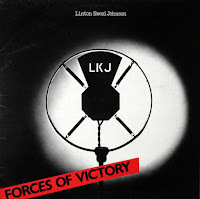
Linton Kwesi Johnson had coined his work ‘dub poetry’ in 1976 and already published three anthologies and four vinyl albums, voicing his experiences as a Jamaican whose parents had migrated to Britain in 1962. Peterlee new town seemed an unlikely venue for a ‘dub poet’, a deprived coal mining region with no discernible black population, but working class Tyneside poet Keith Armstrong had organised this event as part of his community work there to foster residents’ creative writing. Johnson read some of his excellent poems and answered the group’s polite questions. It was an intimate, quiet evening of reflection.

Due to my enthusiasm for reggae, I was familiar with Johnson’s record albums as one strand of the outpouring of diverse innovation that Britain’s homegrown reggae artists had been pioneering since the early 1970’s. Alongside ‘dub poetry’ (poems set to reggae), there was ‘lovers rock’ (soulful reggae with love themes sung mostly by teenage girls), UK ‘roots reggae’ (documenting the Black British experience) and a distinctly British version of ‘dub’ (radical mixes using studio effects). One name that was playing a significant writing/producing role spanning all these sub-genres was Dennis Bovell, alias ‘Blackbeard’, of the British group ‘Matumbi’. His monumental contributions to British reggae are too often understated.

Until then, there had been plenty of reggae produced in British studios and released by UK record labels such as ‘Melodisc’, ‘Pama’ and ‘Trojan’, but most efforts had been either a rather clunky imitation of Jamaican reggae (for example, Millie’s 1964 UK hit ‘My Boy Lollipop’ [Fontana TE 17425]) or performed by ‘dinner & dance’-style UK groups such as ‘The Marvels’. I admit to having neglected Matumbi upon hearing their initial 1973 releases, cover versions of ‘Kool & The Gang’s ‘Funky Stuff’ [Horse HOSS 39] and ‘Hot Chocolate’s ‘Brother Louie' [GG 4540]. It was not until their 1976 song ‘After Tonight’ [Safari SF 1112] and the self-released 12-inch single ‘Music In The Air’/’Guide Us’ [Matumbi Music Corp MA 0004] that my interest was piqued as a result of the group’s creative ability to seamlessly bridge the ‘lovers rock’, ‘roots reggae’ and ‘dub’ styles. Both sides of the latter disc remain one of my favourite UK reggae recordings (sadly, these particular mixes have not been reissued).

In 1978, Matumbi performed at Dunelm House and, after attending the gig, it was my responsibility as deputy president of Durham Students’ Union to sit in my office with the band, counting out the cash to pay their contracted fee. They were on tour to promote their first album ‘Seven Seals’ self-produced for multinational ‘EMI Records’ [Harvest SHSP 4090]. It included new mixes of the aforementioned 12-inch single plus their theme for BBC television drama ‘Empire Road’, the first UK series to be written, acted and directed predominantly by black artists. Sensing my interest in reggae, the group invited me to join them for an after-gig chat, so I drove to their motel several miles down South Road and we sat in its bar for a thoroughly enjoyable few hours discussing music.


As part of my manic obsession with the nascent ‘dub’ reggae genre, I had bought albums between 1976 and 1978 credited to ‘4th Street Orchestra’ entitled ‘Ah Who Seh? Go Deh!’ [Rama RM 001], ‘Leggo! Ah Fi We Dis’ [Rama RM 002], ‘Yuh Learn!’ [Rama RMLP 006] and ‘Scientific Higher Ranking Dubb’ [sic, Rama RM 004]. They were sold in blank white sleeves with handwritten marker-pen titles and red, gold and green record labels to make them look similar to Jamaican-pressed dub albums of that era. However, it was self-evident that most tracks were dub mixes of existing UK recordings by Matumbi backing various performers, engineered and produced by Bovell for licensing to small UK labels. I also had bought and worn two of their little lapel badges, one inscribed ‘AH WHO SEH?’, the other ‘GO DEH!’, from a London record stall. During our conversation in the bar, Bovell expressed surprise that I owned these limited-pressing albums, and even more surprise that I recognised Matumbi as behind them. They remain prime examples of UK dub.


It was Bovell who had produced Linton Kwesi Johnson’s albums, and it was Matumbi who had provided the music. Alongside a young generation of British roots reggae bands such as ‘Aswad’ and ‘Steel Pulse’, Johnson’s poetry similarly tackled contemporary social and political issues with direct, straightforward commentaries. It was a new style of British reggae, an echo of recordings by American collective ‘The Last Poets’ whose conscious poems/raps had been set to music (sometimes by ‘Kool & The Gang’) since 1970, and whose couplets had occasionally been integrated into recordings by Jamaican DJ ‘Big Youth’ in the 1970’s. Of course, MC’s (‘Masters of Ceremonies’) had been talking over (‘toasting’) records at ‘dances’ in Jamaica since the 1960’s, proof that the evolution of ‘rap’ owed as much to the island’s sound system culture as it did to 1970’s New York house parties.


In Peterlee, Johnson read his poems to the audience without music, his usual performance style. It was fascinating to hear his words without any accompaniment. For me, the dub version of Johnson’s shocking 1979 poem ‘Sonny’s Lettah’ (retitled ‘Iron Bar Dub’ on ‘LKJ In Dub’ [Island ILPS 9650]) is brilliantly effective precisely when the music is mixed out to leave his line “Me couldn’t stand up there and do nothin’” hanging in silence. Sadly, memories of Johnson’s performance that night were suddenly eclipsed by the news of Marley’s death. I drove the eight miles to our Sherburn Village home in stunned silence. I was sad and shocked. It was only then that his sudden loss made me realise how much Marley had meant to me.

Despite having listened to reggae since the late 1960’s, I admittedly arrived late to Bob Marley’s music. Though I had heard many of his singles previously, it was not until his 1974 album ‘Natty Dread’ [Island ILPS 9281] that I understood his genius. At that time, I was feeling under a lot of personal pressure which I tried to relieve by listening to this record every day for the next two years. At home, my father had run off, leaving our family in grave financial difficulties [see blog]. At school, I was struggling with its inflexibility, not permitted to take two mathematics A-levels, not allowed to mix arts and science A-levels, not encouraged to apply to Cambridge University [see blog]. Back in my first year at that school, I had been awarded three school prizes. However, once my parents separated and then divorced, I was never given a further prize and the headmaster’s comments in my termly school reports became strangely negative, regardless of my results.

Feeling increasingly like an unwanted ‘outsider’ at grammar school, Marley’s lyrics connected with me and helped keep my head above encroaching waters rising in both my home and school lives. I knew I was struggling and needed encouragement from some source, any source, to continue. For me, that came from Marley’s music. While my classmates were mostly listening to ‘progressive rock’ albums with zany song titles (such as Genesis’ ‘I Know What I Like In Your Wardrobe’), I was absorbed by reggae and soul music that spoke about the daily struggle to merely survive the tribulations of life. After ‘Natty Dread’, I rushed out to buy every new Marley release.

During the months following Marley’s death, I was absorbed by sadness. It felt like the ‘final straw’. The previous year, I had landed a ‘dream job’, my first permanent employment, overhauling the music playlist for 'Metro Radio'. Then, after successfully turning around that station’s fortunes, I had unexpectedly been made redundant [see blog]. I was now unemployed and my every job application had been rejected. That experience had followed four years at Durham University which had turned out to be a wholly inappropriate choice as it was colonised by 90%+ of students having arrived from private schools funded by posh families [see blog]. I felt like ‘a fish out of water’. I loved studying, I loved learning, I desired a fulfilling academic life at university … but it had proven nigh on impossible at Durham.

“This is what I need
This is where I want to be
But I know that this will never be mine”

Months later, my girlfriend awoke one morning and told me matter-of-factly that she was going to move out and live alone. She offered no explanation. We had neither disagreed nor argued. We had been sharing a room for three years, initially as students in a horribly austere miners’ cottage in Meadowfield whose rooms had no electrical sockets, requiring cables to be run from each room’s centre ceiling light-fitment. Now we were in a better rented cottage in Sherburn, though it had no phone, no gas and no television. Her bombshell announcement could not have come at a more vulnerable time for me. I had already felt rejected by most of my university peers and then by my first employer. At school previously, I had passed the Cambridge University entrance exam but had been rejected by every college [see blog]. At Durham, I had stood for election as editor of the student newspaper, but its posh incumbent had recommended a rival with less journalistic experience [see blog]. A decade earlier, my father had deserted me and his family [see blog], and now the person I loved the most had done the same.

I just could not seem to navigate a successful path amidst the world of middle- and upper-class contemporaries into which I had been unwittingly thrown, first at grammar school, then at Durham, and now in my personal life too. Most of those years, I felt that circumstances had forced me to focus on nothing more than survival, whilst my privileged contemporaries seemed able to pursue and fulfil their ambitions with considerable ease. I had to remind myself that I had been born in a council house and had attended state schools, initially on a council estate. My girlfriend had not. I had imagined such differences mattered not in modern Britain. I had believed that any ‘socio-economic’ gap between us could be bridged by a mutual feeling called ‘love’. I now began to wonder if I had been mistaken. I felt very much marooned and alone. My twenty-three-year-old life was in tatters.

Fast forward to 1984. I had still not secured a further job in radio. I was invited to Liverpool for a weekend stay in my former girlfriend’s flat. We visited the cathedral and attended a performance at the Everyman Theatre. It felt awkward. I never saw her again. It had taken me months to get over the impact of Bob Marley’s death. It took me considerably longer to get over my girlfriend ending our relationship. 

“That clumsy goodbye kiss could fool me
But looking back over my shoulder
You’re happy without me”

7 April 2024

Stoking the star-maker machinery behind the popular song : 1980 : Kate Bush, EMI Records & Metro Radio

 “I’m SO sorry,” I grovelled to the petite musician on whose foot I had just accidentally trodden. We were stood side-by-side in the record library – my ‘office’ [see blog] – of local commercial station ‘Metro Radio’ in Newcastle. Kate Bush was kindly autographing several copies of the new album she was visiting to promote, which were about to be awarded as competition prizes to listeners. She had just been interviewed live on-air by one of the station’s daytime presenters and was soon to be whisked away by car to visit yet another local station somewhere across the country.


I had been basking in a brief moment of hit-picking glory, feted by Bush’s record company ‘EMI Records’ for having simultaneously added two singles by singer Sheena Easton (‘Modern Girl’ and ‘9 to 5’) to the station’s ‘current hits’ playlist, the shortest list of any UK station following my radical overhaul of its music policy, guaranteeing substantial airplay for the label’s newest rising star. Relationships with record companies were always a rollercoaster ride. Months later, after I had refused to add Queen’s ‘Flash’ single to the playlist, on the grounds that it sounded more an advertising jingle than a proper song, EMI declined to offer further artist interviews and stopped supplying the station with its new releases altogether (requiring me to drive to the nearest record shop with a weekly shopping list). Bribery, blackmail and boycotts were widespread music industry practices.


After having first heard Bush’s debut single ‘Wuthering Heights’ on John Peel’s evening ‘BBC Radio One’ show two years previously, I had loved her 1978 debut album ‘The Kick Inside’ for its clever arrangements of smart songs with unexpectedly frank subject matter. I had considered the same year’s follow-up ‘Lionheart’ rather insubstantial comparatively and over-theatrical. After a two-year wait, the next album ‘Never For Ever’ was a return to form with a more diverse song list and extensive use of brand-new Fairlight sampler technology invented in 1979. Bush had visited ‘Metro Radio’ to promote this album’s release in September, after three singles extracted from it (‘Breathing’, ‘Babooshka’ and ‘Army Dreamers’) had already reached 16, 5 and 16 respectively in the UK charts.


After a further two-year wait, fourth album ‘The Dreaming’ was a revelation with songs referencing even more startling subject matter, produced in a dense soundscape that was the aural equivalent of Brion Gysin’s and William S Burroughs’ ‘cut-up’ techniques, interlacing samples, sound effects and dialogue from the Fairlight (think 1973’s analogue ‘The Dark Side Of The Moon’ on digital steroids). I have always been intrigued by its track ‘Suspended in Gaffa’ as an incredibly outspoken criticism of EMI Records on an album released by … EMI.

This was by no means the first occasion that musicians had criticised their record company within their recordings. During the 1970’s, I recall several reggae artists obliquely criticising Jamaican producer Joe Gibbs for his sharp ‘business practices’ (eventually Gibbs’ business was bankrupted after prosecution in the US for stealing songwriter royalties). Closer to home, reggae DJ ‘Prince Far I’ criticised British company ‘Charisma Records’ explicitly in his track ‘Charisma’ (credited to collective ‘Singers & Players’) after his 1981 deal to release three albums (‘Showcase In A Suitcase’, ‘Sign Of The Star’ and ‘Livity’) on its ‘PRE’ label had been soured by negligible sales. Part of its lyrics were:

“I see no idea in your place, Charisma. […] Wipe them out, Jah!”

Prince Far I also made a recording to criticise Britain’s ‘Virgin Records’ which had released three of his albums (‘Message From The King’, ‘Long Life’ and ‘Cry Tuff Dub Encounter Part 2’ in 1978-1979 on its ‘Frontline’ label), but which had then rejected a further finished album he had delivered. In a track inevitably entitled ‘Virgin’, he rapped:

“You call yourself [Richard, Virgin co-founder] Branson but I know that Branson is a pickle with no place on my plate. You call yourself [Simon, co-founder] Draper but I know draper is known to cover human bodies. You see ‘Frontline’, I see barbed wire. Opportunity to make big money. Irie, Jumbo [Vanreren, Frontline A&R manager]. I won’t forget you take the master tape and hang it up on your shelf. Music has no place in a gallery.”

This ‘lost’ album was finally released in 1998 [Pressure Sounds PSLP18], long after Prince Far I (and his wife) had been tragically murdered in Jamaica in a 1983 house break-in. In 1992, Virgin Records was acquired for a reported £560m by EMI Records which, returning to our story, had signed sixteen-year-old Kate Bush in 1975 to a four-year contract after hearing her three-song demo tape, paying a £3,000 advance. In 1976, Bush created her own company, Novercia Limited (Latin for ‘she who is new’), that she and her family alone controlled in order to manage her career and maintain the copyrights in her recordings and songs.

From the initial contract’s expiry in July 1979, Bush could finally renegotiate a replacement EMI contract which would allow Novercia to retain the copyright (instead of EMI) and henceforth lease her recordings to EMI for release. At that time, it was unusual for such a young artist to insist upon taking control of their career from their record company, particularly when it was as globally huge as EMI. Bush no longer wanted to be contractually required to do promotional tours, such as her visit to Metro Radio, and she was insisting upon complete artistic control. I imagine that these negotiations between opposing lawyers sat around expansive tables in bare conference rooms on an upper floor of EMI headquarters in Manchester Square (immortalised on The Beatles’ 1963 debut album cover photo) must have been tense and lengthy, particularly for twenty-one-year-old Bush.

Not only would these contractual back-and-forth’s have delayed the release of new recordings, but the inordinate time they must have consumed would have eaten into Bush’s ability to compose and record. During this period, Bush’s musical creativity would frustratingly have been put on hold by the ‘red tape’ of legal negotiations, alluded to in the song’s title (‘gaffa’ being a reference to ‘gaffer tape’, the all-important ‘WD40’-like fix-all of musicians in studios and on tour). At the same time, EMI was demanding to hear proof of Bush’s new material to ensure it was sufficiently commercially marketable to guarantee another 'hit' single. Her song ‘Suspended in Gaffa’ starts:

“They’ve told us that, unless we can prove that we’re doing it, we can’t have it all. EMI want it all.”

Except that the ‘E’ from ‘EMI’ must have been removed from the mix, either upon EMI lawyers’ insistence or upon the recommendation of Bush’s legal team. Only once you re-imagine that unheard ‘E’ does the song make perfect sense in terms of record label/artist contractual disputes. The role of Bush’s lawyer in the negotiations is referred to:

“He’s gonna wrangle a way to get out of it [the initial EMI contract that had included renewal options].”

The impact of the tedious negotiations upon Bush’s creativity and the impatient EMI’s demands to hear her new songs are referenced in the chorus:

“Suddenly my feet are feet of mud. It all goes slo-mo [slow motion]. I don’t know why I’m crying. Am I suspended in gaffa [caught up in ‘red tape’]? Not ‘til I’m ready for you [EMI] can you have it all [my new recordings].”

EMI (then) managing director Bob Mercer later confirmed that Bush had burst into tears during their business meetings. The record company’s patronising response to her demands is referred to in the lines:

“… that girl in the mirror. Between you and me, she don’t stand a chance of getting anywhere at all. Not anywhere. No, not a thing. She can't have it all.”

If Bush had not successfully agreed a new contract with EMI, it might have been threatening that she would be jeopardising her future success. I had witnessed the blackmail tactics of EMI in my job at Metro Radio. The significance of concluding these negotiations successfully was imperative for Bush, and she noted the impact it would have on her finally taking total control of her destiny:

“Mother, where are the angels? I’m scared of the changes.” (Bush’s mother appears briefly in the video, comforting her.)

The key to understanding the song’s theme is to recognise that the most tell-tale line “EMI want it all” was sung eleven times. Record companies almost inevitably want to have their cake and eat it simultaneously, regardless of the fallout for their own artists. Why else would EMI have refused to send its new record releases to Metro Radio if it was not prepared to cut off its nose to spite its face?

If all this speculation sounds farfetched, you have to ask why EMI was happy to license ‘Suspended in Gaffa’ to its partners for release as a single in European countries, but did not similarly release the song as a single in the UK? Would its London executives want to hear a track played on the radio every day that they knew obliquely criticised their own business strategies? As a result, this excellent song languished as a little played album track in Bush’s homeland. Perhaps that was the company men’s notion of ‘revenge’.

At the time of its release in 1982, I was barely watching television so had missed the video for this song, written and directed by Bush herself. Viewing it more than forty years later, I hoped to find hidden references to ‘EMI’ in the visuals. It looks as if Bush (“wearing a designer straightjacket,” interjected my wife) has been kidnapped and locked in a boarded-up wooden shed alongside huge chains and large wheels of (the music?) industry. Outside a huge (legal?) storm is blowing, from which she cannot escape, despite kicking up dust but running nowhere. Is that what it felt like to be under contract to EMI?  Bush was always far too subtle to provide explicit messaging that would explain her songs. Perhaps I am missing something she communicates via her animated hand movements? In one brief section of the video, wrists apparently bound in gaffer tape, Bush tumbles head-over-heals through the vacuum of galactic space, maybe a visualisation of her feelings in the midst of lengthy legal wranglings. Prior to that, the video portrays her 'head in the clouds’, perhaps how she had sensed her initial teenage success with EMI.

As I discovered from my own job at Metro Radio, EMI want it all. Perhaps that is why I felt I understood Bush’s message within ‘Suspended in Gaffa’ from my first listen. It remains a truly remarkable song.