Showing posts with label Ofcom. Show all posts

7 December 2025

Letter from Cambodia - munching mince pies by the Mekong : 2004 : BBC World Service Trust, Phnom Penh

 Dear John

Since we last spoke before Xmas, I have made a move …. to Phnom Penh. I am writing this sitting on a hotel balcony overlooking the Mekong River. How did this happen? Nearly two years ago, when I was living in Brighton, I was interviewed by the BBC World Service Trust for a job managing their projects in Africa and Asia. I didn’t get the job but they said they would get back to me if something suitable came up. I heard nothing more until the week before Xmas, when a message was left on my voicemail asking me to call the BBC office about a possible consultancy job in the New Year. Apparently, they had contacted Owen [Leach, former colleague at Star TV India and Metromedia International Inc.] to track down where I was now, he had told them about my job at the Radio Authority, which they found was closed, so they tried Ofcom. They wanted me to go to Cambodia as early as possible in 2004 to support their project there that was partnered with three Phnom Penh radio stations. Could I spare two or three months? [see blog]

Only a week earlier, my line manager at Ofcom (who too transferred from the Radio Authority) had told me that I would have no work to do during the first quarter of the year and that “there is nothing for you to contribute to” with regard to Ofcom’s strategic review of the whole radio licensing process. So I asked if I could take unpaid leave to do the BBC work. My request was refused. I asked if I could take paid leave to do the work, since I had eight weeks of holiday accrued that had to be taken by year-end 2004. My request was refused. Suddenly, I was told that there were essential tasks that I would be needed to work upon during the first quarter of the year. I was also told that, when the radio licensing regime restarted in the second quarter, it would be essential for me to be there. So when could I take the vacation to which I was entitled? I received no answer. I thought long and hard about the options open to me. I had applied for all sorts of jobs internally with Ofcom that were more suited to my skills (in departments dealing with audience research, market intelligence, policy & strategy), but no one had offered me anything. The prospect of spending at least three months sitting at my desk doing nothing (just like my job at the Radio Authority) whilst the new Ofcom radio licensing strategy was being decided by others did not appeal to me. I had already spent a year doing almost nothing. So I quit. [see blog]

A week later, I was heading for Cambodia. I arrived here on Tuesday of last week without even had a meeting with the BBC World Service in London. They sent me the airline tickets, a contract and a certificate of health insurance. I am here initially for two months, but which is likely to be extended to three months. They are paying for my hotel bill at a very nice, newly built ‘boutique’ hotel owned by two French businessmen. My room is huge. The hotel has wireless internet access and a modern restaurant. They have contracted me as a consultant (their first, so the contract is numbered WST 001), but the manager in London says that, if the work is successful, I should get further work out of the BBC. He has been very honest and admitted that I am helping them out of a large hole. The project is paid for by the UK government Department for International Development (DfID) who want results by their year-end this April before they will renew funding for 2004/5. My job is to produce the required results. The pay isn’t great (£750/week + US$100/week pocket money) which they have admitted, but they say they are eking it out of the existing budget, as a consultant was not budgeted for.

The BBC set up an office here last year (there is no BBC Phnom Penh correspondent) which now employs around 40 people. It is in a beautiful colonial villa next door to the British Embassy. It has everything you could want – drivers, computers, mobile phones, photocopiers, etc and the essential air conditioning. There are several UK staff here – the project manager is an ex-‘Panorama’ filmmaker, the head of radio is an ex-World Service studio manager, the head of TV was executive producer of ‘EastEnders’. I had no briefing before I left as to what I was expected to do here, so I have spent this weekend reading all the BBC documents about the project, and now have a better idea. The BBC is shifting its strategy from simply making the odd programme or series to be broadcast in developing countries towards a more holistic approach of training staff of existing radio stations in developing markets (i.e. Cambodia) to be market leaders. But the BBC doesn’t have any staff who can do that because existing staff are used to having huge BBC resources available to them to achieve even simple objectives. Small-scale cheap commercial radio is simply not their forte. Even a simple phone-in, in BBC terms, is thought to need a staff of at least 5 full-time people for a single weekly show. The BBC has signed contracts with three stations here to deliver a mixture of pre-recorded spots, phone-in shows and management training (combined with hardware purchase) that will make these stations market leaders. There are 18 stations in Phnom Penh. My job is the training. Money is almost no object. DfID has given the BBC £3.3m for 3 years, not only for radio but also for the production of a two episode/week soap for TV. [see blog]

Phnom Penh isn’t as basic as I expected. True, there is no public transport or taxis, but every fifth vehicle is a 4-wheel drive and there are internet cafes on every corner. Although it’s the winter, it is very hot and dusty here, particularly in the middle of the day when the city closes down for a daily two-hour siesta. There are fewer shops than India and no corner convenience stores. I have just found the nearest supermarket to my hotel this morning, which is almost a mile away, but was surprised to find it took credit cards. There are no ATM’s in Cambodia. Everything is denominated here in US dollars as the local currency is worthless. The city is filled with Westerners as there are so many aid projects here of one sort or another. There is a daily English-language newspaper and an English radio station (‘Love FM’), despite the fact that very few Cambodians speak English. All shop signs and road signs are in Khmer and English because of the sheer number of aid workers here. The city is laid out in the Parisian style by the French with wide boulevards (though the traffic travels in both directions on both sides of the street) and vast gardens that stretch down to the river. Lots of Buddhist temples everywhere. Not so much outright poverty as Mumbai, but then Phnom Penh is a small city and there is no apparent rural-to-urban drift. Most people that survived Pol Pot lived in the countryside and stayed there. [see blog]

Anyway, enough of me. Let me know how things are going. I have intermittent wireless internet access at the hotel, and more reliable internet access at the office. If your itinerary passes this end of the world, please drop in. I’m sitting here eating mince pies (made in Australia) that I bought from the supermarket and thinking about ordering a pizza delivery tonight. Sometimes I wonder if I am really in Cambodia at all (although the endless karaoke phone-in shows on all radio stations remind me that I am not somewhere ‘normal’) [see blog]. Our only worry at the moment is that King Sihanouk has left for China to have a serious operation and, if he were not to survive, there is no succession plan in place and the likelihood of a people’s revolution because parliament has never been recalled since the last election. Oh, and the chicken flu that has arrived here Friday from Vietnam and Thailand. Apart from that, things are fine.

Yours, Grant

25 January 2004

23 July 2025

The birth and near death of licensed black music radio in London : 2010 : Choice FM, London

 31 March 1990 was the memorable day when London‘s first licensed [South London community of interest] black music station, ‘Choice 96.9 FM’, arrived on-air. Until then, the availability of black music on legal radio had been limited to a handful of specialist music shows, even though about half of the singles sales chart was filled with black music. The decision by then regulator the Independent Broadcasting Authority [IBA] to license a London black music station was part of a huge government ‘carrot and stick’ campaign to rid the country of pirate radio. On the one hand, new draconian laws had been introduced that made it a criminal offence even to wear a pirate radio tee-shirt or display a pirate radio car sticker. On the other hand, the establishment knew that some kind of olive branch had to be offered to the pirate stations and their large, loyal listenership.

Many pirate stations, having voluntarily closed down in the hope of becoming legitimate, were incensed when the IBA instead selected Choice FM for the new South London FM license. Its backers had no previous experience in the London pirate radio business, but had previously published ‘Root’ magazine for the black community in the 1970’s. Although it was impossible for one station to fill the gap left by the many pirates, Choice FM tried very hard to create a format that combined soul and reggae music with news for South London’s black community, which was precisely what its licence required. The station attracted a growing listenership and it brought a significant new audience to commercial radio that had hitherto been ignored by established stations. With Choice FM, the regulator succeeded in fulfilling two aspects of public broadcasting policy: widening the choice of stations available to the public; and filling gaps in the market for content that only pirate radio had supplied until then.

In 2000, Choice FM won a further licence to cover North London with an additional transmitter. For the first time, the station was now properly audible across the whole capital and had access to more listeners and more potential advertising revenues. Its listening doubled and, at its peak in 2006, Choice FM achieved a 2.8% share, placing it ahead of ‘TalkSport’ and ‘BBC London’ in the capital. Choice FM had no direct competitor in London, although indirectly some of its music had always overlapped ‘KISS FM’ [see blog]. The station’s future looked rosy.

However, the Choice FM shareholders must have realised just how much their little South London station was worth, at a time when commercial radio licences were being acquired at inflated prices. Already, in 1995, Choice FM shareholders had won a second licence in Birmingham, but had then sold the station in 1998 for £6m to the Chrysalis plc group, who turned it into another local outlet for its network dance music station ‘Galaxy FM’. At a stroke, the black community in Birmingham had lost a station that the regulator had awarded to serve them. Black radio in Birmingham was dead. The die was cast.

The then regulator, the Radio Authority, had rubber-stamped this acquisition, stating that it would not operate against the public interest. The Authority requested some token assurances: at least one Afro-Caribbean member on the station’s board; an academy for training young people, especially from the black community, in radio skills; and market research about the impact of the format change on the black community. None of these made any difference to what came out the loudspeaker. Birmingham’s black community was sold down the river.

Changes in UK media ownership rules were on the horizon that would soon allow commercial radio groups to own many more stations within a local market. As a result, in 2001, the UK’s then largest radio group, Capital Radio plc, acquired 19% of Choice FM’s London station for £3.3m with an option to acquire the rest. In 2003, it bought the remaining 81% for £11.7m in shares, valuing the London station at £14.4m. The Choice FM shareholders had cashed in their chips over a five-year period and had generated £21m from three radio licences. What would happen to Choice FM London now?

Graham Bryce, managing director of Capital Radio’s London rock station ‘Xfm’ (which Capital had acquired in 1998 for £12.6m), said then:

"Our vision is to build Choice into London's leading urban music station, becoming the number one choice for young urban Londoners. Longer term, we intend to fully exploit the use of digital technology to build Choice nationally into the UK's leading urban music station and the number one urban music brand."

Capital Radio and subsequent owners seemed to want to turn Choice FM into a station that competed directly with KISS FM (owned by rival EMAP plc). But they never seemed to understand that KISS FM was now a ‘dance/pop’ station, whereas Choice FM had always been firmly rooted in the black music tradition of soul, reggae and R&B. Such semantics seemed to be lost on Choice FM's new owners and on the regulator, but certainly not on Choice FM’s listeners, who had no interest in Kylie Minogue songs.

In 2004, Capital Radio moved Choice FM out of its South London base and into its London headquarters in Leicester Square. The station’s final link with the black community of South London it had been licensed to serve was discarded. In 2005, Capital Radio merged with another radio group, GWR plc, to form GCap Media plc. In March 2008, [offshore] Global Radio Ltd bought GCap Media for £375m [see blog]. In July 2008, Choice FM managing director Ivor Etienne was suddenly made redundant. One of the station’s former founder shareholders commented:

“I’m disappointed that the new management decided to relieve Ivor Etienne so quickly. My concern is that I hope they will be able to keep the station to serve the community that it was originally licensed for.”

However, from this point forwards, it was obvious that new owner Global Radio had no interest in developing Choice FM as one of its key radio brands. In the most recent quarter, the station’s share of listening fell to an all-time low of 1.1% (since its audience has been measured Londonwide). Sadly, the station is now a shadow of its former self, even though it holds the only black music commercial radio licence in London (BBC digital black music station ‘1Xtra’ has failed to dent the London market, with only a 0.3% share).

This week, news emerged from Choice FM that its reggae programmes, which have been broadcast during weekday evenings since the station opened, will be rescheduled to the middle of the night (literally). One of the UK’s foremost reggae DJ's, Daddy Ernie, who has presented on Choice FM since its first day, will be relegated to the graveyard hours when nobody is listening. From 2003, after the Capital Radio takeover, reggae songs have been banished from the 0700 to 1900 daytime shows on Choice FM. Now the specialist shows will be removed from evenings, despite London being a world centre for reggae and having more reggae music shops than Jamaica.

Station owner Global Radio responded to criticism of these changes in ‘The Voice’ newspaper: “Choice [FM] has introduced a summer schedule which sees various changes to the station including the movement of some of our specialist shows.”

Once again, the regulator will roll over obligingly and rubber-stamp these changes. For Global Radio, the endgame must be to transform the standalone Choice FM station into a London outlet for its Galaxy FM network. At present, London-based advertisers and agencies can only listen to Galaxy on DAB or via the internet. A London Galaxy station on FM would bring in more revenue for the brand as a result of more listening hours and its higher profile in the advertising community. It would also provide a direct competitor to KISS FM London (ironic, because Galaxy FM had been launched in 1990 by an established commercial radio group as an out-of-London imitation of successful, London-only KISS FM). Global Radio’s argument to persuade the regulator will probably be that Choice FM’s audience has fallen to uneconomic levels. And whose fault was that?

Already, Global Radio’s website tells us that “Choice FM is also included as part of the Galaxy network” which “consists of evolving mainstream music supported by entertaining and relatable presenters.” And yet, according to Ofcom, Choice FM’s licence is still for “a targeted music, news and information service primarily for listeners of African and Afro-Caribbean origin in the Brixton area but with cross-over appeal to other listeners who appreciate urban contemporary black music.” How can both these assertions be true of a single station?

For the black community in London, and for fans of black music, this will be the final straw. Just as happened in Birmingham, the new owner and the regulator will have collectively sold Choice FM’s listeners down the river. Another station that used to broadcast unique content for a unique audience will have been wilfully destroyed in order to make it almost the same as an existing station, playing almost the same content. We have many commercial radio stations, but less and less diversity in the music they play. Radio regulation has failed us.

For Choice FM, the writing was on the wall in 2003 when Capital Radio bought the station and one (unidentified) former DJ commented:

“Choice [FM] was there for a reason [to be a black music station for black people], but that reason changed [since] 13 years ago. That’s why you’ve got over 30 pirate stations in London. If Choice FM kept to the reason why they started, you wouldn’t need all them stations. But Choice has become a commercial marketplace. They’ve sold the station out and they should just say they’ve sold the station out. What’s wrong with that? They have sold the station that was set up for the black community and they know they’ve done the black community wrong. But they’ve made some money and they’ve sold it. Why not let your listeners know?”

For me personally, as a black music fan and having listened to Daddy Ernie for twenty years, I am much saddened. In the 1970’s and 80’s, I had found little on the radio that interested me musically, so I listened to pirate stations and my own records. During those two decades, I actively campaigned for a wider range of radio stations to be licensed in the UK and, by the 1990’s, I had played a direct role in making that expansion of new radio services happen successfully. Where did it get us? Now, years later, I have gone back to listening mostly to pirate radio and my own records (and internet radio). I am sure I am not the only one.

The radio industry and the regulator seem not to understand one important reason why radio listening and revenues have been declining for most of the last decade. They need to examine how, through their decisions, they have consistently sold down the river their station audiences and the very citizens whom their radio licenses were specifically meant to serve. Listeners vote with their ‘off’ buttons when station owners renege on their licence promises and the regulator lets them. Choice FM is sadly just one example.

In 2006, a lone enlightened Ofcom officer, Robert Thelen-Bartholomew, had asked at a radio conference:

“Is there room to bring the content of illegal stations into the fold? One way or another, whether we like it or not, we have a large population out there listening to illegal radio. Why do they listen? We are trying to find out. But, if you listen to the stations, they are producing slightly different content and output [from licensed stations]. Some of it is very high quality. Some of it is very interesting. So, what options are there for bringing some of that content into mainstream radio?”

Seemingly, none. The last FM commercial radio licence the regulator offered in London was more than a decade ago. Last year, when two small South London FM stations (one licensed for a black music format) were closed by their owner, the regulator unilaterally decided not to re-advertise their commercial radio licences (see my story here). A pirate radio station has not been awarded a commercial radio licence by the regulator for two decades.

Why do pirate radio stations still exist? Because, just as in the 1970’s and 1980’s [see blog], there are huge gaps in the market for radio content that – in spite of BBC radio, commercial radio and their regulators – remain unfilled. It is no coincidence that the share of listening to ‘other’ radio stations (i.e. not BBC radio and not commercial radio) in London is near its all-time high at 3.1%.

Farewell, Choice FM. I knew you well for twenty years.

And, irony of ironies, we are in Black Music Month.

[thanks to Sharleen Anderson]

[Originally published in 2010 at https://grantgoddardradioblog.blogspot.com/2010/06/choice-fm-rip-birth-and-near-death-of.html . Three years subsequently, 'The Guardian' published a remarkably similar, shorter article 'RIP Choice FM' authored by Boya Dee.]

19 February 2024

Mining for radio news in an editorial black hole : 2004-2007 : Paul Boon, The Radio Magazine

 Magazine editors. What do they do? “They create editorial calendars, develop story ideas, manage writers, edit content and manage the production process…” according to Google. Makes perfect sense. Except sometimes…

Journalism started for me in 1976 when I volunteered for student newspaper ‘Palatinate’ and attended regular meetings under editor George Alagiah who managed a team of section editors, discussed ideas for stories and sub-edited our writing efforts [see blog]. Subsequently I contributed articles to many publications, including ‘rpm Weekly’, ‘City Limits’, ‘For The Record’, ‘Jazz Express’, ‘Broadcast’, ‘Music Week’, ‘Jocks’, ‘NME’, ‘Now Radio’, ‘Music & Media’ and ‘Radio World’, whose editorial systems worked in much the same way [see bibliography]. There was dialogue, there were meetings, story ideas were passed upwards and downwards, teamwork and editorial direction were de rigueur.

In late 2004, lifelong radio industry buddy Bob Tyler called to say he was relinquishing his job as news editor of ‘The Radio Magazine’ and asked if I wanted to take over. I was desperate for paying work, having just returned from a poorly paid freelance contract in Cambodia and then been hung out to dry by ‘BBC World Service Trust’ whose promise of further, more lucrative work never materialised [see blog]. I had been applying for radio-related job vacancies but none had resulted in an offer. This was the second occasion that Tyler had passed on his editorial jobs to me, for which I remain eternally grateful.

I knew ‘The Radio Magazine’ as the only weekly publication for the UK radio broadcast industry, published as a colour A5 booklet. In May 1986, it had been launched as a scrappy paid-for fanzine named ‘Now Radio’ by Howard Rose, former pirate radio presenter under the aliases Crispian St John and Jay Jackson, filled with gossip and opinion for wireless ‘anoraks’. In October 1992, I had begun to write and publish a weekly four-page ‘Radio News’ newsletter [downloads here] which I photocopied and distributed for free by mail to a small group of people I thought would be interested, not as a competitor to Rose but complementary since my focus was hard news, information and statistical analysis of ratings.

Unexpectedly, within weeks of my newsletter’s debut, Rose relaunched his fanzine as ‘The Radio Magazine’ with a new layout and new features that looked remarkably similar to mine, such as an events calendar and analysis of ratings. This seemed somewhat coincidental, given his fanzine’s prior six-year, 177-issue history. Any ambition to eventually transform my tiny newsletter into a paid-for magazine had been effectively scuttled, so I persevered for twenty issues before ceasing publication. Unfortunately, ‘good ideas’ prove impossible to copyright and I had already learnt to my cost that the radio industry included people not averse to taking credit for my innovations.

Nevertheless, twelve years later, I was so desperate for income that the opportunity to write for ‘The Radio Magazine’ had to be accepted. Rose had tragically died in 2002 during routine surgery, bizarrely one week after selling his magazine business to Sir Ray Tindle, a local newspaper and radio station owner. Paul Boon had taken over as managing editor and had employed acquaintance Bob Tyler as news editor until now. Boon was asking me what payment I would require to do the job. I quoted him the National Union of Journalists’ rate per word for contributions to the very smallest publication. He responded by saying he would only pay half that rate. I was disappointed but reluctantly accepted his measly offer, reasoning that some income would prove better than none at all. After all, this job might not last long.

At the outset, I decided upon a financial survival strategy for myself. I would need to spend zero to gather news stories because my expenses were not to be reimbursed. This meant no phone calls, no interviews, no travel to meetings. I would have to depend upon second-hand sources I could cull from the internet, newspapers and magazines. In order to maximise my payments, I would submit as many news stories as I could write, since I was to be paid per word written. Doubtless, the magazine must be receiving dozens of press releases from every organisation connected with the UK radio industry. Naturally, as with my previous magazine work, I anticipated these would be regularly forwarded to me by the editor for a quick rewrite…

Except that they were not. I quickly learnt that no press releases, no news tips, no rumours, no nothing was forwarded to me by the magazine. There were no editorial discussions, no phone calls, no meetings, no guidance, no delegation of work. In fact, nothing at all except the odd emailed complaint about things I had written. I started work in December 2004 but, by New Year, Boon wrote a complaint to my predecessor Bob Tyler:

“I've just had David Bain of CFM on the phone complaining about an out-of-context story with the "wrong perspective" which was printed this week.  It was a local press story and as we all know local reporters do not understand radio and in this case printed a story which was not factually correct.  We then reprinted, courtesy of Grant the same errors. While I know it has been difficult to contact people at stations over the Christmas period I really think these types of story need to be checked out.  We are not in the market of producing overtly partisan stories which demoralise staff at stations. I had a similar call from another station before Christmas.” [sic]

Already, I was baffled as to why ‘The Radio Magazine’ functioned unlike any other publication for which I had worked previously. The managing editor was printing my stories mostly verbatim (fine), sometimes chopping their ends to fit a page (okay), changing my headlines (no problem), but otherwise was only communicating with me by forwarding complaints. Another one arrived in April 2005:

“We have been fending off an irate Simon Horne of Virgin Radio who says the article you wrote (Issue 681) was based upon a mis-quote published in the Scottish Daily Record (or similar paper). Furthermore he is upset that he was not contacted over the story to either check the facts or to give them an opportunity to respond.” [sic]

Surely, this sort of beef should have been with the journalist who had originally quoted the complainant’s words, not with me who had merely extracted the quote from a respected newspaper. Normally, you might expect a managing editor to defend their staff when they had evidently done nothing wrong, but Boon’s reaction in a further email to me was:

“We just cannot let this continue.  The Scottish press are notorious for getting facts wrong, heaven knows they have some big axes to grind up there. Time would have allowed for a quick call to the appropriate press officer, Collette [Hillier] can give you a list if you don't have one. Even an email would have given us some support.  Virgin are advertisers as well as news fodder, so treating them fairly seems only reasonable.” [sic]

Editorial ‘dialogue’ continued in a similar vein for my entire time as under-resourced news editor of the magazine. Every Monday morning, I emailed as many stories as I could muster, receiving no feedback other than occasional complaints from radio industry personnel who did not approve of what had been published. However, I was submitting so many news stories to maximise my earnings that the magazine regularly added additional pages to print them all, week in, week out…

Except for four issues per year when Boon required no news stories from me because, despite my training in statistics, he insisted upon covering the radio industry’s quarterly audience ratings results. Having collated and analysed radio station data since 1980, I regularly attended the RAJAR organisation’s press conferences announcing its latest numbers at a central London lecture theatre. Boon was present too but did not acknowledge me or seek to collaborate.

Apart from Boon (and Tyler), nobody was aware of my role providing the bulk of ‘The Radio Magazine’s editorial content, as a result of its news stories being published without author bylines. At the time, I was content with this arrangement because I was busy applying for full-time jobs in the radio industry and believed that I was unlikely to be offered employment if it were evident that I was reporting everything that was happening within the sector. 

My somewhat distant relationship with the magazine continued until March 2007 when I received an unanticipated email from Boon:

“I am sorry to say I have been forced to bring to a close the freelance arrangement we have with you for news stories. I am sorry. […] On a personal note, I’d like to thank you for the detailed and analytical dimension you have brought to your stories covering the radio industry in these stormy times. My thanks once again.” [sic]

It was the first (and last) occasion I received positive feedback from Boon. By then, I had thankfully found better paid work as a media analyst [see blog] so the resultant loss of earnings was less consequential. However, this apparent ‘warm glow’ of gratitude vanished almost immediately. Prior to my abrupt dismissal, I had registered for a free press pass to attend a forthcoming radio conference whose organisers then contacted ‘The Radio Magazine’ to rightly confirm my credentials. Boon responded to them bluntly:

“Grant Goddard does not work for this publication.”

I wrote to Boon accusing him of “rudeness” because, instead of simply explaining to the organisers truthfully that, since registration, I was no longer news editor, his words connoted I was a liar. Was he already seeking to erase my substantial and transformational involvement in his magazine during the previous two years? My suspicions were far from allayed by Boon’s response to me:

“I think rudeness is rich coming from you, but that is a separate issue. […] Just chill my friend - life is too short!” [sic]

On that sour note, our email correspondence ended once and for all.

In November 2008, Boon started a job with government regulator Ofcom’s radio licensing division in the same role I had held five years previously [see blog]. Perhaps he was sat at my former desk. Given that I (and predecessor Bob Tyler) had written 90% of his magazine’s editorial, I pondered whether any number of anonymous “detailed and analytical” news stories published in ‘The Radio Magazine’ might have accidentally fallen into Boon’s journalism portfolio. Any number between zero and the 848 I had written? Those words ‘detailed’ and ‘analytical’ might even have figured in Ofcom’s job description for the role.

During Boon’s subsequent “nine-year stint” at Ofcom, his CV states he was:

“Chapter Editor of the radio & audio chapter of Ofcom’s Communications Market Report an annually published in-depth insight into UK radio and audio developments.” [sic]

My work had once again passed through Boon’s hands! In 2003, having been The Radio Authority’s staff member with a maths/analysis background, I had been ordered to undertake a mammoth project to create for Ofcom the new regulator’s first historical database combining commercial radio licence, audience and financial information in a group of interlocking Excel spreadsheets. My complex formulae were required to summarise the state of the UK commercial radio industry, for publication in Ofcom’s initial annual ‘Communications Market Report’. Naturally, uncredited once again.


[None of the hundreds of issues of ‘The Radio Magazine’ appear online. My news stories for the publication are available to read at https://www.scribd.com/lists/3527224/Radio-broadcasting-industry-news-stories-by-Grant-Goddard ]

14 February 2024

Some men see things as they are and ask "Why … change?" : 2003 : Neil Stock, Ofcom

 A colleague would arrive at my workplace some Mondays with evident cuts and bruises. A tragic case of domestic violence? No. He was a loyal fan of Millwall Football Club, a team characterised by its “historic association with football hooliganism” [Wikipedia]. Did I overhear anyone comment that it might be considered inappropriate to work in a government quango when resembling the runner-up from five rounds with Mick McManus? No. Colleagues alleged that this young buck was untouchable because he held finance qualifications that his boss lacked, despite their requirement to legally sign off public accounts. That same boss was then promoted to personnel director, despite having demonstrated to me a similar skills deficit, and then to deputy chief executive of our organisation [see blog]. Ho hum.

Relevant qualifications and experience appeared to be non-essential for appointment to the management class at The Radio Authority. If you possessed ‘the right stuff’, prior employment in a Norfolk chicken processing factory could prove appropriate for a job regulating Britain’s commercial radio industry. One woman in my small crowded office talked incessantly, inserting expletives into every other sentence. Did any colleague suggest this to be inappropriate behaviour, particularly when some of us were interrogating radio station managers by phone and recording our conversations? No. Once, an interviewee enquired if I was calling from home, having overheard swearing in our office. Er, no, I just work in a madhouse.

Arriving daily to cross the threshold of our office, I felt like one of those unsuspecting visitors knocking on the front door of ‘The Munsters’ home, only to be invited into a scary otherworld that was bafflingly grotesque. Why did I choose to stay there? Because it was the only job I had been offered after countless rejected applications during months of unemployment [see blog]. And I knew that my private hell would end soon. In several months’ time, the government would be merging several small regulators, including ours, into one new huge one to which staff would be transferred en masse. Well, with the exception of our only two visible minority colleagues, one of whom was dumped in the new regulator’s basement call centre, the other who was told she would have to apply for advertised vacancies despite her lengthy loyal service to our organisation. Which decisionmaker in our midst did we suspect of having never torn up their dogeared ‘NF’ membership card?

In order to prepare us for employment in a modern state-of-the-art regulator, The Radio Authority’s workforce was sent to a government conference centre to watch our new leader, Stephen Carter, talk us through PowerPoint presentations promising us a bright new future. I left these events finally feeling ‘hope’, though some colleagues seemed to sense ‘tyranny’, preferring the security blanket of a dysfunctional abusive ‘family’ already tainted by a corruption scandal exposed on national television [see blog]. Preferring paperwork to floppy discs, I suspect nobody in The Radio Authority had even needed to press the ‘PowerPoint’ function on their archaic desktop computers. Why should they bother?

Though I had never witnessed our department required to function as any kind of team, we were all sent on a ‘teambuilding’ awayday organised by one of those faceless global management consultancies. We were told to pull together to solve theoretical problems, to play childish games and express our feelings in ‘breakout’ groups. I was paired with a colleague from my office who admitted her early career objective was to work on ‘BBC Radio Four’s ‘Women’s Hour’ programme, though she had never sought training in radio production [see blog]. My own ‘learning experience’ from that session was something I had observed before – our privately educated elite expect to succeed in their chosen shiny career without needing to put in any graft as practitioners.

I lacked acting abilities, having always volunteered to organise the sound for school plays, but at our awayday I was picked to roleplay a radio licence hopeful whose latest application had been refused, in dialogue with the officer who had turned me down. Having endured enough of that day’s preposterous exercises, I threw myself into this role, choosing to feign a nasal Northern accent and imitate a persistent applicant from Stoke who felt the Radio Authority was discriminating against him. My colleagues laughed loudly at my desperate attempts to win the argument against my posh counterpart. In fact, my performance was art imitating life. I had heard work colleagues often lampoon the speech of a licence applicant from Stoke, despite his experience in radio broadcasting. Naturally, my play-acting did not dent their snobbishness one iota.

I had not understood how convincing my role had been that day until, during The Radio Authority chairman’s monthly walkabouts round our office, he would greet me using the ‘Wayne’ name of the Stoke persona I had adopted … and neither was he being ironic or witty. I had been renamed. I corrected him each month, but he insisted on addressing me on the next occasion as ‘Wayne’. Though he transferred to the new regulator, the majority of our senior management either were not offered jobs there or decided to accept redundancy, I know not which. Given that some had never used a work computer, preferring to order underlings do the grunt work for them, it was difficult to imagine them integrating within a modern office environment [see blog].

Everyone in our department received an email requesting our thoughts on how the radio licence application process could be improved. It had been sent by our team deputy Neil Stock, who had surprisingly been promoted by somebody somewhere to lead the radio division within the new regulator a few months hence. I had lots of ‘thoughts’ on the subject so started banging them out on my desktop computer. I was 875 words into my spiel before suddenly halting, asking myself what the hell I was doing providing free insights from hard-bitten experience. Earlier in my working life, I had spent months writing a radio licence application. Stock had never. That application had won up against 39 competitors [see blog]. I had started working in commercial radio two decades ago. Stock had never. I had launched a London commercial radio station that had attracted a million listeners per week within its first six months [see blog]. Stock had never. Might he not be harvesting ideas from his ‘team’ to convince his new paymasters that he possessed some kind of grand plan?

This suspicion was confirmed when, not having initially responded to his request, Stock reminded me repeatedly that he still required my contribution. He knew I considered the present application system deficient in almost every aspect because I had told him as much in previous conversations. However, I had nothing to gain from assisting his meteoric rise through the regulatory ranks without commercial radio experience. As is evident from the raw stream of consciousness I wrote then and reproduce (uncorrected) here, my verdict on my employer’s licensing system was damning as a result of having watched it contribute to an increasingly disastrous commercial radio sector in Britain. But criticising The Radio Authority meant criticising my new boss, so I never replied.

Months later, we had moved to the modern office environment of Ofcom. At last, it felt as if I was living in the present century. However, I sat at my desk day after day doing nothing, sidelined by Stock. Eventually he invited me to join his sub-committee tasked with updating the paper licence application form, which seemed like continued attrition to divine my insights. We met a couple of times, during which I retained my counsel about the disastrous system, since it was evident that Stock contemplated only minor amendments rather than a full-blown overhaul. At the end of our final meeting, Stock concluded our discussions by announcing that the application form would remain exactly as it already was, with only the old logo on the front page to be replaced by ‘Ofcom’. I was still working in a madhouse!

One day, everyone in the radio section received an email from Stock requiring their presence at a team meeting, a novelty as no such meetings had occurred at The Radio Authority. We all filed into the glass-walled room in the middle of our floor, waiting to be addressed. I wrote a header in my notebook and expected to jot some bullet points, but what followed left me open-mouthed and unable to note a single word. The sole topic of discussion was these former Radio Authority employees’ refusal to update their working methods to support Ofcom’s modernisation plan. Everyone in the room who spoke supported this strategy. I said nothing as my jaw had already hit the ground. My colleagues were a rabble of anti-revolutionaries. They wanted nothing to change. They were working in Ofcom’s office, drawing salaries from Ofcom, using Ofcom’s resources to hold this meeting … but they wanted to pretend they were still working at The Radio Authority. It was bizarre!

I was reminded of the ‘Luddites’ I had studied for economic history: textile workers in Nottingham who, between 1811 and 1817, had opposed factory owners replacing their labour with machinery. The government had sent 12,000 troops to quell their destruction of new equipment and violence against mill owners, after passing ‘The Frame Breaking Act’ that had made “machine breaking” a capital crime. Two centuries later, I was in the midst of a middle-class penpusher uprising where their disobedience was probably limited to not clearing their desks of papers before sneaking out to catch an early train home. Instead of armed troops, the most violent official response might be a polite e-mail etiquette reminder.

I returned to my desk in a state of disbelief. I must have attended hundreds of meetings during my working life, but that was the first where the consensus was to refuse to adapt to twenty-first century working methods. It felt like ‘Back to The Flintstones’. They would have been happier NOT to have computer terminals on their desks and a fast internet connection. I seemed to be in a minority of one, surrounded in our open-plan office by a couple of dozen paid-up members of the ‘Popular Front for the Liberation of Radio Regulation Reactionaries’. I was half-expecting a singsong of ‘Power to The People’ during our afternoon tea break.

I was SO disappointed. I had endured a miserable eighteen months’ employment at The Radio Authority, during which I had been shouted at repeatedly, told not to talk about ‘radio’, denied my yearend bonus and had failed my annual review on every criterion [see blog]. Despite my successful track record in radio, I had been treated like a troublesome child. The only thing that had kept me arriving daily for work in Holborn was the hope that the situation at the merged regulator would prove different. Yet, within weeks of Ofcom’s launch, I was witnessing the same crazy behaviours that my colleagues had carried across the Thames with them to recreate their own private Transylvania. Like Harker, I needed to escape the clutches of these vampires if I were to retain my sanity. Could I tie together enough bedsheets?

5 February 2024

My elderly mother, secret deregulated telecoms entrepreneur? : 2014 : Virgin Mobile

 “Just putting you through, dear.” Thousands of calls received each day demanding telephone numbers of businesses and individuals across the country. Shelves of phone directories and ‘Yellow Pages’ for every area of the UK. Banks of phones with operators wearing headsets sat at desks, staring into flickering screens. An impending deal with the Caribbean island of Nevis to ‘offshore’ customer service to a new call centre opened by the country’s premier where staff could be paid as little as £300 per month. My mother was doing all this?

From the early days of telephony, Britain’s ‘directory enquiries’ service had been a successful ‘public service’ available free by dialling ‘192’ to speak with a helpful human being until … Tory government dogma forced privatisation of the country’s phone system in 1984. You can 'tell Sid' that Thatcher’s promise to Britain’s financially illiterate population that they could sit on their sofa and ‘get rich quick’ by merely purchasing a few shares in former public utilities was an outright lie. In 1991, users of ‘192’ started to be charged for the service, despite British taxpayers having contributed billions since 1912 to build the country’s public telegraphy system. Why were we now required to pay shareholders for the privilege of using a service that generations had already paid for?

A Labour government in 2003 opened up the previously singular ‘192’ service to ‘entrepreneurs’ who were permitted to charge an arm and a leg for a brief call to request a phone number. The government regulator did nothing to control this legalised extortion until 2015, by which time there were 200 competing private ‘directory enquiry’ services, all allocated phone numbers that started ‘118’. How on earth were the public expected to choose between so many companies charging varying prices for exactly the same information? What had once been a universal free ‘192’ service had been transformed into a costly logistical nightmare for consumers in the name of ‘market choice’. Unsurprisingly, the number of callers to directory services fell by 38% PER ANNUM after 2014.

Visiting my mother’s home, I saw no signs of a ‘directory enquiries’ start-up business in her tiny terraced house in the Home Counties. In fact, her landline phone rarely rang at all and quarterly bills I received listed few calls. Neither was there space in her postage-stamp back garden for a ’home office’ shed. No computer was visible in the house either because, in the 1980’s, her workplace accounts department’s upgrade from handwritten ledgers to huge concertinaed computer printouts had traumatised her, necessitating me to help interpret and reconcile them on our kitchen table [see blog]. Despite this overwhelming lack of evidence, nothing could convince Virgin Mobile that my mother was not operating a ‘directory enquiries’ business on her phoneline … whose number happened to begin ‘0118’, as did all landlines in the Reading area. It started like this:

  • 6 December 2014 @ 1600. I phoned my mother’s landline on my Virgin Mobile phone, its roaming function enabled, to let her know I had arrived safely in Spain. We spoke for 11 minutes.
  • 7 December 2014 @ 2004. I phoned my mother again. We spoke for 3 minutes.
  • 9 December 2014 @ 1841. I phoned my mother again. We spoke for 13 minutes.
  • 14 December 2014 @ 1708. I phoned my mother again. We spoke for 16 minutes.

I tried to use my mobile phone later that week and found my account had been suspended. I logged in online and was surprised to find that Virgin Mobile believed my maximum monthly credit limit had already been exceeded. The four calls to my mother were bizarrely billed as “Roaming Directory Enquiries” with amounts of £30.15, £9.30, £36.90 and £44.76 respectively (plus VAT at 20%). I had regularly called my mother from abroad, where I often worked, and never encountered this problem previously. Her phone number had not changed. Evidently, a fault must recently have been introduced into Virgin Mobile’s billing system. I expected it to be quickly fixed once I explained the mistake. For heaven’s sake, who would call a ‘directory enquiries’ number and talk for 16 minutes?

I was so so wrong. I am sufficiently ancient to recall a long-gone era when ‘customer service’ meant listening to a client’s problem and then doing the utmost to bring it to a satisfactory conclusion. I am evidently a dinosaur. Call a helpline now and you might speak with someone in the Philippines whose purpose is to never admit corporate liability for any mistake, to direct you to a non-existent web page and to read a lengthy on-screen script (pre-approved by lawyers) that has zero pertinence to your issue. Having been a customer of Virgin Media for more than a decade, I had already suffered pain trying to get the simplest problems fixed. On one occasion, my wife became so angry with its ‘customer service’ that she had demanded the mobile number of its departmental boss and, phoning it, he answered only to explain he was presently aboard his yacht. How the other half live!

I persevered anyway, phoning Virgin’s customer service to complain twice on 18 December and again on 5 January, calls for which I was charged £12.62 because I was abroad. I was attempting to avoid my impending 6 January invoice being mistakenly inflated. I was lied to, told that my query would be investigated and I would be called back within 24 hours. I was disbelieved, told that I must have forgotten that I had used ‘directory enquiries’ to call my mother, even though her landline is ex-directory. I was fobbed off, told that the issue could not be investigated until Virgin had dispatched my next monthly invoice. I was told I could pay the overcharged amounts immediately so as to restore my credit limit, enabling me to make further calls. I was even told that, because my mother's UK phone number started with '0118', she MUST be a ‘directory enquiries’ service. Remarkably, one customer services person admitted that a previous customer services person I had spoken to had lied to me when having promised to resolve the problem.

Virgin’s invoice arrived and included the overcharges, forcing me to submit an online complaint on 9 January. I received an automated confirmation but no response. I sent the same complaint by letter to Virgin’s complaints department in Swansea. I received no response. I was forced to let Virgin take the £145 overcharge from my bank account or my mobile service would never be resumed.

Now I was unable to call my mother for fear of incurring further crazy charges. Though she had a mobile phone my sister had bought for her, she habitually left it in a drawer uncharged. I added cash to my Skype account but 99% of attempts to call her landline failed as I was told her number did not exist, had been disconnected or was permanently ‘busy’, none of which were true. I had to resort to using phone booths in Spanish internet cafés or calling my sister’s mobile when I knew she was visiting my mother, neither of which enabled frequent communication. To my frail mother, it must have seemed like sudden ‘radio silence’ from her eldest son.

By March 2015, having received no response from Virgin, I registered a formal complaint with ‘CISAS’, the organisation arbitrating customer complaints against Virgin Mobile. In April, it responded that “we have received confirmation from the communications provider that they are settling your claim in full” and it “now has 20 working days to provide you with everything you claimed”. That should have been the end of the four-month affair … except that Virgin Mobile did not pay!

You might imagine CISAS would chase Virgin Mobile for payment on behalf of the customer. You would be wrong. My subsequent correspondence with CISAS to inform that Virgin had still not paid was met with indifference: “We note the points and concerns you have raised and will be contacting the company. We will revert back to you promptly…" Except it never did.

In June 2015, I wrote to CISAS again: “You have failed to “revert back to [me] promptly”, as stated in your correspondence below. It is more than a month since I sent my e-mail to you noting that Virgin Mobile had failed to execute any of the agreed remedies from April 2015. It is more than three months since I submitted my complaint about Virgin Mobile to CISAS. You have failed to address the questions raised in my e-mail of 13 May. I continue to be making expenditures as a direct result of Virgin Mobile failing to remedy the billing problem I initially raised with them in December 2014…”

By July 2015, having received no response, I lodged a complaint about CISAS’ inaction to a related organisation named ‘IDRS’. Although I had been informed in March by CISAS that Virgin Mobile had agreed to settle my claim in full, it appeared that, after refusing to pay, Virgin wished to open up a new attack front on my complaint which it suddenly wanted to pursue to the bitter end. There followed a completely bizarre, intense correspondence in which I had to provide a detailed ‘defence’ to Virgin’s accusations in correspondence with an IDRS employee named “Jean-Marie Sadio BA (Hons) Bsc ( Hons) ACIarb” [sic].

Tellingly, Virgin Mobile now claimed to have sent me a letter dated 10 March 2015 in which it had mentioned the value of compensation I was seeking, a value I had not calculated until nine days later when my complaint to CISAS was submitted. Perhaps Virgin’s litigator had been dozing during Law School lectures, daydreaming that ‘Hot Tub Time Machine’ was a reality movie. The reason I had never received Virgin’s letter was because it was evidently a work of post factum fiction.

Another of Virgin’s fictions in March was its assurance that it had “take[n] action to prevent future overcharges” when I called my mother’s landline. Strange because a short test call I made to my mother on 4 April 2015 was still charged at the exorbitant ‘directory enquiries’ rate. At any point during this gigantic waste of time, all it needed was for one of Virgin’s thousands of employees to have called my mother’s phone number in order to verify that it was not in fact a ‘directory enquiries’ service. I am certain my mother would have been happy to give the Virgin staffer a forthright piece of her mind, had they requested the phone number of the nearest pizza takeaway.

Happy ending? Not really. Later in 2015, I did eventually receive the compensation amount from Virgin Mobile I had been promised in March, but only after this ridiculously long and exhausting struggle. What a way to run a railroad!

However, what was not returned to me was the ability to call my mother’s home phone from my mobile without incurring further massive expenses. Skype was still rejecting 99% of my calls to her number, despite attempts every few days. In Spain, the waiting time to install a home landline was more than a year. As a result, between December 2014 and the tragic episode when my mother contracted COVID whilst waiting to be discharged from hospital after a successful minor operation then died at home in March 2021, my ability to communicate with her from overseas had been reduced to almost zero.

In my mind, Virgin Mobile looms large over memories of the final years of my mother’s life. In this brave new world where global communication is supposed to have been made so straightforward, nothing can replace the loss of personal contact I suffered during her last days. COVID travel restrictions conspired against my presence during her final months on Earth and at her funeral.

[Correspondence from Virgin, CISAS and IDRS not reproduced here due to long 'confidentiality' warning paragraphs]

30 October 2023

One good turn deserves a cold shoulder? : 2004 : BBC World Service Trust, Phnom Penh

 “I understand you’re an expert in messaging,” said the woman sat behind the desk.

I looked blank. I had absolutely no idea what she was talking about. If she meant SMS text messaging, I did not even own a mobile phone!

“I was told you are experienced in capacity building,” continued the woman, undeterred.

I looked even more blank. What on earth was she talking about? I had just flown half way around the world. This was my first meeting with the boss of the project where I was to work. Yet I had zero understanding of what she had just said. I began to wonder if the office back in London had mistakenly sent the wrong person (me) to the wrong location (Phnom Penh, Cambodia). Did she think I was someone else? I had been sent here to do radio training. Had the international wires become crossed somewhere?

It took me several weeks to understand that Giselle Portenier, manager of Cambodia’s BBC World Service Trust project, had been addressing me in ‘NGO-speak’, an esoteric language I had never before encountered. People working in such ‘Non-Governmental Organisations’ (er, international charities) apparently use terminology that substitutes long words for concepts which the rest of the world refer to with short words. Some might call this professional obscurantism.

During my first week, Portenier insisted I attend a two-day workshop organised by the Centre for Disease Control concerning drama programmes created to communicate health issues to the population. My takeaways were that NGO staff love the sound of their own voices and try their utmost to turn simple tasks into overcomplicated diagrams and flow charts. I strained to stay awake in Cambodia’s oppressive daytime heat and quickly tired of hearing NGO people talk to each other in a language that was apparently English, but might as well have been Mongolian for all I could understand. Luckily, I managed to excuse myself from a similar two-day workshop about ‘messaging’ the following week.

Why was I in Cambodia? In July 2002, I had been unemployed and applied in desperation for an advertised role with the BBC World Service Trust in Ethiopia. The only thing I recall about that interview was sitting alongside dub poet Benjamin Zephaniah (born two days before me!) in the lobby of Bush House. Having neither attended Oxbridge nor benefited from a family member or acquaintance employed in the Corporation, I was hardly surprised to receive my thirty-seventh consecutive BBC rejection letter. The Holy Grail I had coveted since childhood was receding further over my horizon with every CV submitted.

Fast forward to December 2003. I was in a dead-end job at Ofcom where my line manager Neil Stock had met me on Christmas Eve to say “there is nothing for you to contribute to” the media regulator’s work schedule during the first quarter of the next year. I had just discovered a voicemail message on my work phone from the BBC, asking if I was the ‘Grant Goddard’ who had applied for a job the previous year. My contact details had proven a dead-end and it had resorted to contacting a referee in the United States I had listed who advised that I now worked for ‘The Radio Authority’ … which was found to have closed [see blog]. I phoned back, confirmed it was me and explained that I had since changed address. Would I be interested in a consultancy role lasting two to three months? Though I had accrued eight weeks’ unused holiday at Ofcom, it refused me paid or unpaid leave to pursue this opportunity … so I resigned.

Roy Head, director of the BBC World Service Trust’s health division, explained by phone that a contract had recently been signed between the Cambodia government and the Corporation to train local staff at two radio stations to produce phone-in shows around health issues. A decade earlier, he had managed the United Nations’ radio station ‘UNTAC’ in Cambodia. Head confided that, only after signing this contract had he discovered that the BBC’s ‘executive producer, radio’ in Cambodia, despite having held numerous posts within the Corporation since 1987, apparently had no experience producing a live radio programme. Neither had the Cambodia project manager who had produced television documentaries for the BBC since 1986. I respected Head’s honesty when he admitted my involvement would help him out of a very large hole. The Cambodia government was becoming increasingly impatient for the training to start, necessitating my arrival as quickly as possible. Yes, the pay (£750 plus US$100 pocket money per week) was not great because it had had to be unexpectedly eked out of an existing budget, but Head promised me better paid similar BBC work afterwards if I would solve his pressing problem.

I nearly never made it to Cambodia. The nurse I was mandated to visit at BBC White City could not locate the required ‘BCG’ vaccination on my left arm and threatened to block my departure for several weeks to redo it. Was I born in Britain? Yes. Did I have paperwork proving I had received the vaccine? Er, I was a child. Where did I receive it? In a health clinic, long gone, at the corner of Upper College Ride and Saddleback Road on the Old Dean Estate in Camberley, 200 metres from the house in which I had been born. After an extended interrogation, as a last resort she inspected my right arm and found a faint tell-tale circular mark there, and expressed astonishment that I was the first person she had encountered with it on the ‘wrong’ arm. All I could presume was that some nurse in the 1960’s had decided it would never matter as council estate children were destined to go nowhere anyway.

On arrival in Phnom Penh, my line manager Chas Hamilton invited me to homemade dinner in his flat and filled my head with gossip about his BBC colleagues. He was particularly incensed that his boss Portenier, before her recent arrival, had allegedly demanded her flat be remodelled at considerable public expense to include, shock horror, a sunken bathtub. As a short-term consultant (given BBC contract number WST001), I preferred to avoid such office politicking. I chose to keep my burning question – how is a BBC employee promoted to a radio management role without having produced a live radio programme? – to myself. The Corporation evidently worked in mysterious ways.

After a morning visit to one of the radio stations in Phnom Penh at which I would be working [see blog], the Cambodian BBC driver was en route to the office when I requested he stop for me to buy a takeaway lunch.

“I will take you to a hotel for lunch, sir,” he kindly offered.

“No, thank you,” I said. “I can buy something at one of these roadside shacks and eat it at the office.”

“But they only serve noodles, sir,” he explained patiently.

“Yes, and that is what I want for lunch,” I insisted.

Despite his complete puzzlement, he parked the BBC four-wheel-drive alongside a random food stall, translated my order into Khmer and, minutes later, I left clutching a knotted transparent plastic bag containing my freshly stir-fried order for less than a dollar. At the BBC office, I went to the kitchen, requested a plate, emptied out my food and sat at the dining table to eat it, much to the amazement of the Cambodian staff. My new colleagues found it hard to believe that I ate noodles at home all the time.

From that day forward, I joined the local staff for lunch daily in the BBC kitchen, with between five and fifteen of us gathered around the large dining table for the mandatory two-hour break inherited from French colonialists. Each of us paid the BBC kitchen manager a dollar a day to take our preferences and venture out to numerous street stalls to fulfil our orders. The food was always fantastic and the company was excellent, though I could not understand the Khmer chatter. The project’s Cambodian receptionist sidled up to me and explained with awe:

“In all the time we have been here, not one of the foreigners working here has sat down and ate our food with us, except on special occasions such as Chinese New Year.”

So where did all the ‘foreigners’ go every day? On one occasion, sat at the kitchen table ready to eat lunch, Portenier approached me and insisted I accompany her and the other ex-pats ‘out’. We were driven in several cars to an international hotel that appeared completely devoid of guests, where we were offered menus and then waited over an hour in the lobby for our dishes to arrive. The food, the surroundings and the conversation were all mediocre, though I presume that the BBC was picking up the tab for its employees’ daily lunchtime jollies to various Phnom Penh hotels. Thankfully, I was never invited again.

The BBC had initially ordered my air ticket to return to London three months later. As my work was still far from complete [see blog], I had to spend three hours sat uncomfortably on a long wooden bench in a tiny Phnom Penh travel agency that attempted to change the date … unsuccessfully. I decided unilaterally to use the ticket (rather than waste it) to fly home for a quick visit, only to discover that Roy Head, having sent me to Cambodia, was no longer with the BBC, reportedly having become ill after a work trip to Brazil. Back in London, I was called to a meeting with his successor at Bush House, a brusque woman who demonstrated little interest in my work but asked me to spy on my line manager Chas Hamilton and report what he was or was not doing. I refused. I had been hired as a consultant solely to train people in radio, not indulge in espionage. The BBC booked my new ticket to return to Cambodia a week later and gave me boxes of radio equipment to transport in my heavily surcharged, overweight suitcases.

Returned to Phnom Penh, when one of my station projects was about to launch its new weekly live youth phone-in show, I drafted a press release and asked Portenier to approve it, transpose it onto BBC notepaper and circulate it through established PR channels. She refused. I was perplexed. Surely it was positive news to herald the successful completion of part of the BBC’s contract with the Cambodia government. Apparently not. In order not to disappoint the radio station’s production team with whom I had worked so closely for months, I was reduced to secretly commandeering a BBC car and driver when Portenier was absent from the office in order to hand deliver to each of Phnom Penh’s newspapers my press releases in Khmer and English that had to omit mention of the BBC's involvement.

This negative response was very dispiriting as it appeared that neither my local project manager, nor my local line manager, nor the replacement BBC manager in London seemed even vaguely appreciative of my success saving their bacon. My second radio station project was almost ready to launch too but I considered now was a good time to return home, having already spent twice as long in Cambodia as my contract had required. The local BBC staff organised a fantastic farewell party for me in the office and gave me presents. Neither Portenier nor Hamilton attended. To be accurate, Hamilton arrived at work after it had finished. At the airport, several of the wonderful Cambodian radio station staff I had trained arrived unexpectedly to see me off. They cried. I cried. They and the lovely local office staff had made my work worthwhile.

By the time I landed in London, my BBC e-mail account had already been cancelled, preventing continuing contact with my colleagues in Cambodia. I sent Portenier an email apologising (ahem!) for not having seen her before I left and thanking her for “all her help”. Her reply lacked a shred of gratitude:

“I know you were planning to do a handover report for David. Did that happen? I know he tried to get in touch in England, but failed.”

My BBC contract had not required me to write a report. Besides, in Cambodia I had been fully occupied each week spending four days from 8am to 5pm training two teams, one day in the radio studio and two days preparing materials for my next sessions, without any BBC input. Meanwhile, the project’s head of radio seemed to have spent most of his time sat in his cosy BBC office. Neither did I know who ‘David’ was. Nevertheless, I offered my services to help out for free in the BBC’s Bush House office, hoping to avail myself of future opportunities. I submitted six applications for advertised vacancies in the BBC World Service Trust during 2004 and 2005, for one of which I was interviewed, but without success. Nobody in the BBC thanked me for my work bailing it out in Cambodia or offered me the better paid, follow-on opportunities I had been promised. I had no idea how to contact Roy Head once he had left the BBC.

When I signed on for Unemployment Benefit, my most recent work in Phnom Penh was viewed suspiciously because, whilst I had been away, British tabloid newspaper front pages had splashed stories about 1970’s pop star ‘Gary Glitter’s exploits with underage boys in Cambodia. The young 'JobCentre' officer instructed me to apply for a radiology vacancy in a local hospital, not comprehending it was totally unrelated to radio production.

Giselle Portenier completed one year in charge of the Cambodia project before leaving the BBC and returning to Canada.

In 2006, Chas Hamilton lauded the youth phone-in radio show I and my trainees had created as the project’s “most popular”, noting that “all members of the production team … had no previous media experience before we plucked them from university and trained them.” His invisible ‘executive production’ role while I was there had apparently proven so successful that the BBC promoted him to manage their entire Cambodia project. I hope he enjoyed the accompanying apartment’s sunken bathtub he had seemed to envy so much.

30 July 2023

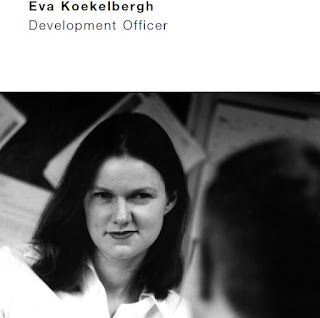
The spy who disliked me : 2003 : Eva Koekelbergh, The Radio Authority

 “Do you know who I am?” my workplace colleague shouted down the phone. “Do you know who I work for?”

I suspect customer service personnel at Fortnum & Mason (which promises “everyone remembers their first encounter with us”) endure similarly haughty conversations with their upper crust clientele day in day out and follow a scrupulously polite script such as:

“Yes, madam, I can read your name on the order for wedding guest name cards and I can tell from your posh accent that you are a member of the British elite who since 1707 have purchased ordinary things from our Piccadilly shop at extraordinary prices, BUT …”

Perhaps private school timetables schedule one period per week of ‘Privilege Studies’ during which pampered Torquil’s and Persephone’s confidently acquire the skill of always getting their own way in life by addressing the 95% of Brits who they consider not ‘one of us’ as inferior beings … though I fail to recall my state school reciprocally teaching ‘deference’. Whether the harangued employee at Fortnum & Mason (“committed to delivering a sense of pleasure”) on the other end of the call had heard of 'The Radio Authority' I doubt. Our government quango was so marginal that there were probably people toiling in radio stations who had never heard of it.

My colleague was usually more softly spoken until an issue arose with ‘service’, at which point the inherited gene that had probably balled out ‘the help’ in centuries past suddenly emerged on the radar screen like the tip of an upper-class iceberg. On a previous occasion, a phone charger left permanently plugged in under the same colleague’s desk had burnt out with a bang while she was sat in our crowded, unventilated office, but without injury. No eavesdropping was necessary to overhear how forcibly the manufacturer would be complained to, sued and adequate compensation secured for her having suffered this apparent near-death experience.

Our office proved the ideal place for my colleague to spend most of the year meticulously planning her spectacular wedding in the grounds of a hired West Country mansion. Months could pass without management delegating any work to us ‘development officers’ to do. The pay and conditions in this public sector agency were undeniably rubbish, but never have I been required to do so little work for a salary. If I exited the office even ten minutes after five o’clock, it would be my duty to switch off all the lights and lock the Radio Authority front door. So much time, so little work!

Evidently, no run-of-the-mill wedding was being planned from the desk next to mine. Its scale and lavishness would easily have triumphed in a ‘Radio Industry Wedding of the Year’ awards ceremony. Like all historic royal weddings, this was not a purely personal affair. It celebrated the alliance of two established ‘houses’ that since 1973 had been at war with each other, fighting innumerable battles over every issue known to the broadcast industry’s opposing armies. The bridegroom was a board member and director of a significant British commercial radio group. The bride worked for the government regulator of the very same commercial radio industry. It was a match made in conflict-of-interest heaven.

I had already observed that, as soon as something of even minor significance occurred at The Radio Authority, the bride-to-be would unhook her mobile phone from its charger and march to the ladies’ loo where she might remain a good while. Maybe she just suffered a weak bladder exacerbated by radio industry events. Whatever, by dint of a mysteriously indirect route, such news would magically appear within the pages of the next ‘Radio Magazine’, a weekly publication brimming with insider gossip that naturally was rabidly consumed by The Radio Authority’s staff.

Normally I would have remained coldly detached from such workplace intrigue but, this time, my life was impacted by the whiff of in-house espionage. Bob Tyler, a good friend for as many decades as I have attended radio conferences, was then news editor of the Radio Magazine and had a habit of phoning The Radio Authority switchboard and asking to be put through to me for an innocent chat. Having signed some kind of Official Secrets Act on my first day of work, I told him absolutely nothing confidential. However, his calls may have sowed seeds of doubt with my boss, David Vick, who one day discovered me alone in his office after I had entered to retrieve a document I had mistakenly left on his desk minutes beforehand. As the only employee with hundreds of published articles about the radio industry to my name [see bibliography], the fickle finger of fate appeared to point directly at me and, without explanation, Vick started to lock his office door when he was absent. Subsequently, I was the sole employee not to be awarded a Christmas bonus and my annual review was unremittingly negative.

“My father worked as a spy for the Dutch government,” the bride-to-be would tell the rest of us in the office, as if addressing an interviewer for a place at Oxbridge. I wondered to myself whether such an occupation passed as a ‘family business’ amongst her peers. Could her employment with The Radio Authority be merely an undercover mission in a quiet backwater for an MI5 agent? Suspicions were further aroused when our boss David Vick insisted he vet and approve each of her wedding guests, the list apparently resembling a who’s-who of everyone who presently worked in the British commercial radio industry. Not that I ever saw it. 

As the Big Day approached, it became apparent that all who worked in our office had received an invitation … except me. In fact, everybody in our department had been invited … except me. Indeed, I suspect that just about everyone employed by The Radio Authority had been invited … except me. Not that Eva Koekelbergh ever told me to my face that I would not receive an invitation to her big fat Wessex wedding. My desk was only six feet away from hers so the ‘oh dear, it must have been lost in the post’ excuse would have been wholly redundant. I had endured almost a year of aural torture, forced to listen to every minor detail concerning the biggest day of her life being phoned through to dozens of contractors and then chased up relentlessly from her desk, yet now I was being treated as if I might deliver a homemade bomb as my gift-wrapped present.

Though there may be eight million eligible bachelors in the naked city, the universe of Britain’s 5% appears more akin to the gene pool within a rural Mormon village. The bridegroom just happened to be the former Radio Authority line manager of the bride, and he also just happened to be best man at her present line manager’s wedding, and both men just happened to have attended the same university [see blog]. For the cherry on top of this cake of coincidence, one of the six people working in our office was the daughter of one of the bride’s teachers at her former private school [see blog]. When people casually comment ‘it’s a small world’, do they realise what a truism it is for a certain stratum of society?

One week before the Big Day that had necessitated a year of planning, including its own internet domain with gooey photos of the couple and a lengthy wedding gift list, the bride casually asked me if I wanted to attend her post-wedding evening soiree, but not the main event. I was tempted by an appropriately pithy two-word response but instead feebly explained that I was already busy that weekend. The few friendly staff I knew at The Radio Authority had already asked me privately why I had not been invited and all I could do was shrug. I had no idea. Anybody who was anybody in the British radio industry seemed to have been invited. I could only surmise that I must be ‘nobody’, despite having planned and executed London’s most successful large-scale commercial radio station launch during the previous decade [see blog].

Naturally, the wedding juggernaut did not come to rest abruptly at the end of the Big Day. Afterwards there were still the communal experiences and the photos to be ooh-ed and ah-ed over by colleagues in the office … and the gossip. Who did what, who saw what and who said what occupied many of the staff for several weeks afterwards. I just sat at my desk pretending to be deaf, dumb and blind. All I learned was that everybody seemed to have had a good time. The wedding had at least not cost me a penny. No present, no card, no car hire, no petrol, no hotel, no tuxedo hire. Even if I had received an invitation, I might have proffered a public explanation that I could not afford all these costs on my meagre salary (particularly as I was commuting to London by train from Brighton), even whilst harbouring the private reason that the wedding’s scale and ostentatiousness seemed to be drawn from the pages of ‘Emma’.

A few months later, The Radio Authority closed and the majority of its staff transferred to a new regulator named Ofcom where we worked in a huge, open plan office overlooking the River Thames. I was relieved that my newly appointed desk was no longer next to the post-honeymoon bride, not because I disliked her, but because during my eighteen months at The Radio Authority she had insisted on running a powerful electric fan on her desk, whatever the season. It might have had the effect of making her feel like Kate Winslet on the bow of ‘The Titanic’ but the airstream had simultaneously played havoc with my sinuses. I had asked her repeatedly to adjust the fan’s angle but somehow it had still subjected me to painful headaches.

I had only transferred to Ofcom in the desperate hope of being offered some proper work tasks to tackle after having been required to do so little at its predecessor. It was not to be. My new boss Neil Stock gave me nothing to do [see blog]. When the BBC called unexpectedly to offer me contract work in Cambodia, I accepted the challenge [see blog]. During my last afternoon at Ofcom, I bade a fond farewell to the few lovely colleagues who had been so good to me. On route towards the exit, I passed Eva’s desk. I considered stopping to say farewell but then reflected on my experiences and resolved to walk on by.