Showing posts with label music. Show all posts

12 September 2026

The day my world stood still [part three] : 7 October 1971 : Calvin Close, Camberley

 “At the age of thirteen I thought I was carrying the weight of the whole world on my shoulders …”

‘Patches’ had become a surprise number two UK hit single for blind southern soul singer Clarence Carter at the end of 1970 (written by General Johnson whose group ‘Chairmen Of The Board’ had just had a number three UK hit single with their wonderful debut ‘Give Me Just A Little More Time’). In the lyrics, ‘Patches’ is the thirteen-year-old son of a poor American farmer who, on his deathbed, pleaded:

“Patches, I'm depending on you, son
To pull the family through
My son, it's all left up to you”

‘Patches’ was one of my mother’s favourite records of that period. At the time, I could never understand why because, to my young ears, it was an over-sentimental, over-American rural fantasy and not a patch on Bobbie Gentry’s enthralling and mysterious ‘Ode To Billie Joe’ family tragedy from 1967. Whenever ‘Patches’ was heard on ‘BBC Radio 1’, my mother would stop whatever she was doing and listen intently to the lyrics. Why did this song mean so much to her?

A little over a year after ‘Patches’, unexpectedly I was to become that thirteen-year-old carrying the weight of the whole world on his shoulders. However, rather than my father dying surrounded by his loving family, mine had sordidly run off with a girl only a few years older than me, scarcely to be seen again. From that day, though neither parent instructed me as such, it seemed to be left to me “to pull the family through”. My father’s new mission was to wreak vengeance on our family in every which way, disowning us whilst stealing possessions we valued [see blog]. My mother fell into a resigned malaise that lasted the remainder of her life [see blog]. I felt only relief my father had left, a better outcome than observing my mother cower from his violence. Fortunately, he had never touched me, my knowledge having proven too valuable to his businesses [see blog].

Hearing the lyrics of ‘Patches’, had my mother anticipated the inevitable dissolution of her marriage and the consequential demands on me, her eldest son? Her husband had been cheating on her since the 1950’s and, now that his business ventures were finally generating significant ‘cash’ profits, he felt justified in unilaterally indulging juvenile desires unaffordable until now. In 1970, he had proudly shown me his impulse purchase of one of the first handheld electronic calculators, whose £100 price tag infuriated my pregnant mother. In 1971, he had changed his recent American Motors ‘Javelin’ sports car unnecessarily for a newer, more powerful ‘AMX’ model [see blog], a totally impractical upgrade for a three-child family. He had been behaving like a kid in a sweetshop as he approached forty. And then he was gone.

During the preceding years, I had already taken on a role as our family’s administrator, typing correspondence, posting letters, opening and filing incoming mail. Our financial management – paying the bills, writing cheques – had rested with my father. In retrospect, I am never sure if it was coincidence that my parents had trained me in administrative skills from an early age, or whether my mother had foreseen that I would have to become the family’s ‘Patches’, required to steer our family away from administrative and financial oblivion. Although it was she who had taught me financial skills, her husband’s departure paralysed her into inaction, clinging to a hope that he would someday return and restore our family’s equilibrium, or at least take care of family finances once again.

We should all have been living in Canada by now. For more than a decade, my parents had planned to emigrate there. In 1962, they had visited Canada House in Trafalgar Square and come away with a huge, colour fold-out wall map of the country (that I still have). In those days, neither visa nor migration papers were necessary. You could simply book seats on a plane or boat and be welcomed as a newcomer to the great Dominions. Unexpectedly, during the two years following my brother’s birth in late 1963, my parents abandoned this long-held plan. No explanation was offered me. All their preparations for a North American lifestyle – me and my brother’s names [see blog], our succession of American cars, my father’s ice skating [see blog], our weekly ten-pin bowling [see blog], our American music, our American kitchen appliances [see blog] – came to nothing, never to be mentioned again. I was disappointed.

In 1965, my father discovered for sale an empty plot of land on the other side of Camberley that might be purchased at a discount. The owner of one of Camberley’s huge Edwardian mansions, ‘Old Knowles’ on Upper Chobham Road, had divided the far reaches of their estate into small plots, each sufficient for one family house to be built. However, ‘Plot 7’ remained unsold due to its odd shape and access problems. A new ‘Calvin Close’ cul-de-sac had been constructed to reach these new properties and building work had already progressed on some sold plots. Plot 7 comprised a long narrow upward-sloping driveway, barely wide enough for a car, that ended in a flat square-ish plateau. However, for some crazy reason, the new electricity sub-station serving the street’s houses had been built at road level slap bang on the driveway, preventing any vehicle access.

I visited the plot with my parents, us having to squeeze past the sub-station’s wooden fence and clamber up to the plot. It was clear that, though Old Knowles had retained a huge perfectly manicured rear garden, the plots up for sale beyond had been left as wilderness for years. It was a jungle. My parents were unaware that this land had once held an industrial gravel pit. Each plot had apparently been drawn on a map without consideration about what might be on or under the ground. In Plot 7, we found the end of an old concrete ornamental pond, though its substantive part stretched onto an adjacent plot. There was no back fence to the big house (the right-hand edge of Plot 7), just a line of thick high rhododendrons that you could push through, tempting you to march across their perfect garden.

The rear of the plot was marked by an ancient sunken alleyway wide enough for a horse and cart, the dug-out soil having been piled up on either side and planted with thick bushes that grew into a canopy of foliage, making the path invisible from beyond. It stretched in a perfect straight line southeast from Upper Chobham Road 600 yards to a neighbouring estate, ‘Toad Hall’ (formerly ‘Edgemoor’), and then diverted with a 90-degree turn southwest to ‘Eastlea Court’ estate (formerly ‘The Firs’) on Chobham Road. Perhaps this overlarge ditch had marked the western limit of the 300 acres of heathland purchased in 1860 by Swiss botanist Augustus Mongredien to build a silk farm named ‘Heatherside’ that soon failed, the land defaulting to mortgage lender Sir Gabriel Goldney of Chippenham. A century later, ‘Goldney Road’ was the unmade, potholed rough access road necessary to enter our cul-de-sec and the new Heatherside housing development beyond, then under construction by housebuilder Bovis that had acquired most of Goldney’s land.

I failed to understand how the wilderness of Plot 7 could be transformed into a home for our family. It was full of insects, spiders and creepy-crawlies that terrified me. For the next two years, I elected to spend weekends at home alone [see blog] whilst my parents spent every daylight hour at Plot 7 to clear the site and house build. My father petitioned the Electricity Board to relocate its problematic sub-station to adjacent land not yet built upon and, following a long wait, his request was approved and executed, allowing vehicles to reach the site for the first time. My father made a sign on a sample floor tile saying ‘Plot 7’ in white Letraset and nailed it to the fir tree on the left of the driveway at street level. To save money, my parents did as much of the building work as they could, employing specialists only for tasks that needed heavy equipment or trade skills.

My father was an admirer of American architect Frank Lloyd Wright’s modernist buildings and seized the opportunity to build a similarly novel property in Camberley. Having executed so many renovations and extensions for clients, this would be his first opportunity to design an entire house to his own specifications. Perhaps he was inspired by a photo-feature in his beloved ‘Architects Journal’ of the 1959 ‘Rossdale House’ on Hendon Road in London, since many of its features were replicated in our home – a carport instead of a garage, exposed dark purple brickwork inside and out, floor-to-ceiling glass sliding doors, an adjoining pond/pool and a white oval dining table and chairs (as seen in ‘2001’). Though the London house comprised two storeys built on stilts, ours was limited to one floor by the land deeds, the owners of stately Old Knowles not wishing to look out their back windows and sight the top of our modest home beyond their perfectly kept garden.

My father designed his house in the shape of the letter ‘H’, the right sidebar comprising three bedrooms, the left a long, open living/dining room and, within the crossbar, the kitchen, bathroom, WC, coat cupboard and heating/hot water system. The majority of the ‘walls’ were floor-to-ceiling glass, enabling sightlines from outside straight through both wings of the house. The roof was flat concrete, supported by the bare brickwork between the glass windows. The bathroom included a separate bath and enclosed shower cubical, unusual in that era. The bathroom mirror was a huge sheet of thin aluminium foil stretched over a frame ordered from the US. Instead of a letterbox in the front door, there was an American-style upright post-box on the wall alongside the two-vehicle carport, much to the confusion of postmen/women who had walked up our long driveway. Instead of a front door key, embedded in the wood was a press-button combination lock ordered from the US. Opening the front door from outside, you were confronted with a huge floor-to-ceiling clear Perspex window that overlooked an exterior pond at the rear. The heating system was underfloor gas air, also ordered from the US. The living room thermostat was manufactured by Honeywell, ordered from the US. The kitchen sink included a waste disposal unit, ordered from the US. In the garden was constructed a greenhouse that resembled the top half of a clear glass sphere.

The house was initially designed to be completely open-plan, with internal doors only for the bedrooms, bathroom and WC. However, British building regulations necessitated the addition of fire doors to separate the kitchen from the bedrooms, as well as from the living/dining room. Frustrated by these rules, my father installed a ridiculously expensive kitchen door constructed entirely of thick, frosted glass, an unnecessary appendage that we never closed in all the time we lived there. Essentially, my father had built a ‘showhouse’, permitting his potential architectural clients to view a real-world example of futuristic living that might have been commonplace in California but was rarely seen in suburban Surrey. I loved living in the house, though its purpose echoed the earlier building of the Rossdale House as a marketing exercise for architect Geoffry Powell’s practice ‘Chamberlain, Powell & Bon’.

Our new futuristic home was not without its problems. The mostly glass exterior made birds believe they could fly at speed straight through the house during daylight, only to ‘thud’ against the glass window and be found dead, requiring regular burials in our garden. Leaving a glass sliding door open meant the occasional squirrel would enter, then panic and race around the floor inside the house, banging against the glass windows until we could usher it back outside. The deafening roar of low-flying test flights by Concorde from nearby Farnborough Royal Aircraft Establishment would rattle the huge glass windows, worrying us they might shatter. At night, our house lights would attract foxes, whose two red eyes would appear out of the darkness at a living room window, staring at us sat within like a horror movie. My mother purchased yards of thick, olive-green patterned material from Liberty that I helped her measure, cut, line, pleat, add curtain heading tape and hang in front of the eight expanses of glass window. The house being located some distance from the road, it felt as if we were living in countryside since neighbouring properties were not visible from our windows, a major change from our previous home fronting a bus route near Camberley town centre.

The red standalone enamel hooded fireplace mounted on a large inch-thick black slate square in the living room looked impressive but, when there was the slightest wind outside, smoke from a lit fire would blow back down the iron chimney and fill the living room. In summer, sunlight on the glass windows heated up the rooms terribly, particularly when the house was closed up. Conversely, in winter, the absence of insulation and the bare brickwork made the house cold, particularly the bedrooms that all faced northwards, while the open-plan design made it impossible to retain heat in one part of the house. Only a few years later (after my father had left), the heating system failed completely and, despite my repair efforts [see blog], we lived in an unheated house for years thereafter. The house’s legacy was that much of its equipment purchased from the United States could not be serviced or repaired in Britain, rendering those amenities defunct.

The inspiration for our home unexpectedly appeared in my music listening. Having bought the Simon & Garfunkel album 'Bridge Over Troubled Water' in 1970 from 'Dykes' record shop in Camberley [see blog], I was surprised to hear the Paul Simon composition 'So Long, Frank Lloyd Wright' dedicated to this American architect who had died in 1959. My father had regularly shown me articles about Wright in architectural magazines and glossy American coffee-table books bought on trips to London, filled with his modernist building designs. In distant Camberley, it turned out he was not the only one inspired by Wright:

"Architects may come and architects may go
And never change your point of view.
When I run dry
I stop awhile and think of you."

During the first years in our new home, I was given new responsibilities. My father insisted I regularly clean his preposterous American sports car in and out, afterwards spending hours polishing its bodywork inch by inch, a task I really hated. I was charged with mowing the grass lawns on three flanks of the house with a newfangled 'Flymo' lawnmower (‘It’s a lot less bovver with a hover’), after my mother’s attempt nearly electrocuted her when she rolled over and sliced its electric cable. For some reason, I was also the one who had to light the living room fireplace in winter, struggling with matches, firelighters and bits of damp wood. After initially continuing to share a bedroom with my younger brother, one year later my parents moved me into the house’s third bedroom, the first time I had occupied a room of my own. Despite the unwelcomed isolation from friends and my much-loved maternal grandparents, life proved enjoyable.

This stasis did not last long. My parents had spent two years building their ‘dream home’ and then four years living in it when my father deserted his wife and children [see blog]. My mother was left with a millstone property, raising alone three children in a now unheated home that she could ill afford to maintain or repair. Her dream had become a nightmare. Each of the house’s five sets of glass sliding doors were locked with a key, one each of which my father kept. The front door could only be opened with a number combination which my father knew. Securing the house from my newly vengeful father proved impossible. When we were all out, he would walk in and steal whatever he wanted, including parts of my precious vinyl record collection for which I would never forgive him [see blog]. Every summer, my mother’s sister Pam would generously pay for our one-parent family to stay somewhere in Britain, but I would never again accompany my mother and two siblings on holiday as I had to stay home alone to guard it from my father [see blog].

The most immediate impact of my father’s departure was my education. Three years earlier, when my parents decided to send me to a secondary school the other end of the county [see blog], they had promised to give me a lift every school day to Camberley railway station to catch the 8.10 train. Arriving back at Camberley station at 5pm, I would walk to my father’s town centre office and cadge a lift home. That was then. Now that my parents’ promise was in tatters, I had to be the first to rise at 6.30, make breakfast, then walk out to the Prior Road bus stop just after 7 to catch the irregular bus to the town centre and await the 8.10 train. Now, arriving back in Camberley at 5pm meant a wait until 5.40 for the next 39B bus that would deliver me home after 6. Outside of winter, if the weather was fine and I was not carrying too many books, I would choose to walk the two miles home, though it meant a trudge to the top of Church Hill, down Crawley Hill, across the M3 interchange, a walk up Prior Road, then finally down Goldney Road. I could arrive home shortly before 6, but often exhausted.

To avoid such long days, I asked my mother to sign a letter I had typed to my school, asking if I could be let out ten minutes early at the end of the day, as I could arrive home a full hour earlier by catching the 4pm train from Egham. The school reluctantly agreed though, in practice, it proved impossible to enact because teachers of the final afternoon lesson set the day’s homework during their final minutes, to be handed in the following day. It was Hobson’s Choice: get home early or fail my homework. The school office had already become suspicious of my home circumstances. At the end of one term, my regular school report booklet failed to arrive home by post. On enquiring, I was informed that my father had phoned, asking for it to be sent to his new address. I had to explain repeatedly that I did not live with my father and that he took no interest in my life, before I could persuade staff reluctantly to change back the address. How could I admit that most of my father’s stories were lies?

There were reasons for needing to reach home from school at a sensible hour, none of which I wanted to explain to my school. Every weekday, teachers set two subjects of homework that had to be submitted the next school day. They seemed to imagine students reached home within minutes after the school bell, joined their family for formal dinner, then one or other of their parents helped them complete their schoolwork. In my case, nothing could be further from the reality. Neither of my parents ever assisted with my homework because they lacked the knowledge or skills. Instead, once I reached home, my most urgent ‘home work’ now was to administer my mother’s perilous circumstances.

I had multiple uncharted waters to navigate. Our mortgage lender. The municipality’s property ‘rates’. Southern Water. Southern Gas. Southern Electricity. The Post Office telephone service. Buildings insurance. Contents insurance. Car insurance. Service contracts. Inland Revenue. Midland Bank. Until then, all household bills had been paid by my father. I had to contact these agencies by typing letters in my mother’s name and setting up new payment plans, urgently where outstanding balances had accrued due to my father’s abrupt cancellations. I had to field regular ‘red reminders’ and threatening court summonses. Once my mother had signed this correspondence, I would carry it to school and post it in my lunch hour at Egham Post Office. I created a set of labelled folders at home to track all the documents, filing carbon copies of letters I had typed (rediscovered intact four decades later during house clearance following my mother’s death).

At the same time, I had to respond to my father’s resort to the legal system to harass us. He filed a case for regular access to his one-year-old daughter, despite having tried to prevent her birth and never having shown an interest in the upbringing of his children. Farnham Court ordered my mother to permit him to take my sister one weekend a month, seemingly oblivious that neither he nor his teenage mistress knew the slightest about baby care. Those weekends were particularly fraught in our home when my mother would fret terribly that her husband might disappear with her daughter merely to spite her. Eventually, my father bored of this antagonistic routine, spurning further contact with his daughter for the remainder of his life.

I now diverted my school lunchtimes to the upstairs reference section of Egham public library, reading dusty law books to understand our family’s rights in the face of my father’s legal onslaught. He was well aware that he had left my mother without sufficient funds to fight his actions, requiring me to fill out forms for ‘Legal Aid’ and attach the requisite proof of our dire financial situation. I had to apply to Surrey County Council to support my education, most urgently for the expensive termly railway season ticket necessary for travel to school, as well as subsidies to buy my school uniform and entitlement to free school meals [see blog]. Until my mother could find employment, having not worked since my sister’s birth the previous year, I had to apply for social security benefits from the government DHSS agency. My mother’s change of status proved difficult to document when we were unaware of my father’s new address as he had ended direct communication with us.

To represent her in court, my mother hired local solicitor Neale Turk whose office on Kings Ride had recently opened. I accompanied her to their initial meeting and explained our family’s situation with reference to the legal statutes I had read and photocopied at Egham library. While my mother would attend follow-up meetings, she said Turk instructed her not to invite me again. Unfortunately, my mother’s outcomes from a succession of Farnham court appearances, none of which I was permitted to attend, proved not particularly positive. Only later did we discover that my father had at some time been a client of Turk. Mmmmm.

Court orders requiring my father to make maintenance payments to my mother for her and his children were ignored. It was left to me to phone the Clerk to Farnham court from home once a fortnight to ask why we had still not received his overdue funds, me having to fib to the school that I had some medical or dental appointment. I heard every excuse under the sun relayed by the Clerk. Eventually, once my father’s arrears had accumulated to astronomical amounts, he disappeared. He never did pay what he owed us. Only later did we discover he was an illegal immigrant in the United States, the place he had sought to emulate so much in his architectural work [see blog].

Before he fled, his design legacy was left for all to see on Calvin Close, not only in our house but also at the far end of the cul-de-sac. His ‘showhouse’ had brought him a commission to design a group of identical houses around the bottom of our road. Quite how the municipal planning committee approved his plans I never fathomed, as they were designed in the style of Swiss chalets with steep pitched roofs, completely out of character with surrounding homes. Whenever I happened to pass them, I felt ashamed of my association. Decades later, most of those monstrosities were demolished and replaced with orthodox houses. 

In 2004, visiting my mother in the tiny house she now occupied in a town near Camberley, she showed me estate agent sale particulars for a property about which she had enquired, having seen it advertised in the local paper. It was our former home in Calvin Close. She told me she was thinking of arranging a viewing. I was horrified. No no no! Even after all the terrible things that had happened in her life, she still imagined she could resume her ‘happy family’ years between 1968 and 1972 by living in that house again. Mercifully, the £340,000 price tag was way beyond her means. I never did find out if she ignored my pleas to stay well away.

My parents’ now rather post-modern home was demolished after planning permission was approved in 2011 for a conventional, two-storey house to replace it. Their decision not to emigrate to Canada had had disastrous consequences. Their dream of a ‘new start’ there had turned to dust: my father an illegal immigrant on the run and my mother impoverished for the remainder of her life.

[to be continued…]

POSTSCRIPT:


Nearly two decades after our Calvin Close house had been built, another Frank Lloyd Wright-inspired house was constructed in Camberley at 11 Crawley Hill, an address I had walked past hundreds of times on my way home from school via the railway station. Built between 1981 and 1984, initially named ‘Rhododendron’ but later renamed ‘Betterwords’, it was designed by architect David Elgin Dodge (of the American ‘Dodge’ car dynasty) for owner Firoz Mehta, an “industrial consultant” who had lived in Camberley since 1972 and “had always wanted to be an architect”. By remarkable coincidence, in late 1985 I happened to work briefly in this house and experienced an eerie familiarity with my childhood home that, by then, had been consigned to memory. This later property attracted considerable press coverage for its retro-1960’s stylings (“It is the only house of its kind in Europe”, Mehta proudly told ‘The Camberley News’), including in the national 'Daily Telegraph'. It now apparently fulfils three Surrey Heath Borough Council criteria that make it a “significance of heritage asset”, whereas my father’s genuine contemporary 1960’s modernist design, built one mile away, had attracted zero public attention … perhaps because he had not been a 'real' architect [see blog].

28 August 2026

The day my world stood still [part two] : 7 October 1971 : Kings Ride, Camberley

 Had I been born a century earlier, I suspect my parents would have bundled me off to climb up the insides of neighbourhood chimneys for a few farthings. Things then would have turned out much worse for me, as my mother’s guidance for childrearing was apparently forged by her half-dozen visits accompanying me to 1964’s ‘Mary Poppins’ at the Camberley Odeon. As Julie Andrews had seen nothing immoral about grubby children being pressganged into Dick van Dyke’s happy posse of sweeps, the film seemed to convince my mother that offspring were meant to be seen (working) rather than heard (playing).

Some kids embark upon a paper round once they have learnt to ride a bike. Others help out in the neighbourhood shop for pocket money. Visiting a mini-mart to pay your newspaper bill, you would rightly be surprised to find a child of single-digit age and less than three feet tall stocking shelves. Apparently not my parents! As soon as I could walk, my father was taking me with him in his ostentatious American car to survey local properties whose owners required renovations or extensions. Initially I was charged with holding the end of his long roll-out, wind-up tape measure at the far end of large rooms [see blog]. Before long, I was sketching out on paper the floorplan of buildings and noting their dimensions. Later on, I was calculating floor areas using the long multiplication my father had evidently failed to pay attention to before quitting his education aged fourteen from a Dickensian school he would show me on School Lane, just along from Ron Francis’ long-time photographic studio.

Thanks to an apprenticeship and ‘night school’, my father became a qualified quantity surveyor who passed as an architect by appending ‘AFS ARIBA’ to his name on business cards printed by Southwell Press [see blog]. In his school-hut office in the back garden behind our garage, my first administrative task was to maintain his professional periodicals such as ‘Architects Journal’ in strict date order. Soon he would teach me how to transfer Letraset from large sheets onto architectural drawings. I could calculate the relevant scale for plonking images of furniture, white goods and American-styled human figures onto the tracing paper plans masking-taped to his drawing board. If we did not have the necessary sheet, I would locate it within the huge, well-thumbed ring-bound Letraset catalogue and my father would then walk down to ‘Camberley Stationers’ on the High Street to buy it on account.

Whilst my father was self-employed at home, my mother worked as bookkeeper for a local garage 290 yards away that serviced vehicles, hired out a fleet of coaches and owned the town’s only petrol station on the busy A30 London Road. She would regularly bring her wide accounts ledgers home, set them out on our kitchen table alongside a paper-roll adding machine and require my services to help ‘balance the books’ and calculate the weekly payroll [see blog]. At my school, some classmates were still struggling with basic addition whilst I was already adept at calculating Income Tax and National Insurance deductions for a local company’s workforce.

After leaving school at sixteen without a Certificate, my mother had enrolled for some kind of local secretarial course which led to our home having a manual typewriter and shorthand texts. I taught myself to type and was soon faster and more accurate than my mother. If my parents had to fill out a form, I would type it for them. After my brother was born, his name had to be added to their passports alongside mine, so I typed the application form to be mailed to the Passport Office in Little Venice. When the passports were returned, I was so proud to see that the civil servants had merely cut out the paper on which I had typed my brother’s details and glued it onto a spare page. My handiwork!

Without realising what was happening, I became our family’s ‘administrator’ merely because I excelled at reading, writing and arithmetic. When there were Christmas cards to send to my father’s clients, it was my job to write addresses on dozens of envelopes. When there were letters to be sent to the Council, Inland Revenue or DHSS, I was tasked with typing them and their respective envelopes. After my parents gave me a ‘Kodak Instamatic 126’ camera for my birthday in 1964, I also became the family’s photographer, carefully sticking hundreds of square pics in a photo album and labelling them with precise dates, locations and names. (Decades later, my brother stole this treasured album from our mother’s home before emigrating [see blog], leaving me now without a single family photo, despite having been our family’s only photographer then.)

If I had been a teenager when pressganged into this family work, perhaps I could be accused of some collusion. But I was still under ten years old when all this happened. Other kids in my class went home to spend evenings playing worry-free games in their back gardens, while I returned home to yet another round of administrative tasks. My cleverness was being mercilessly exploited by two un-clever parents who had left school without an examination pass between them. I had no idea why I was clever. I often wondered whether I was truly the offspring of the adults I was being forced to live with. Had I been swapped, accidentally or deliberately, at birth? However, my birth certificate said I had been born at home. How was my DNA related to theirs? During my early years, I had a mop of blonde hair. But neither parent was blonde. I had blue eyes. But neither of my parents had blue eyes. Having watched 1960’s American sci-fi series screened on British television, I even pondered whether aliens had planted me with this suburban family. Was I the boy who fell to earth?

As the years progressed, my parents’ grip over my life tightened. At age eleven, having passed the compulsory ‘Eleven Plus’ exam, I was entitled to join the one grammar school in Camberley, adjacent to the infant/junior school I had attended for six years. Instead, my parents chose to send me to a grammar school twelve miles away at the opposite end of the county, the outcome of my father’s desire to impress a potential business partner [see blog]. I was not even consulted for my opinion before being condemned to spend hours travelling on public transport for the next seven years. I would never again see my many junior school friends.

After my father switched to renting a town centre office, I was additionally charged with calculating, typing and sending out client invoices, statements and reminders on his newly purchased ‘IBM 72’ electric typewriter. I was also required to spend days making photocopies and dyeline prints for my fathers’ clients in a darkened unventilated room, damaging my health irreparably [see blog]. When my father diversified into property speculation with a new business partner, my expertise in maths was required to figure out the potential profits of buying local businesses and redeveloping them with blocks of flats [see blog]. Though not yet a teenager, my calculations would determine whether projects worth millions could prove viable for my father’s latest business, which I had been required to name (‘IMIC Properties Limited’) even though I was still too young to be one of its directors. It was crazy.

The upside of all this work for my ‘family business’ was that, once their tasks were completed, my parents left me alone to pursue my own interests without interference. My mother could not be bothered to divert to Camberley’s only Post Office at the far end of the London Road from the town centre so, while she shopped, I would walk there and cash her fortnightly ‘Family Allowance’ vouchers from the booklet sent by the government. The postal staff knew me by sight because, from the time I could barely peer over their counter, I had been sending and receiving many more letters than my parents. My ‘pocket money’ comprised this useful cash that my mother would let me keep.

During childhood, I developed a wide range of interests that I maintained … until the fateful day in 1972 when my father deserted his family and abandoned his three children, leaving us to grow up in chaotic deprivation [see blog]. After that, I had neither the time nor the money to pursue anything beyond day-to-day survival. After that, I lived an even more isolated existence away from friends and extended family. These unwelcomed losses were initiated in 1968 when my parents relocated to a new housing estate on the edge of town. I was now three miles from my grandparents who, having lived next door almost my entire life, had generously provided the childrearing skills to which my parents seemed oblivious. I was now three miles away from the neighbourhood kids on our street with whom I had played regularly on the roads leading to Barossa Common [see blog]. I was now three miles away from the junior school I would attend for one further year which, until then, had been a short solo ride away on buses 1, 2 or 3c of the Aldershot & District Traction Company Limited. I now had no friends living within miles. I needed a lift to get to school.

In our home on Kings Ride, my parents had bought me a metal full-size pedal-powered go-kart with a handbrake that could travel so fast that it would have proven dangerous to meet a pedestrian on our narrow pavements. Instead, I would drive it along the road outside our house when there was little traffic around, pursued by my neighbourhood mates on their bikes. Sometimes a double decker bus would unexpectedly pass in the opposite direction and you could see the passengers stare out its windows in disbelief. My parents never told me not to play in the traffic and not once was I stopped or told off by passing adults.

My earliest hobby was ten-pin bowling. My parents’ plan since their marriage was to emigrate to Canada, despite knowing nobody there nor having visited the country [see blog]. That was the reason my brother and I were given what they believed were common North American names. That was why my father taught himself to ice skate by practising surreptitiously each winter on the frozen lake of the Sandhurst Royal Military Academy. That was why, every Saturday morning, my parents drove to the nearest bowling alley in Wokingham to practice, accompanied by me. I was tall for my age and soon became sufficiently accomplished to be asked to join Wokingham’s junior bowling team. Every Saturday morning, I would don my team bowling shirt and either compete at Wokingham or our team would be driven from there by coach to an away match at Heathrow, Brighton or one of the few towns that had a bowling alley. One birthday, my parents bought me my own bowling ball with my name engraved next to the finger holes and a ‘mod’ black and white bowling bag in which to carry it.

I became a manic stamp collector, initially steaming off the stamps on my family’s incoming mail and later visiting the regular Stampex exhibition in the Central Hall at Westminster. My weekly visits to the local library were useful to consult the Stanley Gibbons stamp catalogues in the reference section upstairs. Before long, I had saved enough pocket money to buy my own copies, along with a special stamp album that had spaces to mount every British stamp ever issued. I would write to a stamp dealer in Much Wenlock, enclosing a Postal Order bought from the Post Office to purchase all sorts of strange and wonderful stamps from countries around the world. Every occasion a new set of commemorative stamps was issued, I would traipse down to the Post Office, stick them on the associated special envelope and send it to myself as a ‘First Day Cover’. I even saved up to buy Britain’s first stamp, the 1840 ‘Penny Black’.

My maternal grandfather had sown the seeds of my fascination with the radio medium. I loved listening to music radio stations and discovered I could hear stations from all over Europe on an ordinary portable radio. In my early years, I would comb my parents’ and grandparents’ daily newspapers for any stories about radio, cut them out and stick them in a series of scrapbooks I maintained. Then I would enter every competition I heard announced on radio and, as my knowledge of popular music was good, send in postcard entries. I won quite a few contests on 'BBC Radio London' after it opened in 1970, usually with prizes of vinyl albums (such as the debut of the amazing group Batti Mamzelle). Despite my dozens of entries, I never won anything from national 'BBC Radio One' after its launch in 1967. However, I did win some albums (including ‘King Tubby Meets The Upsetter At The Grass Roots Of Dub’) from Tommy Vance’s Saturday ‘TV On Reggae’ show with Raymondo (alias Ray Edwards) on London’s 'Capital Radio' in the early 70’s. 

I badgered my parents into buying me a Trio 9R59DS radio receiver so I could listen to more radio stations from further away on the shortwave band. Due to my fear of heights, I persuaded schoolfriend Jeremy Mitchell to climb trees at each end of our garden to hang as an antenna a long piece of copper wire I had bought from my grandfather in the ironmonger shop ‘Dolton Bournes & Dolton’ on the High Street, his workplace following the closure of Camberley’s timber yards [see blog]. I bought the thick annual ‘World Radio & Television Handbook’ so that I could find the address of every radio station I heard in order to write to them. I was sending off dozens of letters a month and receiving all sorts of packages in return – programme schedules, postcards, badges, playlists, magazines, books and pennants. The postman often was carrying so much mail to deliver to me alone that he would knock on our front door rather than try and fit it all in our wall-mounted post-box.

I subscribed to monthly Roneo-ed newsletters that shared information about distant radio stations that could be heard and I would send the editors my lists for publication of new ones I had heard recently. I even travelled by train on my own to a meeting organised by some of these radio fans (‘DX-ers’) held in Reading one weekend but, sat amongst men who were twice and three times my age, I was too intimidated to utter a word. However, my listening taught me to identify languages from around the world and to understand the geography of continents. I can still recall the names of many of the oddball radio stations I heard, such as Austria’s ‘Der Schulungssender des Österreichischen Bundesheeres’ on 6221kHz. I think this global knowledge was the reason I managed an ‘A’ grade for my Geography O-level. It also gave me motivation to one day visit some of the faraway places whose radio I had listened to and whose citizens I had corresponded with.

As well as being an enthusiastic radio listener, I was also interested in the technical aspects of the medium. One Christmas in the 1960’s, I asked my parents for a junior home electronic kit that taught me about resistors, capacitors, circuit boards and to build basic projects. A few years later, I would accompany my aforementioned school friend Jeremy on trips to ancient Edgware Road shops to buy second-hand electronic parts so that we could build our own valve-powered radio transmitter to launch an AM pirate radio station. We possessed some suitable circuit diagrams from hobby magazines and were inspired by weekend London pirate stations we had heard.

Starting with technical books held in the upstairs reference section of Camberley library, I studied the theories of how radio transmitters, receivers and antennas functioned and their practical applications. This led me to a correspondence course to take the ‘RAE’ radio amateur examination that would allow me to communicate on the airwaves with other radio ‘hams’. For a small charge, I was mailed study notes by post, learnt them, wrote answers to a set of questions and sent them back. If my responses were correct, I would be mailed the next unit of the course. It could be a rather laborious process at times, but there was nowhere locally I could undertake the necessary training to take this exam.

One of my less technical interests was launching helium-filled balloons from our back garden, attached to postcards asking the finder to write to me with the location it had landed. Most of these efforts disappeared without a trace but occasionally I would receive a card from somewhere in West Europe that one had reached, a few of whom I started writing to regularly as pen pals. I think it reflected my early notion that there must be a bigger world out there beyond the suburban town where my mother’s family had lived for generations. It was a symptom of my alienation from my parents and the quest for an existence that promised more than small-town living. I already felt I did not belong there and I was seeking somewhere else where I might feel more at home (“going where the weather suits my clothes”).

One of the properties my father had insisted I help him measure to prepare for some rebuilding work was the future Lakeside Country Club in Frimley Green to be launched in 1971. We met its owner, musician Bob Potter, to whom I explained my interest in learning music studio production. He also ran the Bob Potter Studio in nearby Mytchett and invited me to attend a forthcoming recording session there by jazz duo John Dankworth and Cleo Laine whom I had seen on television. Although I was not (yet) a fan of jazz, this seemed to be a great opportunity to understand the basics of music recording techniques. I enthusiastically accepted the invitation and looked forward to that visit.

I was a regular customer of the large toy shop on Princess Street where I saved up to buy Airfix plastic model kits and multiple little pots of Humbrol paint, taking them home to assemble whilst trying not to glue my fingers together. Aircraft models appealed most, perhaps because my parents occasionally took me to Heathrow Airport on weekends to stand on the open observation platform of the new Queen’s Building with a free map showing airline logos so that we could identify planes taking off and landing. I built and carefully painted a Fokker DR1, Harrier ‘Jump Jet’ and Gloster Whittle, adding the transfer markings provided with each kit. I was yet to travel on a plane so aircraft seemed exciting and other-worldly.

I had started buying soul and reggae records in 1969, initially from Dykes record shop on the corner of Park Street and Princess Street where a line of soundproofed listening booths along the right-hand wall permitted visitors to request from the shop assistant an audio preview of a single or album before deciding whether to purchase it. Within a few years, I was making Saturday solo trips to London to buy imported soul records unavailable in Camberley from Contempo Records on Hanway Street and imported reggae from the many stalls in and around Granville Arcade in Brixton [see blog]. Though my termly green cardboard train season ticket to commute to school only reached as far east as Egham [see blog], I would continue on the same line to Waterloo station, flash my pass hurriedly at the gate and then only have to pay the minimal Tube fares to travel around London. Sometimes I might go further to visit the many reggae shops in Harlesden or to Lord Koos’ outlet for hard-to-find releases.

In early 1972, My father impulsively booked a holiday in Jamaica for our whole family so I made plans to explore its reggae haunts I knew about while the rest of them would be lounging on the beach [see blog]. We had recently visited Spain for a short family holiday which had proven an unmitigated disaster [see blog] so I considered it more productive for me to set personal objectives to achieve on this holiday, putting as much distance as possible between me and my troublesome father.

A significant reason I had developed so many interests was because, throughout my years at infant and junior schools, no classmates lived anywhere near our home. As the eldest child, neither did I have siblings with whom to play. Then, for two years, my parents spent every weekend on the plot of land the opposite side of town where they were building their dream house. They took my younger brother with them but always left me at home alone the entire weekend. I was never bored as I had developed so many interests that I could pursue. I was perfectly happy in my own company, particularly as my parents demonstrated little interest in me even when they were present. If I wanted interaction, I would go next door and play dominoes for hours with my grandfather on his wooden dining table, notching up our scores with matchsticks on his ancient cribbage board.

Two subsequent events ruined this equilibrium in which I had existed during my early years. Firstly, the move to our new house on the edge of town two miles from Camberley town centre. Until then, I had been only a short unaccompanied walk away from the shops, municipal library and railway station. Now I needed a lift from my parents because the two bus routes 39b and 34a from our new location ran only hourly and two-hourly respectively during peak times. Neither was there a single shop near our new home.

Secondly, my father’s departure four years later left my mother without a car [see blog] or the resources initially to buy one. The impact was two-fold: I was stranded on an outlying housing estate without transport; and the money to support my interests was no longer available. I still visited the Post Office, though less regularly than before, as it was now three miles away instead of a brisk walk. I would cash the Family Allowance vouchers there but now the money had to be passed to my mother to support us because my father was deliberately denying his family any financial help.

It was not just the lack of money that changed my life going forward. Having unexpectedly had additional responsibilities as our family’s ‘eldest child’ thrust upon me, I could no longer find sufficient hours in the day to pursue my own interests. Until then, I had spent most of my childhood in my own company whilst my siblings were under the eye of one or other of my parents. From now on, because my mother was at work every weekday from morning ‘til night, I was left with my younger brother and sister whenever I was home from school. I had become the family babysitter, supervising a nine-year old and one-year old for hours on end. This was not how I had anticipated my teenage years would be spent from age thirteen to eighteen.

There was no gradual change in my life. In the weeks before my father left us, I was still busy with my own interests. Then, suddenly, everything had to be dropped. My go-kart was never used again. My bowling ball remained in its 1960's two-tone bag to this day, kept as a reminder of a now distant past when I once scored over 200 in a competition game. I was not given the chance to say farewell to my bowling team friends because I never returned to Wokingham bowling alley. My various stamp albums were placed in a large plastic shopping bag, never to be examined again. My plans to build a radio transmitter with school friend Jeremy came to nothing, as did our electronics buying trips to Edgware Road. Although I was close to completing the radio amateur correspondence course, I abruptly ended the monthly correspondence because now I would never have been able to afford the equipment even if I gained a licence.

Correspondence with overseas pen pals came to a sudden halt due to my lack of time. Bob Potter’s invitation to attend a recording session would never be fulfilled because my father now disowned me and was hellbent on doing everything he could to disrupt my future, despite my childhood having been spent working for his various businesses. I never again bought or assembled another Airfix model kit, let alone visited Camberley’s toy shop. Regular record-buying trips to London had to be curtailed because, without parental transport, buses from our home to the railway station were unreliable outside of weekday daytime hours. Besides, my pocket money had all but disappeared, sacrificed to more essential needs. My much-anticipated visit to Jamaica was scotched when my father changed the names on our family’s four tickets to that of his new mistress and unknown flunkies [see blog].

What activities was I left with? My radio listening continued because I already had the equipment and it was a free pastime. As a much-needed escape from my family responsibilities, at weekends I would sometimes stay up all night listening to faraway stations. I tried for months to receive a North American station on Medium Wave and my perseverance paid off during the early hours when I distinctly heard ‘CJON 930’ in St John’s, Newfoundland. Encouraged, I soon heard ‘Radio Demerara 760’ from British Guyana and ‘Radio Rebelde 670’ from Cuba. I knew even then that I wanted a career in radio.

I also continued my long running passion for music. I discovered that, instead of visiting London to buy reggae records, I could save money by writing directly to the UK record companies that issued them, claiming to be a record shop named ‘Channel One’ (copied from the recording studio I idolised in Maxfield Avenue, Kingston, Jamaica). Whereas in shops an album would cost £2.15, I could buy the same record ‘wholesale’ for a little over half that price. A typed letter and accompanying Postal Order proved sufficient to convince them to send me the desired albums, often accompanied by marketing materials, their catalogues, additional album sleeves and free promotional copies of singles. I was never asked difficult questions about my fake record shop bizarrely located on a suburban Camberley housing development.

There was no time then to think too deeply about these myriad changes to our family’s existence. We just had to cope with the way things were now. I never complained. It is only in retrospect that I understand how much of my youth was taken away from me by my parents. I never spoke to anyone at school about these changes or the responsibilities foisted upon me at such an early age. I tried to carry on as if everything was fine and that nothing significant had changed. But it had. I was no longer the youthful kid with diverse interests that I had been until now. I had been forced to become an adult though I was only just a teenager. Worse, I felt I would never have complete control over my destiny now that I was tied inextricably to my family’s immediate needs, but continuing into the longer term as well. My life had undergone significant change soon after the day in 1971 when my sister was born … a change that would unexpectedly impact my life from then on.

[continued at part three]

14 January 2026

Making world music's first international star : 1985-1988 : Ofra Haza, Tel Aviv & London

 In January 1985, I had arrived in Israel to work as a DJ on a radio station, but this was no ordinary radio. The studios of ‘The Voice of Peace’ were on a ship anchored permanently in the Mediterranean Sea [see blog]. Aware of my interest in cutting edge music, the station’s popular breakfast DJ Dave Asher (who had been living in Israel for some time) [see blog] played me a recent 12-inch single ‘Galbi’ by a young Israeli singer of Yemeni origin named Ofra Haza. It was a traditional Yemeni song, re-mixed and cut up into a state-of-the-art club tune that sounded to me like a new, exciting ‘Middle East meets West’ genre. I wanted to find out more, but the terrible winter storms and shortage of DJ staff meant that I was stuck working on the ship for the next three months.

Eventually, during my first shore leave, I visited the Tel Aviv office of the small independent record company ‘Hed Arzi’ that had produced the Ofra Haza single. They were baffled that a British DJ would be so interested in one of their worst selling record releases, and particularly one that seemed to have such minimal mainstream potential. They humoured me and let me sit at a desk in their office, penning handwritten letters to radio DJ’s and record labels that I knew back in the UK, sent by airmail along with the single and related album ‘Yemenite Songs’.

Within a month, I had received replies from John Peel at ‘BBC Radio One’ and Charlie Gillett at London’s market leader ‘Capital Radio’, both saying that they had played Ofra’s record on their shows and had received enquiries asking where the record could be purchased. During my next shore leave, I returned to Hed Arzi, whose staff were amazed that their song had been played on national radio in the UK. They introduced me to Ofra and her manager for the first time. I wrote again to several UK record labels and one of them, ‘Globestyle’ owned by ‘Ace Records’, was convinced sufficiently by the airplay to release both the single and the album [see blog].

I returned to the UK at the end of 1985 and spent the next two years trying to convince everyone I knew of Ofra’s talent. By 1987, I had given away so many copies of her records to music industry people that Ace Records’ Roger Armstrong said I would be given one last free box. By chance, I had recently been invited to attend a monthly staff meeting of London pirate station KISS FM (at the London School of Economics) [see blog] and, as a last resort, I distributed copies of Ofra’s records from this last box to some of the station’s DJs, mailed from my part-time job with ‘Rough Trade Records’ director Scott Piering. Simultaneously, I attended monthly meetings in a London pub of music industry personnel who created the new genre ‘world music’ and marketed it for the first time in the UK [see blog].

KISS FM DJ's Jonathan More and Matt Black, recording together as ‘Coldcut’, had already enjoyed underground success with some highly original cut-up singles on their ‘Ahead Of Our Time’ label. They liked the Ofra Haza songs so much that they cut up one of them into their homemade remix of US rappers Eric B & Rakim’s latest single ‘Paid In Full’. ‘Island Records’ in the UK released this remix without seeking Eric B’s prior approval, and without clearing the Ofra Haza sample. By the end of 1987, the single had reached number 15 in the UK singles chart, giving Eric B his first British hit and earning significant royalties for the Israeli record company because a third of the track featured Ofra’s voice, a fact I knew because Roger Armstrong had asked me to time the recording with a stopwatch in order to negotiate his appropriate share of royalties from Island Records.

More than anything, the chart success of that Eric B remix stimulated huge public interest in Ofra Haza’s voice beyond the narrower market for the new ‘world music’ genre. In early 1988, I organised interviews for a promotional visit to the UK, shepherding Ofra Haza and her manager Bezalel Aloni to BBC Radio 1, the BBC World Service and London commercial radio stations. Ace Records re-issued Ofra’s ‘Im Nin Alu’ single, which quickly garnered radio airplay this time, despite it being sung in a strange, foreign language. However, the public demand for the single was so great that the independent label had difficulty fulfilling orders, so it licensed the track to ‘Warner Brothers/WEA’. After an initial meeting with the major label at which I passed on all the press coverage I had achieved to date, my direct involvement with Ofra Haza ended abruptly, just as she was invited back to the UK to perform on BBC1 TV show ‘Top of The Pops.’ I had asked Warner to keep me updated but it never did.

After the success of this single internationally, the Israeli record label invited me to London’s ‘Sarm West’ Studios, where the follow-up single ‘Shaday’ was being mixed. It was evident that none of the Warner Brothers personnel involved had any understanding of the unique charm of Ofra’s Yemeni music in the international marketplace. Ofra’s controlling manager was far too keen to turn her into a mainstream pop singer, which is exactly how the public perceived her in Israel. As a result, the follow-up single bombed and, sadly, it seemed then as if Ofra was consigned to be a one-hit wonder as a result of poor career guidance.

In 2000, I was shocked to learn of Ofra’s death at the age of 42 from AIDS-related organ failure. I emailed the family in Israel, asking to attend the funeral, but received no response. Two years later, an Israeli ‘Channel 2’ television film crew came to London and filmed an interview about my role in creating their country’s most successful international pop star [for 70-minute ‘The Life & Death of Ofra Haza’]. They had just filmed a similar interview with John Peel at his home, during which he impressed them by producing my handwritten letter that had accompanied the Ofra records I had initially sent him from Israel seventeen years earlier. The interviewer asked me if I had made a fortune from ‘discovering’ Ofra Haza for the international market. I laughed. All I had ever received was one cheque for £200 from Ace Records in 1988 to reimburse my expenses for taxis, refreshments and food during Ofra’s initial London promotional visit. Neither Hed Arzi, nor Ace Records, nor Haza’s estate has communicated with me since.

Ofra’s incredible voice lives on through the music she recorded, although I am always reminded of the parts of her life that had been unbelievably tragic. The crucial roles of the late John Peel and Charlie Gillett in her international success should not be forgotten. Ofra Haza’s music arrived in the Western world at a time when the public welcomed sounds that challenged their expectations. We are musically much the poorer for the loss of Ofra, and of John and Charlie, from our world.

[Green Productions in Israel has just completed a video documentary ‘One Song’ in Hebrew that narrates the story in detail for the first time of how ‘In Nin Alu’ became an unlikely pop chart hit.]

10 September 2025

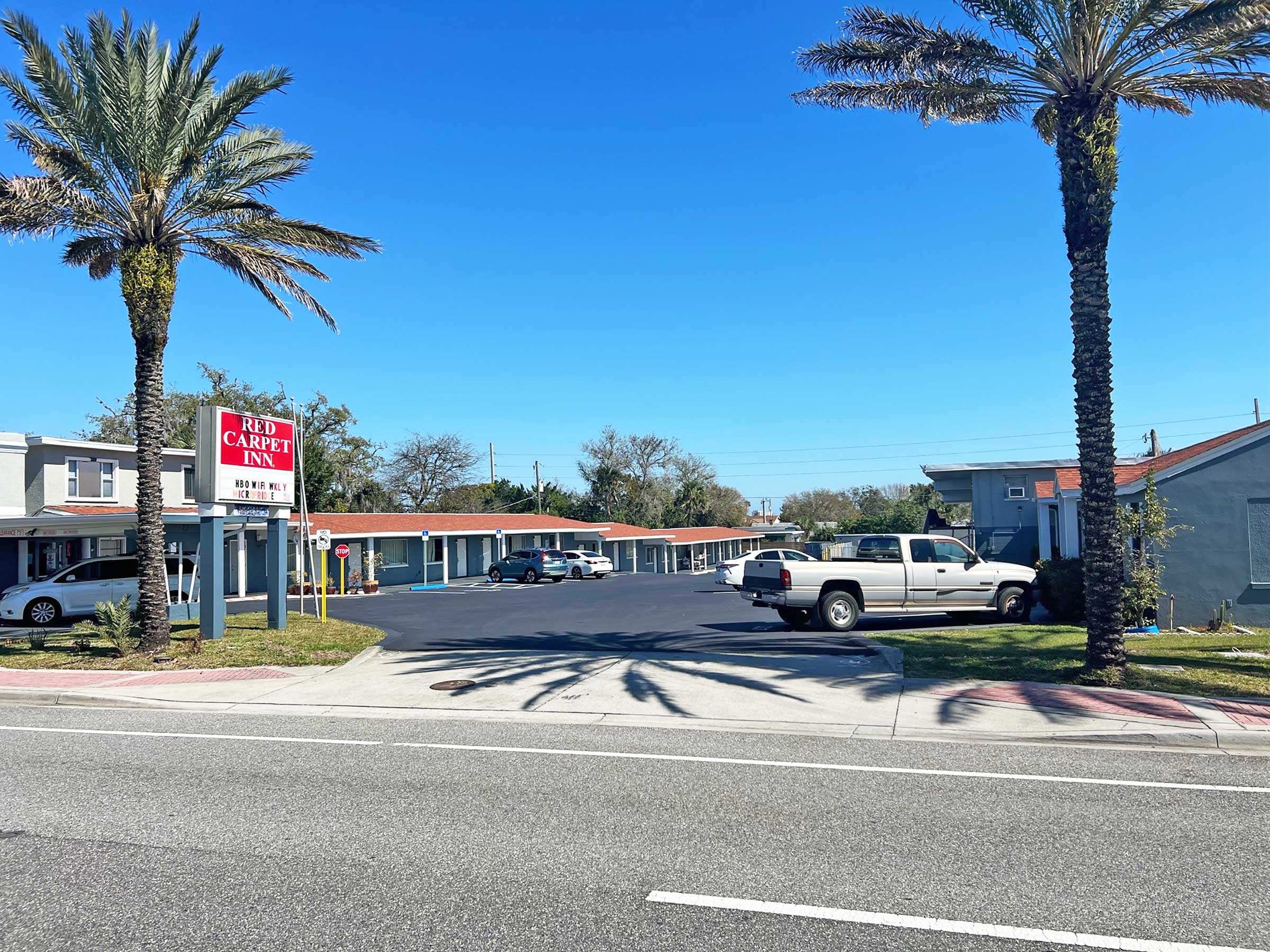
I don’t want to be like my daddy : 1972 : Red Carpet Inn, Daytona Beach & ‘Baby Sitter’ by Betty Wright

 Having answered the front door, its frame was filled by the 11pm silhouette of a large black man wearing overalls and carrying a toolbox. The only words I could discern from his Southern drawl were ‘air con’. Aha! He must have arrived to fix the air conditioning malfunction of which I had alerted the reception desk an hour earlier. He lumbered in and set to work while I continued to watch television.

“You on your own here, sir?” he asked whilst precariously balancing on a chair to grope the insides of the wall-mounted unit. Nobody had ever called me ‘sir’ before. I was a fourteen-year-old boy. He was at least three times my age.

“I am staying here with my dad,” I replied matter-of-factly. Was I meant to call him ‘sir’ too? He looked at me quizzically, seemingly not having comprehended my response. It suddenly dawned that, though Brits know American vocabulary from their TV and movies, Americans understand almost no British English.

“My father,” I clarified. “I am staying here with my father. But he has gone out this evening.”

“D’ya know when your pa gonna return, sir?” the man asked. I shook my head. I was not being coy. I did not know.

It took about a quarter-hour for the man to persuade the air conditioning to function again. Now, whenever I watch Robert De Niro fighting air ducts in ‘Brazil’, I am reminded of that maintenance man. Before he left, he kindly warned me:

“You’s be careful now, sir. And don’t you answer the door to anyone tonight as long as you is alone.”

I thanked him and continued watching television. My parents had raised me on the numerous 1960’s American shows broadcast in Britain, many of which were years old, so it was heavenly to binge on new episodes of familiar shows and those unknown to me. I had bought that week’s ‘TV Guide’ from the reception desk and was thrilled to discover shows like ‘Love American Style’ and ‘Room 222’ on ABC that made me laugh out loud, stretched out on my motel bed.

The late film that night was ‘The Magus’, a baffling watch despite the presence of Michael Caine and Anthony Quinn. Because American TV networks cut off movie credits, I had no idea that it was a critically mauled adaptation of a 1965 John Fowles novel. Back home, a female librarian at Camberley Civic Library had suggested I borrow Fowles’ 1963 debut ‘The Collector’, perhaps not realising from my height that I was only ten years old then, not a suitable age to read a harrowing account of a lonely young man kidnaping a girl and locking her in his cellar until she dies. For years after, I could not supress regular nightmares about this scenario … in which I was the young man.

A decade hence, university friend and housemate John Chandler would insist I read the paperback of ‘The Magus’. Despite the disappointment of the film, Fowles’ book proved to be riveting and not to give me nightmares. It remains one of my favourite reads, alongside another of John’s recommendations, Ursula Le Guinn’s 1974 novel ‘The Dispossessed’. I digress.

So where was my father that evening? I had no idea. He had left me in our motel room and driven away our hire car, promising to be back later. I eventually crawled into bed. He did not reappear until the next morning, offering neither explanation nor apology. As a teenage boy accustomed to parental indifference [see blog], I failed to recognise how irresponsible was his behaviour. Had the ‘Red Carpet Inn’ in Daytona Beach burnt to the ground that night with me inside, how would he have explained his decision to abandon me overnight 4,286 miles from home?

This whole father/son trip had been a bizarre undertaking from its outset. Unencumbered by prior discussion with me or my mother, he had visited a travel agency in Egham and booked a package tour to Florida for me and he alone, omitting our three other family members. My mother was understandably furious. My form tutor at school was furious as it meant me missing lessons for a week during term time and, henceforth, I was never awarded another School Prize [see blog]. Our first long-haul trip was ostensibly booked to witness the launch of the final Apollo rocket from Cape Kennedy. For years I had been a fanatic of the ‘space race’, following every event in detail and even corresponding with NASA for a primary school project. But my father was not.

Our father/son relationship could best be described as ‘business-like’. As soon as I could walk, my father had pressganged me into his one-man quantity surveyor business [see blog], me initially holding the end of his lengthy roll-out tape measure at properties, but more recently calculating returns on potential property developments [see blog]. Was this trip meant to be the reward for my decade’s unpaid service? My father had never seemed, er, fatherly to me. I do not recall him ever sitting me on his knee, holding my hand, hugging me or even reading me a book. When there was something he wanted to do that disinterested my mother, I was merely a handy substitute. Hence, despite my few years, I accompanied him to Camberley Odeon to watch ‘One Million Years B.C.’ in 1966 (aged eight), ‘2001: A Space Odyssey’ and ‘Planet of The Apes’ in 1968 (ten) and ‘Vanishing Point’ in 1971 (thirteen), the latter supported by a violent B-movie western in which a woman is stalked and raped by cowboys. Parental guidance, what’s that?

In the months between my father booking this trip and our departure, his behaviour had become more and more erratic, abandoning our family home for days on end without explanation. At the same time, he had become increasingly violent towards my mother, then caring for my months-old sister whom he had never wanted. Even though he had already indulged in purchasing a new American Motors Javelin sports car, he replaced it with an even more expensive and ostentatious two-seater ‘AMX’ model that resembled the drag racing cars he insisted on taking me to watch on weekends at nearby Blackbushe Airport. Was he experiencing some kind of mid-life crisis?

Whilst driving around Daytona Beach, I had noticed us pass a record shop which I wanted to visit. Having purchased my first soul single in 1969, I since had used pocket money to regularly buy imported American soul records from ‘Record Corner’ in Balham and ‘Contempo Records’ in Hanway Street. We stopped by the store and I bought some recent soul singles I had heard played on ‘American Forces Network’ Frankfurt, audible evenings in the UK on 873kHz AM, songs which had not yet been released at home: ‘Me and Mrs Jones’ by Billy Paul [Philadelphia International ZS7 3521], ‘One Life To Live’ by The Manhattans [Deluxe 45-139] and ‘Baby Sitter’ by Betty Wright [Alston A-4614].

After witnessing the delayed but spectacular night-time launch of Apollo 17 from the bonnet of our hire car, parked amongst hundreds of similar spectators, we caught our flight home from Melbourne airport. I felt sick and delirious that entire journey, unaware I was suffering sunstroke, my father having never considered providing me ‘sun creme’ or a hat during hours spent strolling together along the Florida shoreline for him to ogle bikini girls. Before our arrival home, he told me not to tell my mother about his unexplained overnight disappearances, our day of arrival having been the only night he had slept in his motel bed.

My silence made no difference because, only weeks later, my father left his family for good, similarly without explanation. Had the Florida trip been his clumsy way of bidding me farewell? Or had it been an experiment for him to explore a potential alternate lifestyle unencumbered by his wife and three children? Whatever it was, I did not miss him for one minute. All he had ever done was utilise my skills for his own ends. I did not shed one tear. For the previous fourteen years, he had only been present in my life when there had been some task I could do for him … rather than with him. Never had he demonstrated a genuine interest in his children.

Before he finally left, the few times he was at home, my father would play repeatedly the ‘Baby Sitter’ single we had brought back from Daytona Beach. It was a song in the Southern soul storytelling mould in which singer Betty Wright hires a teenage babysitter to look after her child, later discovering the girl has ‘stolen’ her man. The lyrics relate:

“This sixteen-year-old chick walked in

With her skirt up to her waist

She had a truckload of you-know-what

And all of it in place.”

Wright learnt the lesson after her man left:

“I should have been aware

Of the babysitter

I should have known from the junk, yeah

She was a man-getter.”

I felt it was a bit of a novelty song, nowhere near as classy as Wright’s 1971 ‘Clean Up Woman’ single [Alston A-4601] which I had purchased as an import single and loved. I had no idea why her new song seemed to resonate so strongly with my father until …

The day after my father left us, there was an unexpected knock on our front door. It was our friendly neighbour Mark Anthony who lived three houses along our cul-de-sac. He was visibly upset because his young bride had disappeared the day before without explanation. Had she contacted my mother, since we were the only family she knew on our street, the couple having only recently moved there? No, explained my mother, but my father had disappeared the same day. Oh dear! It seemed that my forty-one-year-old father had run away with Mark’s nineteen-year-old wife Suzie. She may never have been our family’s babysitter but she did resemble the girl in the song. I suddenly realised why my father had identified with its lyrics. He had abandoned us for a teenager. Was that how he had spent his nights in Florida?

During the months that followed, my father tried his utmost to destroy his family. While we were out, he would break into our home and steal as much as he could drive away of our possessions [see blog]. I lost a large number of soul records I had bought with my pocket money, many of which were irreplaceable and in which he had shown no previous interest. Amongst them was the ‘Baby Sitter’ single.

Years later, on the run from Court Orders requiring back-payment of thousands of pounds to my mother for the maintenance of his children, he fled to America. Eventually, the US Immigration Service caught up with him and expelled this ‘illegal alien’ back to the UK from Everton (population 133) in Arkansas where he had been confident/stupid enough in 1985 to register a business named ‘Andre Associates Inc’ with an address there at ‘Route 3, Box 68’, as well as a corporation of the same name in 1986 at '1608 Avalon Place, Fort Myers, Florida'. Extradited back to home soil, he disappeared again to Wales and then Christchurch. He never did pay his debts to us.

Upon his death in 2013, following who knows how many more failed marriages, my father left a handwritten will that bequeathed the bulk of his estate to my younger brother, along with his “collection of soul LP, CD, cassette music”. This was my apparent non-reward for having passed a decade working in my father’s business, whereas my brother had contributed not one day. I hope my brother has enjoyed listening to old records I had eked out of my teenage pocket money. Oh, I almost forgot, he had never shown any interest in soul music. To add insult to injury, my brother did not invite me to my father’s funeral, nor my sister, nor our mother. Evidently, he is the son of his father!

[I was reminded of these events whilst compiling my Spotify playlist of 2000+ 1970’s soul, funk and disco recordings from the catalogue of Miami’s ‘T.K. Records’, home to Betty Wright, George McCrae and KC & The Sunshine Band, amongst others. Naturally, it includes ‘Baby Sitter’.]

23 August 2025

You can lead a boss to wisdom but you can’t make her an expert Expert Witness : 2006 : Claire Enders, Enders Analysis

 Another day, another meeting. Though this one was most unusual. Not a word had been spoken during the past hour. I was sat in the basement Meetings Room. I had a pile of papers in front of me to discuss. I had thoroughly prepared. However, after arriving early, I was still the only person present. My boss had insisted upon this meeting. So where was she? There was no phone call or message to inform of a delay. One really is the loneliest number. Having waited an hour, I returned to my desk upstairs in the team office. Strangely, nothing would ever be mentioned to me about that meeting. It was as if it had never not happened.

Once is an accident. Twice might be a coincidence. Three times is an act of passive aggression. This should have been the last of three meetings demanded of me in an email from my boss’ personal assistant. Their purpose was to brief Claire Enders about the processes by which British radio stations make payments to songwriters for playing their music. She was to be grilled as an ‘Expert Witness’ during a landmark hearing of the obscure ‘Copyright Tribunal’ that had all the trappings of a court proceeding. However, she never arrived for any of those three meetings, never explained her absences and no subsequent attempt was made to reschedule them. For three hours across three days, I had been waiting in vain. The email to me had read:

“We have put in the diary 1pm on Wednesday 13th September for you to spend the afternoon with Grant. We have also blocked off 10th/11th October for your second session with Grant.”

Claire Enders had responded to me and two colleagues who were tackling non-radio issues:

“The initial format I would favour is seminars each w GG [me], JB and AE to outline the key issues covered by each and how we have dealt w them. I will take notes. Ideally, each of GG, JB and AE should this week prepare a set of materials for the topic covered which includes all pleadings and relevant points and witness statements divided by topic. I will then read the materials then expect to be quizzed by each of GG, JB and AE on each topic until I am word perfect. Plse copy this to GG Thank you Plse don't forget that either GG or JB need to be in court with me for my evidence (two full days) and either one will have to have an encyclopedic grasp of our three reports in order to assist.”

After our September meeting had become the first unexplained no-show, the timing of two further dates arrived by email: “GG in for 9th October 3pm, 10th October 1.30pm”.

Why had it fallen upon me to tutor the ‘star witness’ of the defence team? I had been hired by Enders Analysis that April to research and write analyses for its subscribers about the British radio industry [see blog]. However, by year end, I had found no time to write anything for publication. Instead, I was waylaid once my employer discovered that I seemed to be the only person in the office who understood the intricacies of music copyright. I was surrounded there by ‘analysts’ who wrote reams about their specialist media industries but who seemed scarcely to have sullied their hands working on the ‘shopfloor’ of sectors they professed to understand intimately.

I was different from them. They knew it, I knew it. They were posh. I was not. They had been privately educated. I had been born in a council house. My knowledge of the radio industry had been amassed from working my way up from ground zero, fuelled by a childhood thirst for knowledge about broadcasting. I was still at junior school [see blog] when I created multiple scrapbooks filled with newspaper articles about radio, scissored and UHU-ed from my parents’ and grandparents’ daily newspapers. I was still at secondary school [see blog] when I presented weekly music programmes on multiple London pirate radio stations, as well as producing identification jingles played across their output.

In 1980, my first paying job was at Newcastle commercial radio station ‘Metro Radio’ [see blog] whose declining ratings I turned around using my knowledge of pop music, my study of American music radio playlist systems and my economics training. One of my additional responsibilities as acting head of music was to correlate the reporting to copyright agencies of all the music played. Every presenter of every programme was required by law to handwrite A4 forms that recorded for each record played its song title, its artist, its record label, catalogue number and the duration in minutes and seconds it was used on-air. Around 300 songs played each day resulted in dozens of scrappy pages that regularly contained only partial information and blank spaces. A replacement computer system had been promised but never appeared. The forms had to be dispatched to three British statutory music copyright agencies: PPL, PRS and MCPS.

Some presenters hated this ‘extra’ work. They would put off doing the paperwork until their live show had finished, then forget and zoom off, instead piling all the records they had played in their locker, along with the blank forms and a vague promise to do it ‘later’. Much of the station’s record library ended up locked away for weeks in presenters’ lockers bursting with vinyl unavailable for airplay. When pressed to complete forms weeks later, they would have no memory of which track they had played from an album or its on-air duration so, naturally, they just made it up. From my perspective, any completed form – however inaccurate – was better than none at all and would reduce the grief I received from copyright agencies about missing data amongst the reams of paper submitted. It was chaotic. Did any artist or songwriter ever get paid the correct amount by the radio station using their works?

In 1990, prior to launching London’s KISS FM [see blog], I had to create a reporting system from scratch for the music it played. I was the only management team member who even understood our legal copyright obligations. Again, the promised computer system never arrived. I appointed one team member, Myrna McHugh, to co-ordinate the paper-based administration and, during our busiest times of the year, the workload required her to supervise a team of ‘temps’ hired to collate the voluminous information. The station regularly played ‘mixes’, ‘dubplates’ and ‘white label’ records whose copyright details were particularly challenging to determine.

In 2001, working in India on the launch of its first commercial FM radio station ‘Radio City’ [see blog], I met with the country’s copyright agencies to understand how to create a system to report the music played. Though our station was owned by Rupert Murdoch’s ‘Star TV’ business, I invited our competitors, including ‘The Times of India’ newspaper, to my presentation in a Mumbai hotel conference room to explain how music copyright functions and the legal requirements with which all our newly licensed radio stations would have to comply. I was pleased to be teaching my acquired knowledge to others.

By the time I joined Enders Analysis in 2006, my three-decade media career had also taken me to work at radio stations in Israel, Russia, Hungary, Germany, Latvia, the Czech Republic, Lithuania and Estonia [see pdf].

I stumbled into my latest job just when a music copyright dispute was about to be heard before the Copyright Tribunal. The earliest wave of American online music streaming businesses had launched in Britain and disputed how much they should have to pay for the music they played to their subscribers. Their argument was simple: claiming their business model was no different from existing British commercial broadcast AM/FM radio stations, such as London’s ‘Capital Radio’, so they should pay the same low rates. However, those rates had been agreed in 1973 when commercial radio was first licensed in Britain, an era when it was unimaginable that consumers would someday request and hear specific songs via the internet.

The songwriters, represented by the Performing Rights Society (PRS), disputed the argument of these online businesses who added no ‘radio station’ value in the form of presenters, information, news and features to their non-stop back-to-back music. PRS had hired Enders Analysis to provide data and arguments to win its case. Claire Enders would appear before the Tribunal as an Expert Witness for PRS. During the months leading up to the Tribunal hearing this case, my role was to refine those arguments and to research/analyse the radio and music streaming markets to provide documented evidence. Some of this work I have subsequently published, such as ‘The Differences Between Traditional Terrestrial Broadcast Radio and Internet Radio’ and ‘Audio Podcasts and The Market for Podcasting’ (23 and 35 pages respectively).

I recall that one day, waiting at the Lebanon Road tram stop, a ‘Eureka’ moment made me realise that a document I had earlier found online undermined the argument presented by the music streaming companies that their product was ‘radio’. I contacted PRS and, working with its lawyers at Denton Wilde Sapte [see blog], we jointly developed a cohesive case backed by evidence to present in writing prior to the commencement of Tribunal hearings on 28 September 2006.

It was 5 December 2006 when Claire Enders was called as an Expert Witness before the Tribunal. I was sat in the front row on the lefthand side, between the PRS lawyers and their barrister, while the American internet team were on the opposing benches. Throughout the Tribunal, I would follow carefully the proceedings and write thoughts on Post-it notes passed to the lawyers who then made suggestions to their barrister. Enders faced me from the witness box a few metres away to the left of the Bench of three elderly judges. It resembled one of those courtroom scenes so beloved of television dramas. Enders was pressed by the barrister for the streaming services as to her expertise in the radio industry:

Kenneth Steinthal [New York Bar representing MusicNet, Yahoo!, AOL, RealNetworks, Napster and Sony]: “What exactly did you do to analyse the webcasting business before submitting your first witness statement?”

Claire Enders [Expert witness for PRS]: “In preparation of it?”

Steinthal: “Yes.”

Enders: “In preparation of it, the radio specialist I have on the team, who is called Grant Goddard, and I discussed, you know, what we were looking for, and in particular we looked at a large number of webcasts. We did a lot of internet research into the various models. We looked at what had been written about them in the US. It was also part of the job to look at how the different services behaved, you know, actually experiencing them.”

Enders: “My colleague, Grant Goddard, spends a lot of time analysing various web-based phenomena, as do many of my team, and so we listened to them and looked at how they behaved and so forth. So a lot of desk-based research and experimenting with the services themselves.”

Steinthal: “Can we separate what your colleagues did from what you did and ask you to focus on what you personally did to analyse the webcasting industry?”

 Enders: “I personally spent time on ‘Yahoo!’ and ‘AOL’.” […]

Steinthal: “Other than spending time on ‘Yahoo!’ and ‘AOL’ to get a sense of what those services were comprised of and looking at ‘Shoutcast’, again focusing on what you did to analyse the webcasting market, what else did you do, if anything?”

Enders: “I also read the -- I am sorry, I am not a lawyer, but the various documents that had been prepared by the various parties, various legal documents making various claims about their industry -- about the specific aspects of both ‘iTunes’ with the MNO’s and so forth so. I am sorry, I think those are called pleadings, but there are other documents that have different names. So I was trying to understand what the issues were between the two sides.”

Steinthal: “Did you interview anyone engaged in webcasting?”

Enders: “I did not do so personally.”

Steinthal: “Is there anything else you did, other than what you have just testified to, to ready yourself for preparing your first report in May 2006?”

Enders: “No.”

Steinthal: “Other than your experience in connection with the potential ‘EMI’ interest in ‘Viva’ and in ‘Classic FM’ in the early 90’s, do you have any first-hand experience in broadcast radio?”

Enders: “It depends what you call first-hand, because I have always been an analyst and a strategist, so that -- I am not an operations person. I have not run a station or anything, I just analyse business models. So, by that nature, one is always a bit removed from the coalface, if I may say.” […]

Steinthal: “Prior to this case, had you had any experience with respect to the licensing by MCPS or PRS of either terrestrial radio stations or internet radio stations?”

Enders: “No.” […]

Steinthal: “… I am trying to find out whether you did anything other than looking at the industry reports, for example, and talking to your colleagues as you testified earlier in doing –"

Enders: “Desk research, we did a lot of desk research.”

Steinthal: “Excuse me?”

Enders: “We did a lot of desk research, looking for – searching for information online.”

Steinthal: “Anything else that you did to inform yourself, to make the comparison that you made in your various reports between terrestrial radio and webcasting?”

Enders: “Other than looking at websites and doing desk research and listening to the stations themselves and so forth?”

Steinthal: “Right.”

Enders: “No.”

It was 11.35 on the morning of the first of day of testimony by Claire Enders. We had only started at 10.30. For the remainder of that long day and all of the next, I put on a poker face whilst cringing inside at my boss’ difficulty providing detailed answers to questions fired at her about the British radio industry. She had undoubtedly read my documents for the Tribunal, but why had she not been prepared to meet me so that I could share my acquired knowledge and expertise? Why the reluctance to fulfil face-to-face meetings she herself had demanded? Enders’ apparent view was that I toiled at “the coalface” whilst she was “not an operations person” but worked to “just analyse business models”, a latter-day Ian MacGregor to my underground mining activity. She and I never spoke about her performance those two days.

After twenty days of hearings, it took until 19 July 2007 for the judges to publish their 91-page verdict. It noted criticisms voiced during the hearings that Enders was “a commentator or a highly-paid industry observer rather than being a lively participant in any relevant field”. However, it did highlight that “in particular, she gave evidence to refute the suggestion that webcasting [‘streaming’ in today’s parlance] and commercial broadcast music [‘radio’] should be regarded as comparable products”, the argument I had successfully proven.

Overall, the judges’ verdict on Claire Enders’ performance as an Expert Witness was hardly positive:

“Even taking into account Ms Enders’ inexperience in this jurisdiction, her performance as an expert was, we thought, rather uninspiring. Her reports (which comprised a fulsome lever arch file of evidence together with numerous lever arch volumes of exhibits thereto) consisted to a large extent of data which had indeed been sourced by others, sometimes by a team which she herself led and the reliability of whose work she (often unquestioningly) relied on - only to find it wanting on closer examination. We certainly sympathise with the impossibility of mastering everything within so large a corpus of material. Nonetheless, on a number of key issues, she seemed confused, occasionally inaccurate and, more importantly, sometimes unable to provide reasons for the assumptions upon which her evidence was based. Surprisingly, she had not actually read the New JOL [‘New Joint Online Agreement’] but relied on a summary thereof. We do not wish to give the impression however that Ms Enders’ evidence was misleading; it was not. But we were not greatly assisted by it.”

Nevertheless, our client PRS and its legal team at Denton Wilde Sapte were very pleased with the Tribunal’s outcome. They invited me to participate in celebratory drinks after work in a Fleet Street members club. As the only Enders Analysis employee to have sat between them on the legal front bench throughout the proceedings, I had been impressed by their professionalism and gratitude for my contributions. My work had made a difference. Henceforth, music streaming businesses operating in Britain would be required to make considerably greater payments (‘royalties’) to songwriters whose music they were using. Not merely songwriters within Britain but throughout the world. The business model of American music streaming services operating in the UK would necessarily have to change.

In a subsequent presentation 'Online Radio: The UK Business Model' I made in 2012 to the ‘Music 4.3: Smart Radio’ conference in London, I noted how this Tribunal had determined music streamers’ costs for using songs would be much more expensive than rates paid by UK commercial radio stations. The Tribunal had decided that “the per play rates in [online] agreements for pure webcasting [music streaming] are approximately six times those … under the [commercial radio] agreement.” The reason it gave was that “the Tribunal was of the view that independent commercial radio offered quite a different service to an [online streamed] ‘music, music, music’ service”.

As the Tribunal verdict had produced a ‘win’ for PRS, Enders Analysis offered to pay for myself and my work colleagues to share a celebratory afternoon outing. I should not have been surprised that they chose to take ‘afternoon tea’ at the Savoy Hotel in the Strand, a venue for the rich and privileged I had heard of but never coveted. My younger posher colleagues enjoyed themselves at “London’s most famous hotel”. I would have much preferred to spend an evening at the Jah Shaka reggae sound system.

The Tribunal verdict noted that Enders Analysis had charged its client PRS £750,000 for “preparing their reports” though additionally there were “VAT [at 20%] and charges for [Claire Enders’] attendance at the hearing”. The judges concluded that “incurring expert fees of this order of magnitude (and even taking into account […] the substantial sums of money at stake) was, in our view, seriously disproportionate”. Enders Analysis’ billing to PRS had likely exceeded one million pounds.

Within only a few years, most of the American ‘applicants’ who had forced this costly Tribunal – Yahoo!, AOL, RealNetworks, Napster and Sony – exited the UK music streaming market, each having spent millions on legal fees and their own bevy of Expert Witness submissions and expenses. It demonstrated what a ‘black hole’ exists for American online start-ups who seem to have unlimited money to try to push their way into countries around the world on their own terms, using their own lawyers to argue the unarguable and to attempt to stomp on overseas legal precedents. 

My first nine months at Enders Analysis had been diverted into full-time work on this legal case instead of writing media analyses for its subscribers. Regardless, I had been pleased to utilise my ‘expert’ knowledge of music copyright gained over decades on the radio industry shopfloor. One day at work, Claire Enders stopped me on the office staircase, thanked me for my work on the Tribunal and unexpectedly offered me a bonus which I gratefully accepted. It may have been no more than a few percentage points of her ginormous fee but, combined with accumulated savings from my and my wife’s salaries, it provided us a deposit for the purchase in 2007 of our first home … at the age of forty-nine.

It was the first and last bonus I received in any workplace.