Showing posts with label radio station. Show all posts

14 January 2026

Making world music's first international star : 1985-1988 : Ofra Haza, Tel Aviv & London

 In January 1985, I had arrived in Israel to work as a DJ on a radio station, but this was no ordinary radio. The studios of ‘The Voice of Peace’ were on a ship anchored permanently in the Mediterranean Sea [see blog]. Aware of my interest in cutting edge music, the station’s popular breakfast DJ Dave Asher (who had been living in Israel for some time) [see blog] played me a recent 12-inch single ‘Galbi’ by a young Israeli singer of Yemeni origin named Ofra Haza. It was a traditional Yemeni song, re-mixed and cut up into a state-of-the-art club tune that sounded to me like a new, exciting ‘Middle East meets West’ genre. I wanted to find out more, but the terrible winter storms and shortage of DJ staff meant that I was stuck working on the ship for the next three months.

Eventually, during my first shore leave, I visited the Tel Aviv office of the small independent record company ‘Hed Arzi’ that had produced the Ofra Haza single. They were baffled that a British DJ would be so interested in one of their worst selling record releases, and particularly one that seemed to have such minimal mainstream potential. They humoured me and let me sit at a desk in their office, penning handwritten letters to radio DJ’s and record labels that I knew back in the UK, sent by airmail along with the single and related album ‘Yemenite Songs’.

Within a month, I had received replies from John Peel at ‘BBC Radio One’ and Charlie Gillett at London’s market leader ‘Capital Radio’, both saying that they had played Ofra’s record on their shows and had received enquiries asking where the record could be purchased. During my next shore leave, I returned to Hed Arzi, whose staff were amazed that their song had been played on national radio in the UK. They introduced me to Ofra and her manager for the first time. I wrote again to several UK record labels and one of them, ‘Globestyle’ owned by ‘Ace Records’, was convinced sufficiently by the airplay to release both the single and the album [see blog].

I returned to the UK at the end of 1985 and spent the next two years trying to convince everyone I knew of Ofra’s talent. By 1987, I had given away so many copies of her records to music industry people that Ace Records’ Roger Armstrong said I would be given one last free box. By chance, I had recently been invited to attend a monthly staff meeting of London pirate station KISS FM (at the London School of Economics) [see blog] and, as a last resort, I distributed copies of Ofra’s records from this last box to some of the station’s DJs, mailed from my part-time job with ‘Rough Trade Records’ director Scott Piering. Simultaneously, I attended monthly meetings in a London pub of music industry personnel who created the new genre ‘world music’ and marketed it for the first time in the UK [see blog].

KISS FM DJ's Jonathan More and Matt Black, recording together as ‘Coldcut’, had already enjoyed underground success with some highly original cut-up singles on their ‘Ahead Of Our Time’ label. They liked the Ofra Haza songs so much that they cut up one of them into their homemade remix of US rappers Eric B & Rakim’s latest single ‘Paid In Full’. ‘Island Records’ in the UK released this remix without seeking Eric B’s prior approval, and without clearing the Ofra Haza sample. By the end of 1987, the single had reached number 15 in the UK singles chart, giving Eric B his first British hit and earning significant royalties for the Israeli record company because a third of the track featured Ofra’s voice, a fact I knew because Roger Armstrong had asked me to time the recording with a stopwatch in order to negotiate his appropriate share of royalties from Island Records.

More than anything, the chart success of that Eric B remix stimulated huge public interest in Ofra Haza’s voice beyond the narrower market for the new ‘world music’ genre. In early 1988, I organised interviews for a promotional visit to the UK, shepherding Ofra Haza and her manager Bezalel Aloni to BBC Radio 1, the BBC World Service and London commercial radio stations. Ace Records re-issued Ofra’s ‘Im Nin Alu’ single, which quickly garnered radio airplay this time, despite it being sung in a strange, foreign language. However, the public demand for the single was so great that the independent label had difficulty fulfilling orders, so it licensed the track to ‘Warner Brothers/WEA’. After an initial meeting with the major label at which I passed on all the press coverage I had achieved to date, my direct involvement with Ofra Haza ended abruptly, just as she was invited back to the UK to perform on BBC1 TV show ‘Top of The Pops.’ I had asked Warner to keep me updated but it never did.

After the success of this single internationally, the Israeli record label invited me to London’s ‘Sarm West’ Studios, where the follow-up single ‘Shaday’ was being mixed. It was evident that none of the Warner Brothers personnel involved had any understanding of the unique charm of Ofra’s Yemeni music in the international marketplace. Ofra’s controlling manager was far too keen to turn her into a mainstream pop singer, which is exactly how the public perceived her in Israel. As a result, the follow-up single bombed and, sadly, it seemed then as if Ofra was consigned to be a one-hit wonder as a result of poor career guidance.

In 2000, I was shocked to learn of Ofra’s death at the age of 42 from AIDS-related organ failure. I emailed the family in Israel, asking to attend the funeral, but received no response. Two years later, an Israeli ‘Channel 2’ television film crew came to London and filmed an interview about my role in creating their country’s most successful international pop star [for 70-minute ‘The Life & Death of Ofra Haza’]. They had just filmed a similar interview with John Peel at his home, during which he impressed them by producing my handwritten letter that had accompanied the Ofra records I had initially sent him from Israel seventeen years earlier. The interviewer asked me if I had made a fortune from ‘discovering’ Ofra Haza for the international market. I laughed. All I had ever received was one cheque for £200 from Ace Records in 1988 to reimburse my expenses for taxis, refreshments and food during Ofra’s initial London promotional visit. Neither Hed Arzi, nor Ace Records, nor Haza’s estate has communicated with me since.

Ofra’s incredible voice lives on through the music she recorded, although I am always reminded of the parts of her life that had been unbelievably tragic. The crucial roles of the late John Peel and Charlie Gillett in her international success should not be forgotten. Ofra Haza’s music arrived in the Western world at a time when the public welcomed sounds that challenged their expectations. We are musically much the poorer for the loss of Ofra, and of John and Charlie, from our world.

[Green Productions in Israel has just completed a video documentary ‘One Song’ in Hebrew that narrates the story in detail for the first time of how ‘In Nin Alu’ became an unlikely pop chart hit.]

7 December 2025

Letter from Cambodia - munching mince pies by the Mekong : 2004 : BBC World Service Trust, Phnom Penh

 Dear John

Since we last spoke before Xmas, I have made a move …. to Phnom Penh. I am writing this sitting on a hotel balcony overlooking the Mekong River. How did this happen? Nearly two years ago, when I was living in Brighton, I was interviewed by the BBC World Service Trust for a job managing their projects in Africa and Asia. I didn’t get the job but they said they would get back to me if something suitable came up. I heard nothing more until the week before Xmas, when a message was left on my voicemail asking me to call the BBC office about a possible consultancy job in the New Year. Apparently, they had contacted Owen [Leach, former colleague at Star TV India and Metromedia International Inc.] to track down where I was now, he had told them about my job at the Radio Authority, which they found was closed, so they tried Ofcom. They wanted me to go to Cambodia as early as possible in 2004 to support their project there that was partnered with three Phnom Penh radio stations. Could I spare two or three months? [see blog]

Only a week earlier, my line manager at Ofcom (who too transferred from the Radio Authority) had told me that I would have no work to do during the first quarter of the year and that “there is nothing for you to contribute to” with regard to Ofcom’s strategic review of the whole radio licensing process. So I asked if I could take unpaid leave to do the BBC work. My request was refused. I asked if I could take paid leave to do the work, since I had eight weeks of holiday accrued that had to be taken by year-end 2004. My request was refused. Suddenly, I was told that there were essential tasks that I would be needed to work upon during the first quarter of the year. I was also told that, when the radio licensing regime restarted in the second quarter, it would be essential for me to be there. So when could I take the vacation to which I was entitled? I received no answer. I thought long and hard about the options open to me. I had applied for all sorts of jobs internally with Ofcom that were more suited to my skills (in departments dealing with audience research, market intelligence, policy & strategy), but no one had offered me anything. The prospect of spending at least three months sitting at my desk doing nothing (just like my job at the Radio Authority) whilst the new Ofcom radio licensing strategy was being decided by others did not appeal to me. I had already spent a year doing almost nothing. So I quit. [see blog]

A week later, I was heading for Cambodia. I arrived here on Tuesday of last week without even had a meeting with the BBC World Service in London. They sent me the airline tickets, a contract and a certificate of health insurance. I am here initially for two months, but which is likely to be extended to three months. They are paying for my hotel bill at a very nice, newly built ‘boutique’ hotel owned by two French businessmen. My room is huge. The hotel has wireless internet access and a modern restaurant. They have contracted me as a consultant (their first, so the contract is numbered WST 001), but the manager in London says that, if the work is successful, I should get further work out of the BBC. He has been very honest and admitted that I am helping them out of a large hole. The project is paid for by the UK government Department for International Development (DfID) who want results by their year-end this April before they will renew funding for 2004/5. My job is to produce the required results. The pay isn’t great (£750/week + US$100/week pocket money) which they have admitted, but they say they are eking it out of the existing budget, as a consultant was not budgeted for.

The BBC set up an office here last year (there is no BBC Phnom Penh correspondent) which now employs around 40 people. It is in a beautiful colonial villa next door to the British Embassy. It has everything you could want – drivers, computers, mobile phones, photocopiers, etc and the essential air conditioning. There are several UK staff here – the project manager is an ex-‘Panorama’ filmmaker, the head of radio is an ex-World Service studio manager, the head of TV was executive producer of ‘EastEnders’. I had no briefing before I left as to what I was expected to do here, so I have spent this weekend reading all the BBC documents about the project, and now have a better idea. The BBC is shifting its strategy from simply making the odd programme or series to be broadcast in developing countries towards a more holistic approach of training staff of existing radio stations in developing markets (i.e. Cambodia) to be market leaders. But the BBC doesn’t have any staff who can do that because existing staff are used to having huge BBC resources available to them to achieve even simple objectives. Small-scale cheap commercial radio is simply not their forte. Even a simple phone-in, in BBC terms, is thought to need a staff of at least 5 full-time people for a single weekly show. The BBC has signed contracts with three stations here to deliver a mixture of pre-recorded spots, phone-in shows and management training (combined with hardware purchase) that will make these stations market leaders. There are 18 stations in Phnom Penh. My job is the training. Money is almost no object. DfID has given the BBC £3.3m for 3 years, not only for radio but also for the production of a two episode/week soap for TV. [see blog]

Phnom Penh isn’t as basic as I expected. True, there is no public transport or taxis, but every fifth vehicle is a 4-wheel drive and there are internet cafes on every corner. Although it’s the winter, it is very hot and dusty here, particularly in the middle of the day when the city closes down for a daily two-hour siesta. There are fewer shops than India and no corner convenience stores. I have just found the nearest supermarket to my hotel this morning, which is almost a mile away, but was surprised to find it took credit cards. There are no ATM’s in Cambodia. Everything is denominated here in US dollars as the local currency is worthless. The city is filled with Westerners as there are so many aid projects here of one sort or another. There is a daily English-language newspaper and an English radio station (‘Love FM’), despite the fact that very few Cambodians speak English. All shop signs and road signs are in Khmer and English because of the sheer number of aid workers here. The city is laid out in the Parisian style by the French with wide boulevards (though the traffic travels in both directions on both sides of the street) and vast gardens that stretch down to the river. Lots of Buddhist temples everywhere. Not so much outright poverty as Mumbai, but then Phnom Penh is a small city and there is no apparent rural-to-urban drift. Most people that survived Pol Pot lived in the countryside and stayed there. [see blog]

Anyway, enough of me. Let me know how things are going. I have intermittent wireless internet access at the hotel, and more reliable internet access at the office. If your itinerary passes this end of the world, please drop in. I’m sitting here eating mince pies (made in Australia) that I bought from the supermarket and thinking about ordering a pizza delivery tonight. Sometimes I wonder if I am really in Cambodia at all (although the endless karaoke phone-in shows on all radio stations remind me that I am not somewhere ‘normal’) [see blog]. Our only worry at the moment is that King Sihanouk has left for China to have a serious operation and, if he were not to survive, there is no succession plan in place and the likelihood of a people’s revolution because parliament has never been recalled since the last election. Oh, and the chicken flu that has arrived here Friday from Vietnam and Thailand. Apart from that, things are fine.

Yours, Grant

25 January 2004

27 October 2025

New upstarts clobber complacent commercial radio industry two-decade market monopoly : 1973-2005 : Independent Local Radio, UK

 The UK commercial radio industry has grown dramatically since the first station launched in 1973. The history of the industry can usefully be divided into two chapters:

1.  1973 to 1990

At the beginning of this period, local commercial radio stations were opened only in the UK’s biggest cities and then, in the 1980's, new stations were launched in smaller cities and in largely rural counties. The regime was characterised by the word 'monopoly', as only one commercial station was licensed in each location (London was the only exception, with two stations licensed with very different formats). Each station broadcast its programmes simultaneously on the AM and FM wavebands, enabling it to reach the maximum possible audience in its coverage area. Each station’s success depended upon its ability to attract listeners away from national and local BBC stations, and its ability to attract advertising to the new radio medium and away from competitors such as the local press and regional television.

Listening figures to local commercial stations were generally very high. They were new, exciting and offered something more local and less stuffy than BBC stations. Because each local station was a separate local company, run by a local Board and financed by local shareholders, each station cultivated its 'localness' to the maximum in order to attract listeners. London’s 'Capital Radio' was a prime example of the success such a strategy could have. Using the slogan 'In Tune With London', every day the station used its converted red double-decker bus to visit a different London location, handing out stickers and leaflets, as well as offering listeners the opportunity to meet presenters and request songs. These 'personal contact' strategies paid enormous dividends and generated substantial loyalty between listeners and their local station. By the 1980's, they were supplemented by community outreach projects and charity fundraising marathons. 'Capital Radio' had a JobCentre branch and a flat share information service in its foyer [see blog], which became young Londoners’ first means of finding accommodation in the city.

By the end of the 1980's, local commercial radio was a big success with listeners and had developed a loyal following across two generations of listeners, giving it substantial audience figures across a wide variety of ages. Up and down the country was a range of fiercely individualistic, quirky stations, each with their own name, each with their own 'star' presenters, and each adopting their own idiosyncratic music format. By now, each had woven itself into the fabric of its community and was as much a part of local life as the town’s football team or the local bakery chain.

The one aspect of local commercial radio that proved problematic was stations’ inability to surpass their 2% share of total UK advertising expenditure. This percentage stubbornly refused to grow, even during times of an advertising boom and radio became known within the advertising industry as the '2% medium'. It was viewed as an 'extra' to be added to media campaign plans in times of boom, but quickly struck off when the economy was not so good. As a result, advertising revenues fluctuated enormously during downturns in the economic cycle and one local station was even forced into liquidation.

Radio’s main problems in attracting national advertising were:

Even all the stations added together did not cover the whole UK

Because each station was independently owned, buying a campaign on all existing stations was a labour-intensive task

Station advertising rates and packages varied hugely, more dependent upon stations’ ability to extract such prices from local advertisers than any standard cost per thousand

Station formats varied as much as their names, so that some stations delivered considerably older or more female-orientated audiences than others.

Because national advertising was so problematic, the majority of advertising sold on local commercial stations was derived from local businesses. By the late 1980's, local radio had proved its effectiveness at marketing local products to local listeners, and a bond had been forged between local business owners and the local sales teams of stations that was the economic lifeline of these broadcasters.

At the same time, by the late 1980's, complacency started to infiltrate local radio that resulted directly from stations’ lack of competition for listeners and lack of competition for local advertisers. Stations started to work less hard than they used to in order to please both their audience and their local business community. The government’s regulator released stations from having to fulfil many of their community obligations. Instead of seeing that work as an intrinsic part of their loyalty-building strategy, stations such as 'Capital Radio' closed their Community Department overnight [see blog]. At the same time, stations had their eye on merging with nearby stations to increase profitability, or arranging stock market flotations to generate capital for acquisitions. Several stations diversified into all sorts of businesses from theatres to restaurants, seeing themselves as 'entertainment' rather than purely 'radio' companies. In the 1980's, anything that involved making money seemed a good idea.

For the first time in its history, the late 1980's saw 'Capital Radio' suffering declining audiences and, like other local commercial stations, it had no idea what to do about the problem. It had only ever competed against the BBC for audiences and, only then, back in its very early days. Since then, it had always taken its audience for granted and simply presumed that listeners would never turn to any other station. All the local stations still enjoyed a monopoly over commercial radio advertising in their patch. It was something they felt they had a right to. The 1980's economy was booming. Everyone was getting rich quick.

2.  1990 to now

The existing radio stations received their first major shock when the regulator suddenly licensed a range of 'incremental' stations in areas that already had existing local stations. This was the first time that the so-called 'heritage' stations had ever faced competition from newcomers. For example, in London, 'Capital Radio' lost audience straight away to 'Melody Radio' (targeting older people), 'KISS FM' (young people), 'Jazz FM' (wealthy middle-aged people) and 'Choice FM' (the Afro-Caribbean community). Suddenly, the audience that 'Capital' had taken for granted for so long was deserting it in droves for stations that sounded new, fresh, innovative and in touch with London, something that 'Capital' had done less and less of in recent years.

The second shock came when the regulator licensed three national commercial radio stations, a full thirty years after local commercial stations had been introduced. The industry had been arguing for years that it could never break through the 2% barrier (of all advertising spend) unless businesses and agencies were able to offer clients a proper 'national' opportunity to book a single campaign across the whole UK. New national commercial stations could offer such a deal and give the existing local radio stations a chance to share in radio’s enhanced visibility. As a compromise, the new stations were deliberately introduced in such a way so as not to impact local commercial radio audiences too greatly. The national 'popular music' station was to be confined to the poor-quality AM waveband, while only a minority-interest music station would be allowed the coveted national FM slot.

The third shock came when, having seen the success achieved by some of the specialist music stations that were part of the 'incremental' experiment, the regulator decided to roll out a programme of many more new local stations in more areas with existing 'heritage' stations. Thus, the 1990's heralded the biggest and fastest expansion of radio stations the UK had ever seen, immediately after a period of relatively slow industry growth in the 1980's. The shock of moving from a stagnant period of complacency to suddenly being immersed in a highly competitive situation where they had to fight for both listeners and advertisers proved a wake-up call for many local stations. What followed still has a considerable impact on the radio landscape of today. The radio industry underwent a fundamental re-structuring that included:

a.   The emergence of radio groups

A limited amount of consolidation had occurred during the 1980's, largely based on regional geography, whereby groups were formed from the combination of several local stations in a region (i.e. Midlands Radio Group Ltd, Suffolk Group Radio Ltd). As early as 1985, GWR Radio Ltd started a series of acquisitions based on the simple motivation that 'big is better' and the trend continued throughout the 1990's with stations bought and sold for greater and greater sums of money.

b.   The entry of media groups

Starting in 1990, large cross-media groups such as EMAP plc, Virgin Group Ltd and Chrysalis plc bought their way into the radio industry, acquiring a mix of heritage stations and newly launched stations. This substantially increased the sale prices of local stations.

c.   National advertising

The launch of the three national radio stations had the desired effect of attracting national advertisers and agency media buyers to radio for the first time. With local stations now consolidated into fewer groups, it became easier to buy campaigns through a single selling point to run on stations across a region or regions. Both the national and local stations benefited from the influx of national revenues.

d.   Cost cutting

In an industry where costs are mostly 'fixed costs' and revenues are almost infinitely 'variable', GWR Group pioneered the strategy of cutting costs to the bone at the many stations it acquired. According to GWR CEO Ralph Bernard: “It became very evident that if you don’t have size, you don’t have the ability to do things and you are forever trying to find the money to fix leaks, literally.” GWR’s policy of implementing economies of scale across its stations led to the centralisation of many tasks.

e.   Local advertising

As stations became incorporated within larger and groups, national advertising became of more and more importance to their owners. The bedrock of local radio, local advertisers, soon became serviced by regional rather than local sales teams, until eventually they were serviced hardly at all from a national sales office. As a result, local advertising revenues became less and less important to groups that were growing bigger and bigger.

f.   London agencies

With the rise of youth brands in the marketplace, and the evident success of London youth station 'KISS FM' [see blog] in creating a commercial focus for a demographic that had never before been served by commercial radio, London advertising agencies suddenly wanted to buy campaigns on stations that delivered 15- to 34-year-olds. Faced with both local and national competition for audiences and revenues for the first time, local heritage stations suddenly started chasing a younger audience. As a result, the middle-aged audience that had been loyal to their local commercial stations for many years started to drift away (mainly to 'BBC Radio Two'), alienated by stations playing too much dance and rap music.

g.   'BBC Radio One'

Although the turn of the 1990's had been a scary time for local heritage stations as they suddenly faced competition in their own areas from competing commercial stations for the first time, they were all helped immeasurably by the BBC’s decision to change drastically the programming of its most popular station, 'Radio One'. Until then, this station had a remarkably large audience of diverse ages that overshadowed local commercial stations in most regions of the country. As a direct result of the BBC’s bizarre volte-face, between 1992 and 1994 five million listeners left 'Radio One' and most sought refuge in local commercial radio. These latter stations’ audiences suddenly boomed and they became the most listened to in their markets, without having to change or do anything different. The BBC had unintentionally saved their backsides.

h.   Lack of investment

With audiences growing hugely because of the demise of 'BBC Radio One'; with revenues booming because of the ability to sell national advertising on larger and larger groups of stations; and with stock market values of radio groups buoyed by the industry’s breakout from its former position as the '2% medium', group owners were quick to redistribute their substantial profits to shareholders. After a relatively lean period in the 1980's, 'radio' was suddenly riding on a 'high' in the financial community. Ignoring the fact that their product had only become popular as a haven of last resort for listeners fleeing 'Radio One', group owners invested almost none of their lucky profits back into the development, improvement or update of their product.

i.   Networked programmes

Instead, station owners sought ways to cut even further the fixed costs of their station operations. Led by GWR Group plc, groups persuaded the regulator to let them network some programmes from a central production studio, instead of each of their stations producing all of its own content. In a lengthy process of attrition, by bullying a regulatory agency that lacked any long-term strategic plan for the industry, group owners were allowed piece by piece to extract the 'localness' from their local stations. Local voices, local station names, local celebrities, local music, local content and local news all became sidetracked or dispensed with by many group-owned stations.

j.   The rise of brands

Led by EMAP plc, which championed the notion that nationally recognisable brands were preferable to local identities, many local radio stations were stripped of the very characteristics that had made them 'local' in the first place. In an attempt to make their product controlled, homogenous and universal, the largest radio groups invested considerable sums in state-of-the-art technology that enabled stations up and down the country to be playing exactly the same record at exactly the same time, appended at the end of the song by a jingle that said 'Coventry' or 'Newcastle' as appropriate, depending upon the station’s location.

k.   Format convergence

Although the listener is now offered a considerably wider choice of commercial radio stations in most local markets than was the case in the 1980's, the industry is plagued with competitors who are all trying to move towards the same middle ground [see blog]. In yet another war of attrition that the regulator has lost again and again, many stations have stretched the definition of their prescribed programme formats to (and often beyond) their limits. This has created a situation where stations that are (by the regulator’s definition) meant to be complementary are in fact found to be competing for the same audience demographic and for the same advertisers in the very same market, by playing exactly the same music. This leads to substantial market 'cannibalisation' whereby competitors merely steal audience from each other, rather than attract listeners from the biggest competitor, the BBC.

l.   The decline of the music industry

Commercial radio in the UK, modelled on 'BBC Radio One', has always relied upon the universal popularity of 'popular music' to be the cornerstone of its programmes’ appeal. Until around 1990, almost everyone in the UK had a common notion of what a 'pop hit' was. But from the time that 'Radio One' refused to play the first 'house music' record that reached Number One in the singles chart, it was obvious that such communal experiences were on their way out. The subsequent rise of 'dance' music amongst young people polarised popular music and led to a substantially fractured music market. Now, the market for singles is all but dead, CD sales are at an all-time low, and the cult of 'celebrity' has replaced the cult of 'pop stars'. Frankly, commercial radio stations have almost no idea any more what music they should play to attract listeners.

[Excerpt from 'A Brief History Of United Kingdom Commercial Radio & A Strategy To Create Genuinely Local Radio', Grant Goddard, 2005, 33 pages]

14 October 2025

He’s the queen of snubs : 1989-1991 : Gordon McNamee, KISS 100 FM, London

 September 1989. The other information I needed was a copy of the finished KISS FM application form from the last bid [for a London FM commercial radio licence - see blog], and a copy of the huge appendix that had accompanied it. [Pirate radio station co-founder Gordon] McNamee pulled out his own private copies from a shelf unit alongside his desk, and told me that my need for these last remaining copies of the documents was greater than his at that moment in time. I took both documents and started flicking through them on the train journey home, hoping they might offer me some inspiration.

The application looked pristine, as if it had been completely untouched. Then I came across the page that outlined KISS FM’s intended staff structure, showing each job in the company and how much it would be paid. In pencil, McNamee had scribbled out two of the station’s seventy-seven staff positions. One was the programme director, a position created specifically for [application co-ordinator] Dave Cash, but which was no longer required since he had dropped out of the bid. That change was understandable. However, the other post McNamee had crossed out was the station’s programme controller, the job for which I had been earmarked. No new posts had been added to the diagram, no jobs had been re-titled and no other amendments had been made. It was clear that, in the new scheme, Dave Cash and I no longer held positions within the company. These changes left KISS FM’s head of music, Lindsay Wesker, reporting directly to McNamee, who now acted as both the company’s managing director and programme director.

I was shocked to have found out accidentally that I seemed already to have been ousted from the KISS FM master plan. What should I do? During the weeks and months that followed, McNamee made no mention of this revised staffing structure, so I started to forget about its implications. Maybe these had been mere doodlings that McNamee had made immediately after the failure of the first licence application. I had no idea.

It was only much, much later I would learn that these scribbles held far more significance for my future than ever I could have imagined at the time.

May 1990. [McNamee’s personal assistant] Rosee Laurence had been busy for weeks, organising a surprise thirtieth birthday party for McNamee at Flynns nightclub in London’s West End. She had printed and distributed specially printed invitation cards to everyone involved in KISS FM and to the media contacts the station had built up over five years. Laurence asked me if I would make a speech at the event, trumpeting McNamee’s successes and congratulating him on behalf of everyone involved in the station. I was very reticent as I had always hated making public speeches. However, Laurence insisted that I should make the speech, though she agreed that I could share the task with KISS FM DJ Dean Savonne, who was one of McNamee’s oldest friends.

On the evening of 10 May 1990, several hundred people gathered inside Flynns club to see McNamee arrive in the company of his parents, who had pretended they were taking him out for a meal to celebrate his birthday. As he was shepherded through the front door, the whole room burst into a chorus of ‘Happy Birthday,’ followed by tribute speeches from Savonne and me, along with a brief introduction by KISS FM financial director Martin Strivens. The whole event was rather flamboyant, worsened by McNamee’s expression of blank surprise at the huge welcome he had been given. Mentorn Films was present with cameras and floodlights to commit the whole event to videotape for inclusion in the documentary about KISS FM. This made the evening much more of a media spectacle than a private birthday celebration.

That evening, and the next day in the office, it was obvious that McNamee was not at all pleased by Laurence’s organisation of the surprise event. He showed no gratitude and acted as grumpily as he had ever done in our company. I had given him a pair of solid silver cufflinks as a birthday present, though he had hardly even thanked me for the most expensive gift I had ever bought for anyone. The only thing that seemed to concern him was Mentorn’s filming of the event [for a Channel 4 TV documentary]. His mood did not improve until he had persuaded the company to agree not to use any footage from that evening in its documentary. It appeared that, because McNamee had been unable to rehearse his performance for the surprise birthday party, he did not want to be seen on film as he really was – a moody, often grumpy, man who seemed to like to feel in control of people around him and who liked to appear sufficiently powerful to make them jump to his commands.

September 1990. Eight days after KISS FM’s arrival on the airwaves [having won a London radio licence on its second attempt - see blog], the station staged a huge public launch party in the form of a daytime open-air concert on Highbury Fields, only a few hundred metres away from the Holloway Road office. Although publicity for this event had initially been very slow, by the beginning of the month the event had gathered a momentum that seemed impossible to stop. Naturally, the station had promoted the concert extensively on-air during its first week, and new acts were being added to the all-star line-up on a daily basis.

Driving into work that Sunday morning, my journey came to a standstill a mile from the office. Cars had already been parked along the roads leading to the event, and the pavements were jammed with people walking to the event. It took me an hour to travel the final mile to the radio station, a distance that usually only took a matter of minutes, even in the weekday rush hour. Suddenly, it was brought home to me very clearly how enormous KISS FM’s listenership must be after only a week. At the radio station, everybody was excited because we could look out of the office window at the back of the building and see, literally, thousands of people teeming into Highbury Fields. These were our listeners! For the last week, we had been broadcasting into the ether above London, never knowing whether more than a few hundred people were listening to us. But here was the proof. If any one event made the entire KISS FM staff believe that the station was already a success, it was the sight of all those people who had decided to spend a sunny September day with us ... just because we had invited them.

Although most of the day’s activities were taking place at Highbury Fields, the KISS FM building was also very busy. The entire floor used by the programming department had been turned into a changing room for the artists to use. This proved very convenient for us to grab interviews with each of them before they went on-stage. Sufficient material was gathered during that one day to make dozens of editions of ‘The Word’ programme over the following few weeks. I went downstairs to the production studio and found a very fraught Lyn Champion, head of talks, in animated conversation on the phone. She put the phone down and told me that Gordon McNamee had been calling her, demanding that she put on-air a live link from the Highbury Fields stage. I was surprised. During all the preparations, McNamee had not mentioned to me anything about a live link-up.

Investigating further, I found that McNamee had unilaterally arranged for the station’s engineering contractor to set up a microwave radio link from the event stage to the studio, without informing us. Champion was very concerned that the quality of the audio received from the stage was so awful that it did not bear transmission on the radio. I listened too and, indeed, it sounded like someone playing a stereo system very loudly in a bathroom. The quality was appalling and would sound exactly that way coming out of listeners’ radios. I felt that it would do neither the station, nor the artists who happened to be performing at the time, any service to broadcast such poor-quality sound. Besides, I was not sure that KISS FM had even sought permission from any of the artists to relay their live performances to the whole of London.

I contacted McNamee on his mobile phone at the event and told him that, after listening to the microwave link, I agreed with Champion that the sound quality was too poor to put on-air. McNamee exploded with anger and called me every swear word under the sun. However, I refused to lose my temper and told him that, from where I was standing in the studio, the quality would sound dreadful for the stations’ listeners, a fact that he would not be able to appreciate himself, being at the event. Everybody in the studio had agreed upon this – Champion, me and the DJ on-air at the time. It would be crazy to put something on-air that sounded so bad. McNamee raged at me some more and then the phone line went dead.

I imagined that McNamee might turn up at the studio and put the live link on-air himself, but maybe he was too busy enjoying the privileges of the VIP Enclosure he had organised backstage at Highbury Fields. I never saw McNamee visit the station studios that day, but I realised that I would bear the brunt of his bitterness at some point in the future, so I would not have escaped unscathed.

More importantly than putting the event on-air, by mid-afternoon the police and transport authorities were asking the station to broadcast appeals asking people not to try and travel to the event because the area could not cope with more visitors. I happily obliged. These announcements only served to reinforce in the minds of our listeners the power that the station was able to wield after only one week on-air.

At the very end of the day, when the crowds had finally dispersed happy and fulfilled, I cleared up the debris that the artists had left in their ‘dressing room’ and drove a mile or so down the road to the after-event party that had been organised. There were bouncers on the door of the venue, to whom I identified myself as a KISS FM staff member and showed my ID card. They made me wait ... and wait ... and wait. Then, one of them came back and told me that I was not on their list of approved guests. I told them that I must be. I worked for KISS FM and this was the radio station’s party. They insisted that I was not one of the invited guests of whom they had been made aware. I realised that there was little point in getting angry with two very large bouncers that KISS FM had contracted for the event. The only person I knew that would be inside the event with a mobile phone was McNamee. This was not a good time to ask him a favour. Instead, I drove home frustrated and angry at my exclusion.

December 1990. After the failure of the second [in-store] radio station at the Trocadero [shopping centre], McNamee busied himself with the organisation of a staff party to celebrate KISS FM’s one hundredth day on-air. On the evening of Sunday 9 December 1990, the station’s entire staff, accompanied by members of the board and several journalists, filled The Underworld club in Camden, a venue that was only a few yards away from KISS FM’s first office in Greenland Street. The event was an updated version of the annual KISS FM awards ceremony that had started in the station’s pirate days. McNamee thoroughly enjoyed taking the role of circus ringmaster for the night and, just like the Oscars event, he announced the short-listed candidates for what seemed like a never-ending succession of prizes.

Some of the awards were serious in nature – David Rodigan won ‘Best Daytime Show,’ Tee Harris won ‘Best Specialist Show,’ and Paul Anderson won the prize for ‘Best Mixer.’ There were also many joke awards with which McNamee could thoroughly enjoy embarrassing his staff – Sonia Fraser won the ‘Biggest Flirt Award,’ and Malcolm Cox won KISS FM’s ‘Worst Dancer Award.’ During several hours of ceremonies, McNamee ensured that just about everybody at the station was either nominated or won an award. After a stage show in which three members of the programming department dressed up to present a skit on stage of a soul song by The Supremes, the guests were left to mingle, accompanied by music selected by former LWR DJ Elayne who had been hired for the night.

It was an enjoyable evening and a good way for everybody to relax after three months of hard work. Once the awards section of the evening was over, several of the staff from my department came up to me, one by one, to express surprise that I had not been mentioned at all in McNamee’s ceremony or been nominated for any prize. One concerned member of my team expressed outright indignation that I had not even been thanked for my contribution to the station’s successful launch. “Have you not worked harder than anybody to make this whole thing work?” she asked.

I shrugged off these comments as if I was not bothered about my complete omission from the night’s events. But I too could not have helped but notice that McNamee had left me out. I was not at all surprised. McNamee usually made no bones about snubbing in public those former colleagues who had fallen from his favour. That night, everybody celebrated the fact that KISS FM had already won 750,000 listeners. McNamee seemed to be celebrating the fact that he did not need my services anymore.

June 1991. I knew that, whatever story McNamee had told the press about the reasons for my dismissal [see blog], I could be sure that the reasons he must have offered to the company’s board to ensure my sudden departure were probably much more lurid and fantastic. I dreaded to think what McNamee might have been saying, in confidence, to colleagues within the radio industry about what dreadful deeds I was supposed to have committed at KISS FM before he had found me out. Was there anything that McNamee would not do to try and destroy my reputation?

That question was answered three weeks after my dismissal. I received a phone call late one evening from Daniel Nathan, a colleague in radio whom I had employed at KISS FM temporarily to help train the DJs. The two of us regularly exchanged news about developments within the industry. At the end of the conversation, Nathan asked me how I had reacted to the newspaper report about my dismissal. “What report?” I asked him, knowing that the media trade magazines had already run out of steam with the story. He went away for a while and returned to the phone with the Independent On Sunday newspaper in which he had seen the article.

Under the headline ‘KISS FM Keeps Status Quo,’ the report said: “KISS FM, London’s hippest radio station, has fought off an attempt to take it into the mainstream of pop music. But the former pirate has dismissed its head of programming after he suggested that ‘the radical sound of young London,’ as KISS calls itself, ditch the soul, Latin, house R&B, rare groove, salsa, blues, hip hop, reggae and bhangra music styles that made its name. Grant Goddard, head of programming at KISS, was sacked by the managing director, Gordon McNamee, after proposing to dismiss the weekend disc jockeys and play more commercial music to compete with Capital Radio.”

I could not believe the ‘story’ that Nathan was reading to me over the phone, but the article continued: “While a soured Mr Goddard fed the trade press stories of a crisis – ‘Struggling KISS Goes Mainstream’ declared the magazine Broadcast – Mr McNamee, or Gordon Mac as he is known, had gone to Spain for a rest. By the time he returned, the rumour was that Virgin, the principal shareholder, was selling out to the publishing company EMAP, who were to install a rock music supremo to win new listeners. ‘That’s all rubbish,’ said Mac yesterday. ‘We’re not about to start playing pop music, although of course we are interested in taking listeners from other stations, including Capital.’“ 

The article continued with a glowing biography of McNamee, trumpeting his abilities, accompanied by his photo. I could not believe what Nathan had just read to me down the phone line. This was the first national newspaper to pick up the story of my dismissal, but the newspaper had made no attempt to discover my side of the story. Furthermore, McNamee’s lies had surely reached their zenith in this article. And the journalist had peppered the article with inaccuracies – Virgin was not the principal shareholder in KISS FM. EMAP, far from buying the radio station, already had a substantial stake in it. I was absolutely livid and was determined to do something about it.

Once I found the relevant issue of The Independent On Sunday in my local library the next day, I noticed that the article had been written by Martin Wroe. The name was familiar to me because Wroe had written regularly about KISS FM since January 1988, when a piece in The Independent, entitled ‘Pirates Who Storm The Open Airwaves,’ had been accompanied by a photo of McNamee standing in the pirate KISS FM studio. Wroe’s first article had offered a glowing account of “Gordon Mac, the twenty-seven year old North London entrepreneur who controls KISS FM.” In at least four further articles about the station, Wroe had described McNamee as “a hip young media mogul” and had referred to “the excellent audience figures of KISS FM.” If I had wanted to choose someone to write a positive account of recent events at KISS FM, who better to ask than a journalist, on a national newspaper, who had never said a negative word about me?

I was incensed that Wroe had made no attempt to contact me to discover my side of the story, despite the fact that the article had been published three weeks after my dismissal. Every other journalist who had written about my exit from KISS FM had at least spoken to me about the story, even if they had not believed my version of events. Wroe had written a straightforward character assassination piece, much as McNamee might have wanted. Just when I thought McNamee had finished sticking the knife into my back publicly, he had played his trump card.

September 1991. However, it was not until three months after Wroe’s article had been published that the newspaper printed a full retraction and apologised for Martin Wroe’s wholesale inaccuracies.

[Excerpts from ‘KISS FM: From Radical Radio To Big Business: The Inside Story Of A London Pirate Radio Station’s Path To Success’ by Grant Goddard, Radio Books, 2011, 528 pages]

10 September 2025

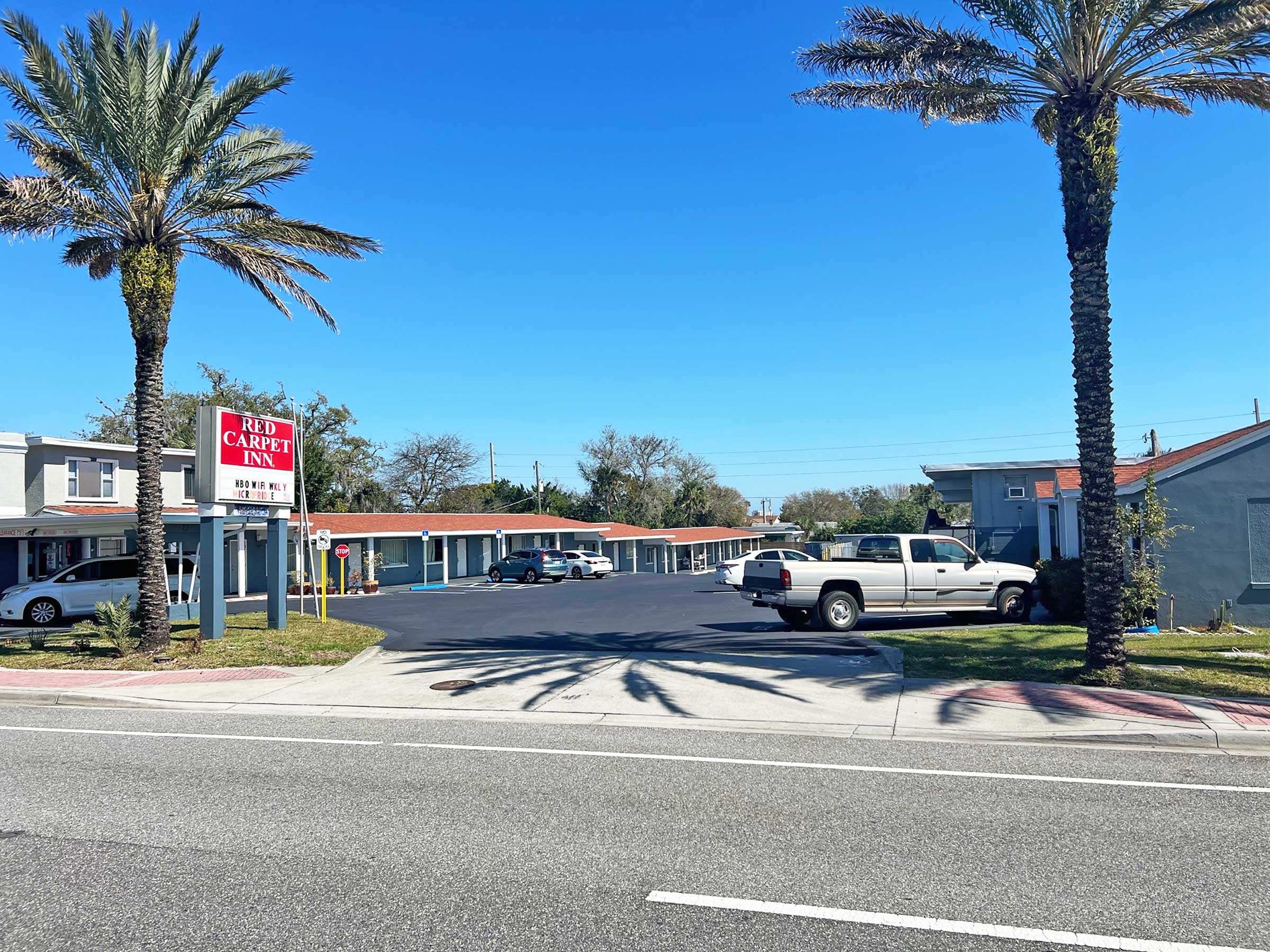
I don’t want to be like my daddy : 1972 : Red Carpet Inn, Daytona Beach & ‘Baby Sitter’ by Betty Wright

 Having answered the front door, its frame was filled by the 11pm silhouette of a large black man wearing overalls and carrying a toolbox. The only words I could discern from his Southern drawl were ‘air con’. Aha! He must have arrived to fix the air conditioning malfunction of which I had alerted the reception desk an hour earlier. He lumbered in and set to work while I continued to watch television.

“You on your own here, sir?” he asked whilst precariously balancing on a chair to grope the insides of the wall-mounted unit. Nobody had ever called me ‘sir’ before. I was a fourteen-year-old boy. He was at least three times my age.

“I am staying here with my dad,” I replied matter-of-factly. Was I meant to call him ‘sir’ too? He looked at me quizzically, seemingly not having comprehended my response. It suddenly dawned that, though Brits know American vocabulary from their TV and movies, Americans understand almost no British English.

“My father,” I clarified. “I am staying here with my father. But he has gone out this evening.”

“D’ya know when your pa gonna return, sir?” the man asked. I shook my head. I was not being coy. I did not know.

It took about a quarter-hour for the man to persuade the air conditioning to function again. Now, whenever I watch Robert De Niro fighting air ducts in ‘Brazil’, I am reminded of that maintenance man. Before he left, he kindly warned me:

“You’s be careful now, sir. And don’t you answer the door to anyone tonight as long as you is alone.”

I thanked him and continued watching television. My parents had raised me on the numerous 1960’s American shows broadcast in Britain, many of which were years old, so it was heavenly to binge on new episodes of familiar shows and those unknown to me. I had bought that week’s ‘TV Guide’ from the reception desk and was thrilled to discover shows like ‘Love American Style’ and ‘Room 222’ on ABC that made me laugh out loud, stretched out on my motel bed.

The late film that night was ‘The Magus’, a baffling watch despite the presence of Michael Caine and Anthony Quinn. Because American TV networks cut off movie credits, I had no idea that it was a critically mauled adaptation of a 1965 John Fowles novel. Back home, a female librarian at Camberley Civic Library had suggested I borrow Fowles’ 1963 debut ‘The Collector’, perhaps not realising from my height that I was only ten years old then, not a suitable age to read a harrowing account of a lonely young man kidnaping a girl and locking her in his cellar until she dies. For years after, I could not supress regular nightmares about this scenario … in which I was the young man.

A decade hence, university friend and housemate John Chandler would insist I read the paperback of ‘The Magus’. Despite the disappointment of the film, Fowles’ book proved to be riveting and not to give me nightmares. It remains one of my favourite reads, alongside another of John’s recommendations, Ursula Le Guinn’s 1974 novel ‘The Dispossessed’. I digress.

So where was my father that evening? I had no idea. He had left me in our motel room and driven away our hire car, promising to be back later. I eventually crawled into bed. He did not reappear until the next morning, offering neither explanation nor apology. As a teenage boy accustomed to parental indifference [see blog], I failed to recognise how irresponsible was his behaviour. Had the ‘Red Carpet Inn’ in Daytona Beach burnt to the ground that night with me inside, how would he have explained his decision to abandon me overnight 4,286 miles from home?

This whole father/son trip had been a bizarre undertaking from its outset. Unencumbered by prior discussion with me or my mother, he had visited a travel agency in Egham and booked a package tour to Florida for me and he alone, omitting our three other family members. My mother was understandably furious. My form tutor at school was furious as it meant me missing lessons for a week during term time and, henceforth, I was never awarded another School Prize [see blog]. Our first long-haul trip was ostensibly booked to witness the launch of the final Apollo rocket from Cape Kennedy. For years I had been a fanatic of the ‘space race’, following every event in detail and even corresponding with NASA for a primary school project. But my father was not.

Our father/son relationship could best be described as ‘business-like’. As soon as I could walk, my father had pressganged me into his one-man quantity surveyor business [see blog], me initially holding the end of his lengthy roll-out tape measure at properties, but more recently calculating returns on potential property developments [see blog]. Was this trip meant to be the reward for my decade’s unpaid service? My father had never seemed, er, fatherly to me. I do not recall him ever sitting me on his knee, holding my hand, hugging me or even reading me a book. When there was something he wanted to do that disinterested my mother, I was merely a handy substitute. Hence, despite my few years, I accompanied him to Camberley Odeon to watch ‘One Million Years B.C.’ in 1966 (aged eight), ‘2001: A Space Odyssey’ and ‘Planet of The Apes’ in 1968 (ten) and ‘Vanishing Point’ in 1971 (thirteen), the latter supported by a violent B-movie western in which a woman is stalked and raped by cowboys. Parental guidance, what’s that?

In the months between my father booking this trip and our departure, his behaviour had become more and more erratic, abandoning our family home for days on end without explanation. At the same time, he had become increasingly violent towards my mother, then caring for my months-old sister whom he had never wanted. Even though he had already indulged in purchasing a new American Motors Javelin sports car, he replaced it with an even more expensive and ostentatious two-seater ‘AMX’ model that resembled the drag racing cars he insisted on taking me to watch on weekends at nearby Blackbushe Airport. Was he experiencing some kind of mid-life crisis?

Whilst driving around Daytona Beach, I had noticed us pass a record shop which I wanted to visit. Having purchased my first soul single in 1969, I since had used pocket money to regularly buy imported American soul records from ‘Record Corner’ in Balham and ‘Contempo Records’ in Hanway Street. We stopped by the store and I bought some recent soul singles I had heard played on ‘American Forces Network’ Frankfurt, audible evenings in the UK on 873kHz AM, songs which had not yet been released at home: ‘Me and Mrs Jones’ by Billy Paul [Philadelphia International ZS7 3521], ‘One Life To Live’ by The Manhattans [Deluxe 45-139] and ‘Baby Sitter’ by Betty Wright [Alston A-4614].

After witnessing the delayed but spectacular night-time launch of Apollo 17 from the bonnet of our hire car, parked amongst hundreds of similar spectators, we caught our flight home from Melbourne airport. I felt sick and delirious that entire journey, unaware I was suffering sunstroke, my father having never considered providing me ‘sun creme’ or a hat during hours spent strolling together along the Florida shoreline for him to ogle bikini girls. Before our arrival home, he told me not to tell my mother about his unexplained overnight disappearances, our day of arrival having been the only night he had slept in his motel bed.

My silence made no difference because, only weeks later, my father left his family for good, similarly without explanation. Had the Florida trip been his clumsy way of bidding me farewell? Or had it been an experiment for him to explore a potential alternate lifestyle unencumbered by his wife and three children? Whatever it was, I did not miss him for one minute. All he had ever done was utilise my skills for his own ends. I did not shed one tear. For the previous fourteen years, he had only been present in my life when there had been some task I could do for him … rather than with him. Never had he demonstrated a genuine interest in his children.

Before he finally left, the few times he was at home, my father would play repeatedly the ‘Baby Sitter’ single we had brought back from Daytona Beach. It was a song in the Southern soul storytelling mould in which singer Betty Wright hires a teenage babysitter to look after her child, later discovering the girl has ‘stolen’ her man. The lyrics relate:

“This sixteen-year-old chick walked in

With her skirt up to her waist

She had a truckload of you-know-what

And all of it in place.”

Wright learnt the lesson after her man left:

“I should have been aware

Of the babysitter

I should have known from the junk, yeah

She was a man-getter.”

I felt it was a bit of a novelty song, nowhere near as classy as Wright’s 1971 ‘Clean Up Woman’ single [Alston A-4601] which I had purchased as an import single and loved. I had no idea why her new song seemed to resonate so strongly with my father until …

The day after my father left us, there was an unexpected knock on our front door. It was our friendly neighbour Mark Anthony who lived three houses along our cul-de-sac. He was visibly upset because his young bride had disappeared the day before without explanation. Had she contacted my mother, since we were the only family she knew on our street, the couple having only recently moved there? No, explained my mother, but my father had disappeared the same day. Oh dear! It seemed that my forty-one-year-old father had run away with Mark’s nineteen-year-old wife Suzie. She may never have been our family’s babysitter but she did resemble the girl in the song. I suddenly realised why my father had identified with its lyrics. He had abandoned us for a teenager. Was that how he had spent his nights in Florida?

During the months that followed, my father tried his utmost to destroy his family. While we were out, he would break into our home and steal as much as he could drive away of our possessions [see blog]. I lost a large number of soul records I had bought with my pocket money, many of which were irreplaceable and in which he had shown no previous interest. Amongst them was the ‘Baby Sitter’ single.

Years later, on the run from Court Orders requiring back-payment of thousands of pounds to my mother for the maintenance of his children, he fled to America. Eventually, the US Immigration Service caught up with him and expelled this ‘illegal alien’ back to the UK from Everton (population 133) in Arkansas where he had been confident/stupid enough in 1985 to register a business named ‘Andre Associates Inc’ with an address there at ‘Route 3, Box 68’, as well as a corporation of the same name in 1986 at '1608 Avalon Place, Fort Myers, Florida'. Extradited back to home soil, he disappeared again to Wales and then Christchurch. He never did pay his debts to us.

Upon his death in 2013, following who knows how many more failed marriages, my father left a handwritten will that bequeathed the bulk of his estate to my younger brother, along with his “collection of soul LP, CD, cassette music”. This was my apparent non-reward for having passed a decade working in my father’s business, whereas my brother had contributed not one day. I hope my brother has enjoyed listening to old records I had eked out of my teenage pocket money. Oh, I almost forgot, he had never shown any interest in soul music. To add insult to injury, my brother did not invite me to my father’s funeral, nor my sister, nor our mother. Evidently, he is the son of his father!

[I was reminded of these events whilst compiling my Spotify playlist of 2000+ 1970’s soul, funk and disco recordings from the catalogue of Miami’s ‘T.K. Records’, home to Betty Wright, George McCrae and KC & The Sunshine Band, amongst others. Naturally, it includes ‘Baby Sitter’.]

13 August 2025

Traitor at the gates of soul : 1990 : Tony Blackburn, Capital Radio versus KISS 100 FM, London

 Pop music had been outlawed by the British government. Twiddle the dial of an AM transistor radio and you would not have found a single UK radio station playing the hits of the day. It was crazy. Contemporary popular music, along with the latest fashions and art, had become Britain’s biggest cultural exports. The ‘British Invasion’ had taken America by storm a few years earlier. Liverpool’s Beatles were the most popular pop group in the world. Yet none of this music could be heard on radio in Britain. It was so crazy.

The British establishment, populated by the upper classes, had always looked down their monocled noses at popular culture. It had never touched their lives because they inhabited a world of people just like themselves who valued classical music, opera and English literature. Not only did pop music appear entirely frivolous to them, but it was an artform they found difficult to completely control. Not only did pop music’s lyrics (‘Lucy In The Sky With Diamonds’?) baffle their sensibilities, but they suspected songs were laced with messages (‘Won’t Get Fooled Again’?) that might incite rebellion against their rightful position at the apex of British society.

The radio waves of Britain had been tightly controlled by the British government almost since the earliest invention of the medium. Although commercial radio stations playing pop music had existed in the United States since 1920, Britain’s elite remained doggedly determined to maintain a firm grip on every item broadcast to a heathen population that needed to be managed and patronised. From its beginnings until the present day, our government-controlled BBC has been stuffed with Oxbridge graduates who resolutely uphold the class status quo.

Despite the birth of rock’n’roll in 1954, BBC radio had remained determined throughout the 1960’s to ignore the resultant resurgence of British popular music that held unprecedented appeal amongst the young generation. Though The Beatles had sold more records than any other musicians in history, you would never know it from listening to BBC radio. The Fab Four’s songs were mostly confined to occasional live guest appearances on the ‘BBC Light Programme’ that my father anxiously recorded on his second-hand Uher reel-to-reel tape recorder so that we could replay their beloved pop music ad nauseum. Otherwise, the BBC’s lone music radio station remained firmly stuck in a bygone era.

On 14 August 1967, the United Kingdom parliament had passed ‘The Marine Broadcasting Offences Act’ whose outcome was to ban the British population from listening to pop music on the radio. From the early 1960’s, to the annoyance of the country’s elite, smart entrepreneurs from the US, Canada and Ireland had filled the yawning gap in the British radio market for pop music by anchoring ships off its coast, transmitting unscripted North American disc jockeys playing chart hits from beyond Britain’s territorial waters. Whenever we journeyed in our family car, I was always sat on the front bench seat of our Rambler between my parents, in charge of the volume and tuning dials of its American-made AM radio. Our favourite listening since its arrival in 1964 had been pirate radio ‘Big L’ on 266 metres that played lots of Motown soul and pop songs.

At midnight on 14 August 1967, Big L and its offshore companions closed forever, all made illegal by the new legislation. Suddenly and unexpectedly, the pop music radio station we adored had been eradicated from our lives. Pirate radio ships had enjoyed immense audiences, too popular for bigwigs at the non-commercial BBC and the stuffy British establishment to control, and (shock horror) they had used advertising revenues to fund their unlicensed activities. Commercial radio would remain outlawed in Britain until the following decade. Our household was reduced to listening to the multiple reel-to-reel tapes my father had previously recorded with a microphone from radio and television shows, though we already knew the songs’ running order by heart.

Weeks passed until 30 September 1967, the memorable day that pop music returned to the British airwaves when the BBC launched a new national station it named ‘Radio One’. The British government had implemented a ‘stick and carrot’ strategy by having banned the popular pirate stations whilst simultaneously forcing a reluctant BBC to initiate a replacement pop music service. This was a repeat of the 1945 fiasco when the government had had to force the BBC not to close its much-loved temporary wartime radio service of popular entertainment, the ‘BBC General Forces Programme’, and instead maintain transmissions to motivate Britain’s post-war weary working class [see blog]. Ironically, both these stations, BBC Radio 1 and the renamed ‘Radio 2’, would attract considerably larger audiences by playing recorded music than the BBC’s more expensive networks of original drama, discussions, classical music and news (‘Radio 3’ and ‘Radio 4’) that targeted the chattering classes predominantly in the Home Counties.

To those of us who had been committed fans of Big L, the BBC’s new pop station sounded like a pale carbon copy, even employing many presenters who were already household names from their pirate days. ‘Innovation’ at the BBC has long been the outcome of it copying someone else’s ideas that had already proven successful (viz BBC launched ‘1Xtra’ only after the success of my ground-breaking black music format at ‘KISS 100 FM’). Not desiring its new team of young, long-haired, non-Oxbridge presenters to spoil the refined atmosphere so carefully cultivated in Broadcasting House, the BBC installed these recruits in an out-building across the road named Egton House.

Bizarrely, the BBC made no attempt to ensure Radio 1 possessed brand integrity, frustrating its intended young audience by making the new station ‘share’ some daytime shows with long-time Radio 2 old fogey presenters (such as former 1950’s crooner Jimmy Young), and by not broadcasting at all during evenings when teenagers were most readily available to listen. The resulting junctions were jarring. I recall the Number One pop chart single unveiled before seven o’clock every Sunday by Alan Freeman on Radio 1’s ‘Pick of the Pops’ show, then immediately switching to Radio 2’s anachronistic ‘Sing Something Simple’ show of post-war karaoke tunes that ran for 42 years from 1959. I can still sing its dreadful theme tune that signalled my rush to the radio’s ‘off’ button.

From his very first Radio 1 programme, for years to come I would wake every weekday to Tony Blackburn’s breakfast show on my bedside radio alarm clock. I already knew him from his pirate Big L days, but the national exposure on the new station’s most listened to show catapulted him into national celebrity status. He went on to present the weekly BBC TV pop music show ‘Top of the Pops’, to appear on Mike Read’s ‘Pop Quiz’ TV game show and to host the ITV series ‘Time for Blackburn’. When he split from his actress wife Tessa Wyatt, the tabloid newspapers had a field day. His radio shows were always upbeat, optimistic and entertaining, accompanied by the barking of his fake pet dog Arnold.

Blackburn was an unabashed fan of soul music and was able to slip in the odd personal favourite amongst the playlisted pop records mandated by his staid BBC producer, Johnny Beerling. His persistent airplay of the song ‘Remember Me’ from the Diana Ross album ‘Surrender’ persuaded EMI Records to release it as a UK-only single that reached chart position seven in 1971. He wrote sleeve notes for several UK soul albums including the ‘Motown Chartbusters’ series and live albums by The Temptations and The O’Jays.

In 1973, the BBC put thirty-year old Blackburn out to pasture on Radio 2’s mid-morning show, replacing him on the Radio 1 breakfast show with twenty-four-year-old clever clogs Noel Edmonds, much heralded as the station’s ‘rising star’ since joining in 1969 rather than accepting his university place. It was time to retune my morning radio alarm to new offshore pirate radio station ‘RNI’. Although Radio 1 had been broadcasting a weekly soul show on Saturday afternoons, Blackburn was inexplicably never its presenter. However, in 1980 Blackburn did return to Radio 1 as host of the weekend breakfast show which would abandon its previous, child-centric ‘Junior Choice’ identity under which posh presenter Ed ‘Stewpot’ Stewart had played almost the same ‘comedic’ records week in week out for the last twelve years.

In 1981, Blackburn joined local station ‘BBC Radio London’ where, freed from the musical straightjacket exerted by Radio 1 producers, he could play soul music to his heart’s content on its weekday afternoon show. Fellow soul music fans Robbie Vincent and Dave Simmons had already played much black music there since its launch in 1970. Blackburn’s arrival, followed by Dave Pearce in 1984, cemented the station’s reputation amongst London’s black music fans as the only legal station worth a listen alongside the capital’s multiple pirate broadcasters.

In a masterstroke of mismanagement, this soul music ‘beacon’ on London’s airwaves was destroyed at a stroke in 1988 when the BBC decided to transform its predominantly music station into an all-talk station, sacking existing presenters and appointing Matthew Bannister from Capital Radio’s daily evening news show ‘The Way It Is’ to manage the renamed ‘GLR’. I attended the Corporation’s overhyped launch press conference (everyone arriving by Thames ferry) where it was self-evident that disaster loomed, Bannister having an excellent track record as journalist but no experience managing a radio station, let alone marketing a new brand image. Despite much bollocks propagated in the media that ‘GLR’ was the face of a revolutionary style of radio, the ratings testified otherwise. The station’s share of London radio listening nosedived from 5.0% in 1987 to 1.6% by 1992 (source: JICRAR) when it had become the second least listened to of the city’s fourteen licensed stations. The BBC had deliberately abandoned London’s soul music fans and sent us hordes back to pirate radio listening.

Immediately, Blackburn joined Capital Radio’s newly launched all-oldies ‘Capital Gold’ London AM station (previously programmes had always been simulcast on FM and AM), presenting its weekday breakfast show of pop music plus a Sunday soul music show syndicated to Capital’s co-owned UK stations outside London. This new station attracted 10.2% of London radio listening in its launch year (source: JICRAR), surpassing earlier ratings achieved during Blackburn’s seven-year tenure at BBC Radio London. His national profile was raised by television appearances on Channel 4’s ‘After Dark’ show in 1987 and Sky One’s weekday morning show ‘Sky by Day’ in 1989. I purchased his 1985 autobiography ‘Living Legend: The Tony Blackburn Story’ in an ex-library book sale and enjoyed reading it as a fan who had spent thousands of hours listening to his radio shows since the 1960’s.

When the government announced in 1988 the opening of bids for new commercial radio licences for London, the first since 1973, there was substantial hope amongst the capital’s myriad pirate stations that a black music station would be selected. Alliances were forged between existing commercial radio owners greedy for more licences so as to eliminate competitors, moneybags who had witnessed commercial radio become a ‘licence to print money’, music enthusiasts and contemporary pirate station owners. I teamed up with London pirate ‘KISS FM’ which, although not the longest running black music broadcaster, nor the most pervasive (on-air only during weekends, rather than 24 hours per day like others), had the greatest potential to win a licence.

‘Blues & Soul’ magazine published a rumour that Tony Blackburn was considering a licence bid in association with former ‘Radio Luxembourg’ DJ Tony Prince. In his autobiography, Blackburn had written that “if the [Controller] job at [BBC] Radio One is filled, I would like to open a twenty-four hour a day soul music station in London.”

In the KISS FM open plan basement room at Blackstock Mews, a planning meeting attended by more than a dozen people was held to report on progress of the licence application that would be submitted to the broadcasting regulator. Introduced to us was Dave Cash who had been hired to co-ordinate the production of the document. To this day, I have no idea how he came to be involved, how much he was paid or by whom. He had had no prior involvement in KISS FM’s pirate activities and had demonstrated no particular interest in black music during a radio career remarkably similar to Blackburn’s: presenting for pirate ship Big L, joining BBC Radio 1 at launch in 1967 to present a weekday daytime show, then defecting in 1973 to become launch production manager of London’s Capital Radio where he presented shows for the next 21 years.

The resultant KISS FM licence application submitted by Cash was weak, lacked relevant market research, offered a flimsy business plan and failed to argue a convincing case. The bid failed despite Cash’s experience from two decades in the radio industry. Whether any application would have won up against the government’s preferred bevy of old jazz music chums we will never know [see blog]. Cash’s involvement in KISS FM ended the day the licence outcome was announced. Maybe he was busy clinking champagne glasses with Capital Radio’s directors in their boardroom at Euston Tower. A jazz station would prove no competition to Capital’s fifteen-year commercial monopoly over music radio in London. Maybe even more champagne would be gulped the following year after the launch of the ‘Jazz FM’ station proved to be a ratings and commercial disaster (1% share of London listening, 1990 JICRAR).

Tony Blackburn had been moved to comment to ‘Music Week’ trade magazine: “I was amazed that the new London FM was a jazz station. I think KISS FM should have got the licence. I would have thought it would have been a soul station. If I’d been the IBA [broadcast regulator], that’s the one I would have given. The problem is, if they don’t give a proper legalised soul station soon, there’s going to be more and more pirate radio stations.”

To cut a long story short [see book], following Dave Cash’s rejected application, the government eventually offered two further London radio licences as the consequence of a lobbying campaign by Heddi Greenwood and myself at KISS FM. I co-ordinated, researched and wrote the second KISS FM licence application which won [see blog]. I then launched the newly legal station ‘KISS 100’ on 1 September 1990 [see blog] as its programme director, the sole management team member with prior UK commercial radio experience.

Tony Blackburn wrote in ‘Jocks’ magazine: “Now that KISS FM are legal, it will be interesting to see how they face up to the challenge of broadcasting for the first time on a truly competitive basis. Gone are the days when they paid nothing for playing records. Gone are the days when a truly amateur DJ, sitting in a makeshift studio in someone’s bedroom, was tolerated because he was a ‘pirate.’ And gone are the days when DJs on the station was [sic] paid little or nothing for their services. Now that KISS FM is legit, it will have to put out a truly professional sound to attract audience and advertisers alike.”

‘Blues & Soul’ magazine correctly responded that it had been the pioneering work of the many soul pirate stations, from ‘Radio Invicta’ in 1970 onwards [see blog], that had spearheaded the long running campaign for a legal black music station in London. Despite Blackburn’s evident affinity for soul music, there was nothing he had done personally to further that particular cause.

Asked his opinions before KISS FM’s launch by ‘Radio & Music’ magazine, Blackburn responded: “I’m pleased KISS FM is coming on air. I think it’s good for radio, but it isn’t guaranteed to get an audience. It’s not enough to play the right music any more – it has to be presented well.”

However, following the station’s launch, Blackburn wrote in Jocks magazine: “KISS FM didn’t so much open up on September 1st, it staggered onto the air with all the professionalism of a British Rail station announcement, infact [sic] I think some of the station announcers have better voices than a lot of the KISS FM DJs. For a whole weekend, we were subjected to humourless, badly spoken amateurs thanking the management and telling us all that they were now legal, something we’d all worked out for ourselves. At least every half hour, I was told how much the DJ loved me and that everything was ‘crucial.’ At one stage on the first day, I heard a DJ actually play a record for ‘everyone who knows me’ and then invited listeners to send in ‘fax messages on a fax ‘cause our phones ain’t workin’.’“ 

Blackburn continued in this vein for a further three paragraphs before concluding: “On radio, a good voice is important and the ability to use it properly, a lot of the DJs on KISS talk on a monotone, all sound the same and are not a bit entertaining. These people might be very good in clubs but make the station sound so bad I would go as far as to say it is not professionally acceptable. Naturally these remarks don’t apply to the professionals they have on the station such as Robbie Vincent, David Rodigan and a few others.”

A profile of Blackburn also appeared in the ‘Sunday Telegraph’ newspaper, in which he said: “When you listen to those new stations like KISS FM, it shows up how good these old guys are.” The interviewer noted, with understatement, that Blackburn “has a bit of a bee in his bonnet about KISS FM.”

Every Monday morning at nine o’clock, the heads of each KISS FM department met in its upstairs boardroom. At our next meeting, managing director Gordon McNamee insisted upon playing in its entirety from VHS cassette a five-minute commentary Tony Blackburn had broadcast on ‘Channel 4’. He seemed to take Blackburn’s criticisms very personally and asked me what was to be done. I expressed the opinion that this commentary, along with Blackburn’s similar press articles, had been cleverly staged by Capital Radio, but gave KISS FM nothing to worry about. After Blackburn had left BBC Radio One, he had criticised the station in the harshest tones. Then, after he had left BBC Radio London, he had criticised that station too. Blackburn was highly self-opinionated and conveniently seemed happy to damn any station that was not his current employer.

I suggested that, if Blackburn’s main criticism of KISS FM was that it sounded very different from Capital Radio, then it should be taken as a compliment. The huge volume of market research I had commissioned pre-launch demonstrated conclusively that, if KISS FM had launched sounding the same as every other music radio station, it would fail. It was our station’s very differences from its competitors that would make us successful. In fact, Blackburn’s stance in criticising KISS FM should only demonstrate to us that he had no idea what young people wanted from a radio station. His criticisms might even encourage more young people to listen to KISS FM than if he had said that he loved the station.

McNamee seemed unconvinced by my arguments. He was wounded by Blackburn’s comments and suddenly seemed filled with self-doubt about the station’s ‘different’ sound. I was reminded of the accusations he had lobbed in my direction late one night before the station’s launch – that it was I who would be personally responsible for the station’s failure. Now, at this management meeting, I was feeling that McNamee was too eager to blame me for Blackburn’s criticisms. Neither did I feel I was receiving support from the other heads of department present.

I could not understand what was going on inside my boss’ head. Had McNamee lost the courage of his convictions about the radio station he had co-founded? Rather than be a strong leader who demonstrated commitment to his loyal staff, McNamee already seemed to be floundering, only days after the station had launched. Through its employee Tony Blackburn’s criticisms, Capital Radio had scored a direct hit on the managing director of its first ever competitor in the London commercial radio market. It seemed to be left to me now to hold the ship steady and to demonstrate that KISS FM would only succeed if it refused to follow Tony Blackburn’s ‘advice.’

Already, I was becoming used to hearing highly critical opinions expressed publicly about KISS FM. The station was being targeted by the DJs of radio stations competing with KISS FM, and by people who were themselves probably outside of the youth audience the station was seeking to attract. For me, the fact that long established radio stations were bothering to criticise KISS FM on national television must have meant that our new, little London radio station was worrying them considerably. They had not made similar comments when Jazz FM or ‘Melody Radio’ had launched. I felt that this validated what we were doing. However, these issues would not go away and, if anything, they had started to become more significant within the station.

At the beginning of October 1990, Gordon McNamee showed me a two-page letter that KISS FM non-executive director Tony Prince had written to him, criticising the station’s unprofessionalism and expressing doubts about the daytime music policy. I met with McNamee and head of marketing Malcolm Cox and, together, we drafted a detailed response for McNamee to send back to Prince. It explained that KISS FM sounded this way not because we were sloppy or unprofessional, but because all the pre-launch market research that the station had commissioned demonstrated that this was the style of broadcasting that would prove popular with young people. KISS FM’s potential audience had stated categorically that they would not tune to a new radio station that sounded like a pale imitation of BBC Radio One or Capital Radio.

Having received McNamee’s reply, Prince still expressed reservations about the station’s direction, so I was asked to meet him in the boardroom to discuss the matter. This was a rare occasion for me to chat with one of the station’s directors. Prince’s main criticism was that there were insufficient features in KISS FM’s daytime programmes, something that, he believed, made successful radio. Why, he asked me, were there not more competitions in the morning show aimed at housewives? Could not the station introduce recipes or features that would specifically attract housewives to listen? I explained to Prince that the notion that housewives constituted the majority of radio’s daytime audience was a myth. I had painstakingly analysed the radio industry audience data to determine KISS FM’s likely listenership during the day, and it was certainly not housewives. The commercial radio industry had propagated the myth of the ‘housewife’ listener since its inception in 1973. I was programming KISS FM to appeal to the agreed target audience of fifteen- to thirty-four-year-olds. I did not believe that they wanted silly competitions or recipes. Forty-six-year-old Prince listened to me, but still seemed unconvinced. 

I knew that the only incontrovertible proof of the appropriateness of KISS FM’s current programming policy would be statistics that showed the station was attracting a significant audience. Fortunately, only a few days later, the station received the results of a market research survey that its advertising agency, BBDO, had commissioned. It showed that the station had just over 750,000 listeners between 19 and 25 September. These numbers were a solid indication that KISS FM was already on target to achieve the one million listeners it had promised advertisers by the following September. The figures also showed that 96% of listeners were within the ten- to thirty-four-year-old demographic that the station was targeting. McNamee called a meeting in the boardroom to inform the staff of this good news, and the station issued a press release the same day. More than anything, this press release helped calm the internal rumblings from Tony Prince.

Whilst I was pleased with the 750,000 figure, I knew that the only data that mattered were the official JICRAR radio industry numbers that would not be published until January 1991. Neither did I want the programming staff to think that the battle for listeners had already been won and that they could work less hard from now on. I circulated a note to all fifty-seven personnel in my department:

“Many thanks for all the hard work you’ve put in to help achieve these impressive results. We all need to keep it up so that we reach our ultimate goal of getting one million listeners tuned in ... In the meantime, it’s worth remembering that that our first full-scale audience research is underway. JICRAR started last month and continues into December. Thousands of people all over London are filling in diaries right now every day with what they listen to on the radio hour by hour ... So, we’ve come a long way in the first month. Let’s carry on in the knowledge that we’re on the right course and can turn KISS into the most successful new radio station ever heard in London.”

The target demanded of me by the business plan was to attract one million listeners per week by the end of KISS FM’s first year on-air. I achieved 1,078,000 listeners within the first few months (2.7% of London listening, 1990 JICRAR; growing to 3.4% in 1991), while the proportion of housewives listening to our daytime shows was proven to be a mere 9%. If I had failed, I would have been sacked. Once I succeeded, I was sacked anyway by a boss desperate to take the credit and my job [see blog]. I took no pleasure observing him then lead the station on a downward ratings spiral to a low of 2.3% (source: 1993 RAJAR replaced JICRAR).

I never met or heard from Tony Prince again. I never met Tony Blackburn. Both had frustrated my work. Neither had managed the launch of a new radio station, let alone one with a ground-breaking music format that truly became “the most successful new radio station ever heard in London” … since Capital Radio's debut on 16 October 1973.

[Includes extracts from ‘KISS FM: From Radical Radio To Big Business: The Inside Story Of A London Pirate Radio Station’s Path To Success’ by Grant Goddard, Radio Books, 2011, 528 pages]